
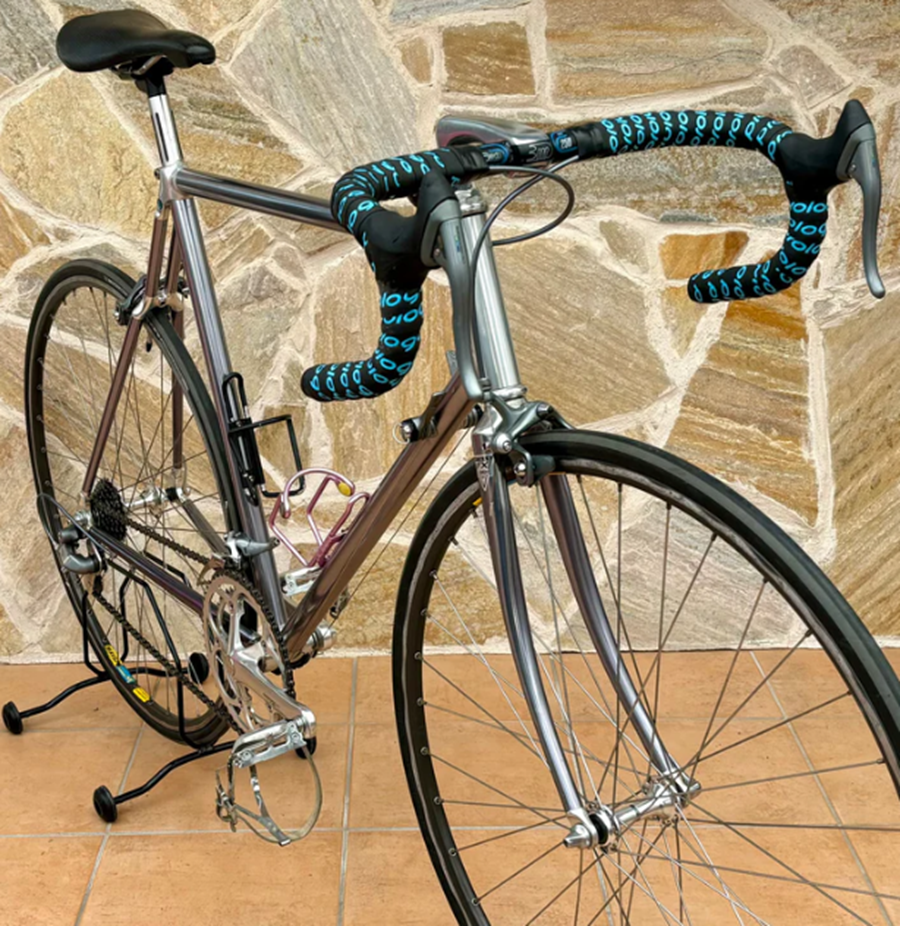
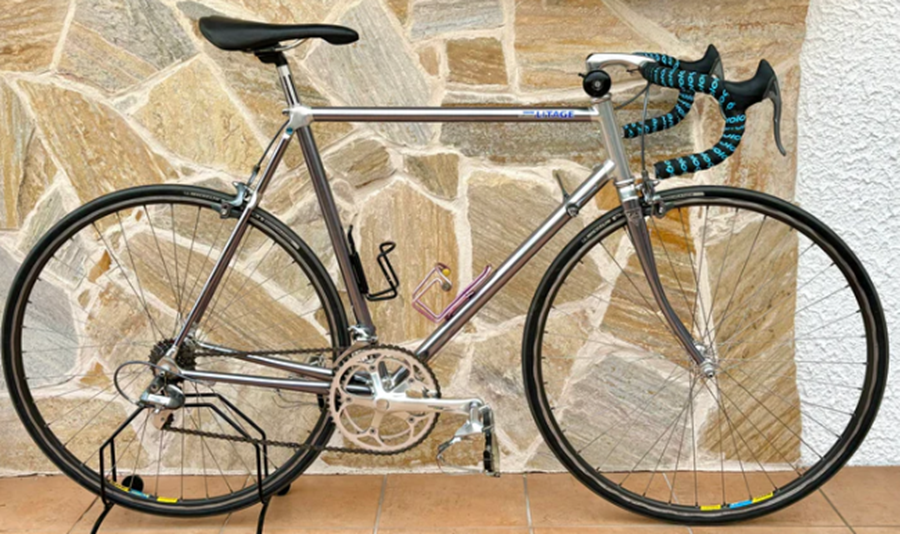
This week’s feature is a Sakae Ringyo Litage road racing bike — a complete build in exceptional condition that represents a specific and often overlooked chapter in Japanese bicycle history. The Litage sits at the intersection of Sakae Ringyo’s (SR) component expertise and the early global shift toward aluminum frame construction. Built on bonded alloy tubing with a full Shimano 600 groupset, it is a machine worth understanding in detail.
Amazon Affiliate I earn from qualified purchases
Who Was Sakae Ringyo?
Sakae Ringyo Ltd. was a Japanese manufacturer founded in the 1950s, best known for aluminum cranks, stems, handlebars, headsets, and bottom brackets. The SR brand supplied components to major European and American manufacturers throughout the 1970s and 1980s, with clients that included Motobécane, Raleigh, and Pinarello. Their aluminum work was respected for precision and weight savings at a time when alloy components were still considered premium.
In 1987, Mori Industries Inc. acquired Sakae Ringyo, and in 1990 the company purchased the bankrupt SunTour (Maeda) name to form SR Suntour, which continues today as a Taiwanese suspension and component brand. At the time of the Litage’s introduction, however, Sakae Ringyo was still operating as a Japanese manufacturer at the height of its component production.
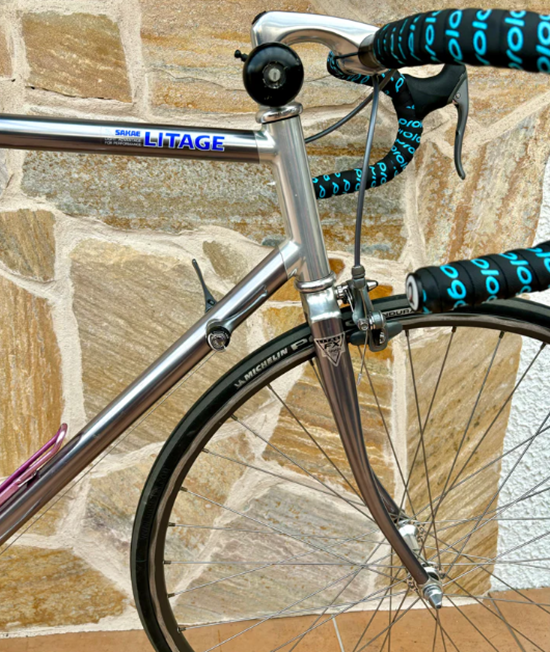
The Litage Frame: Bonded Aluminum Construction
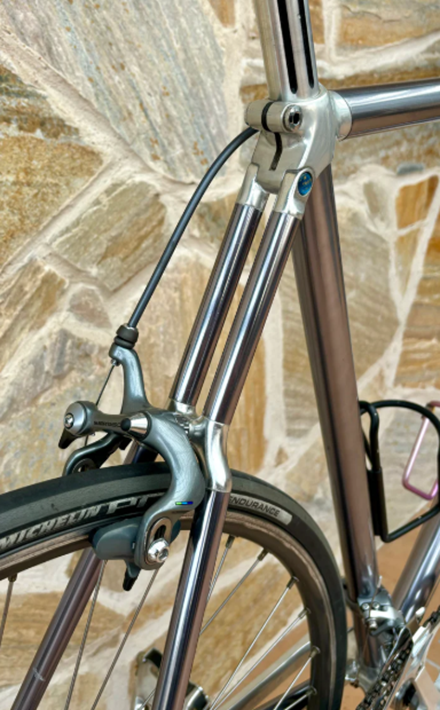
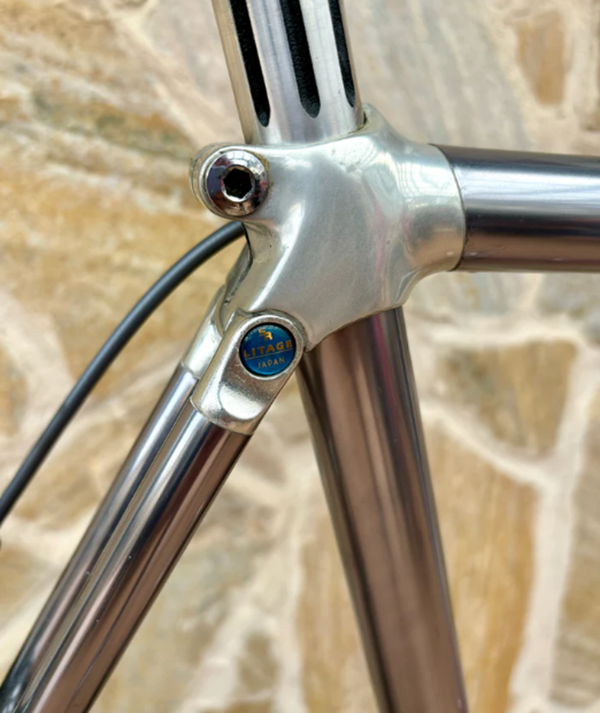
The Sakae Ringyo Litage followed the bonded aluminum frame construction pioneered by European builders ALAN and Vitus. The method — sometimes called “screwed and glued” — involves press-fitting tubes into lugs (or lugs into tubes, in the Vitus-derived approach) and securing them with thermal adhesive rather than welding. Sakae Ringyo used 5056 aluminum alloy tubes bonded to AC4C aluminum-cast lugs. Their catalog described the process: adhesive is injected through a port in the lug after the tube is press-fitted, flowing evenly into an injection space designed to ensure a uniform bond around the entire joint.
SR debuted this design in 1987 under the name “Prizm,” then rebranded it as the “Litage” — a portmanteau of “Light Age.” The frames were available in road and mountain bike configurations, in both aluminum and carbon tube variants. The design attracted enough attention that 3Rensho boss Yoshi Konno adopted it for his line in the late 1980s, selling SR Litage frames in 3Rensho livery — a detail that still generates debate among collectors.
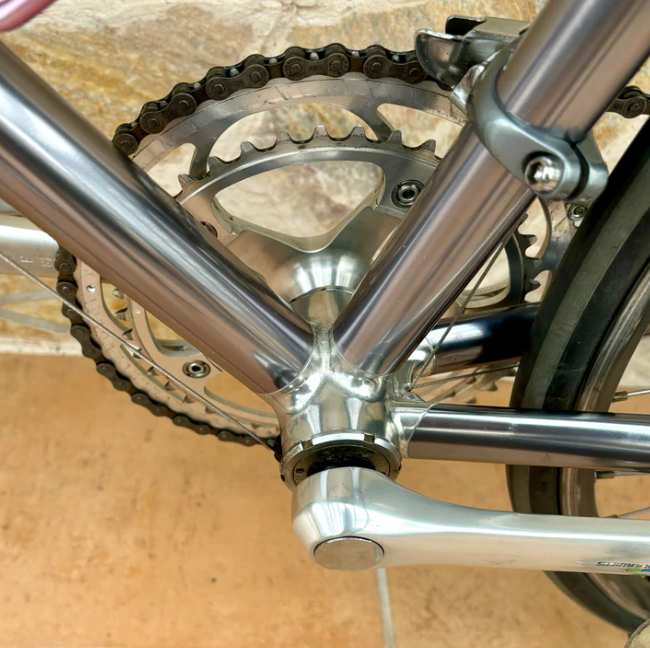
Production ran from 1987 through the early 1990s, placing this bike firmly in the period when bonded aluminum was a legitimate high-performance option before TIG-welded aluminum took over.
Sponsored · Competitive Cyclist
This Build: Specifications and Component Notes
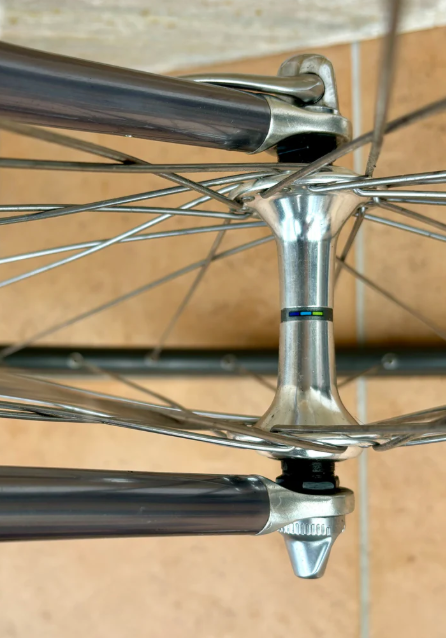
The example here is a 57cm (center-to-top) seat tube, 56cm (center-to-center) top tube frame with a 15cm head tube — a geometry suited to a medium-tall rider with a moderate reach. The condition is excellent: no dents, no cracks, with the alloy showing no structural concerns.
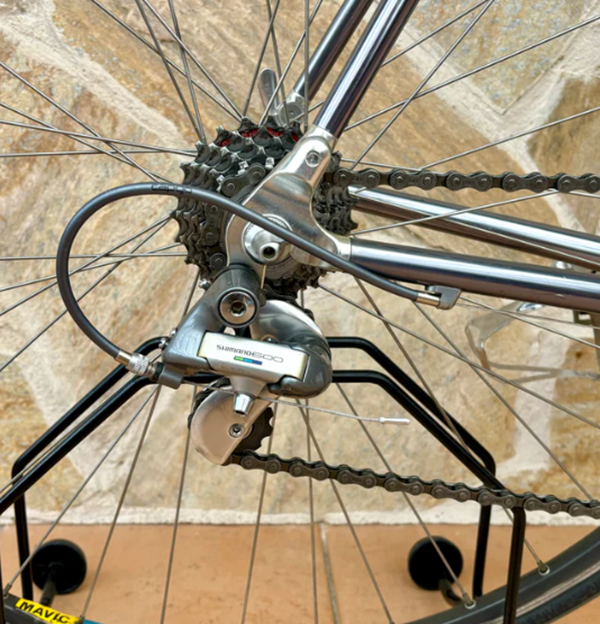
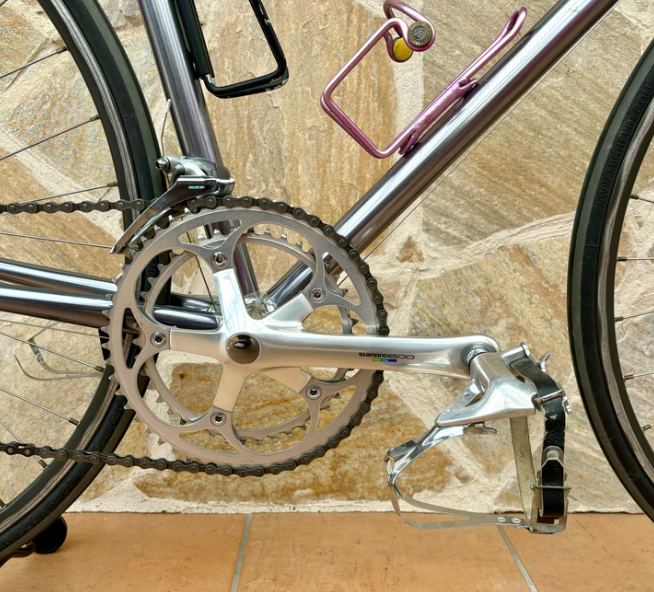
The complete groupset is Shimano 600, which was Shimano’s second-tier road group during this era, positioned below Dura-Ace but above 105. It covered virtually every contact point on this bike:
- Crankset: Shimano 600, 170mm, 52/42 chainring combination — a standard road racing setup for the period
- Brakes: Shimano 600 dual-pivot calipers with matching 600 brake levers
- Drivetrain: Shimano 600 front and rear derailleurs with 600 downtube shifters
- Pedals & Headset: Shimano 600 throughout
- Handlebar: Deda Deep 250 — a classic Italian drop bar known for its shallow drop and compact reach
- Stem: 3ttt — one of the benchmark Italian stems of the era
- Saddle: Selle Italia Flite — a widely used racing saddle that remains in production today
- Rims: Mavic Open 4CD clinchers — an anodized alloy clincher rim from Mavic that was a standard choice for performance builds through the late 1980s and 1990s
The 3ttt stem and Deda handlebar are a European touch that pairs logically with the Japanese frame and Shimano components. The Mavic Open 4CD rims complete a build that reads as a working road racer from the late 1980s or very early 1990s.
Collectibility and Context
The Sakae Ringyo Litage occupies a specific niche in the vintage Japanese bicycle market. It is not a common find — SR produced frames in smaller numbers than major Japanese bicycle manufacturers, and the bonded construction makes condition critical. Frames with compromised lug bonds or cracked tubes are not repairable in any practical sense, which makes a clean example worth noting. This bike shows no such issues.
Its interest to collectors comes from several angles: it documents Sakae Ringyo’s ambition beyond components into complete frame production, it uses a manufacturing method now largely extinct, and the Shimano 600 groupset represents a period-correct and fully functional drivetrain that remains easy to service with widely available parts.
Still Riding Your Classic? Find Out What Your FTP Should Be.
Answer 7 quick questions and get a personalized training roadmap — whether you’re riding a vintage Bridgestone or a modern race bike.
Frequently Asked Questions
What does “Litage” mean on a Sakae Ringyo bicycle?
Litage is a portmanteau of “Light Age,” used by Sakae Ringyo as the brand name for their bonded aluminum frame line introduced in 1987. The name reflected the marketing position of aluminum as the next generation of lightweight frame material, following the European bonded aluminum designs from ALAN and Vitus that influenced SR’s construction method.
How was the Sakae Ringyo Litage frame constructed?
The Litage used 5056 aluminum alloy tubes press-fitted into AC4C cast aluminum lugs, then bonded with an injected thermal adhesive. This method — known as bonded aluminum construction — was the dominant approach for aluminum frames from the late 1970s through the early 1990s before TIG welding became standard. SR’s process injected adhesive through a port in each lug to ensure even distribution around the joint.
Is Shimano 600 still serviceable today?
Yes. Shimano 600 components from the late 1980s and early 1990s are compatible with standard tools and widely available replacement parts. The derailleurs accept standard cables, the brake calipers use common pads, and the crankset uses a conventional square-taper bottom bracket interface. The downtube shifters function in friction mode, which bypasses any indexing compatibility concerns entirely.
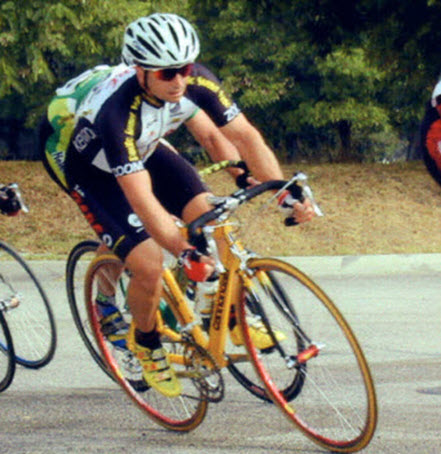
James Hickman is a former USA Cycling Expert-level coach who has worked with cyclists at every level, from beginners to competitive racers. He served as a coach for the Leukemia & Lymphoma Society’s Team In Training program, helping riders prepare for and complete century events. A Masters-category racer himself, he competed and earned podium finishes in Southern California events and holds a Platinum finish at El Tour de Tucson, completing the 100+ miles in under five hours.
|
We are an Amazon affiliate and earn from qualified Amazon purchases with no cost to you. This is for ANY product that you purchase through our links. We are also an affiliate for Competitive Cyclist and JensonUSA. This way we can provide you with competitive pricing and products.