
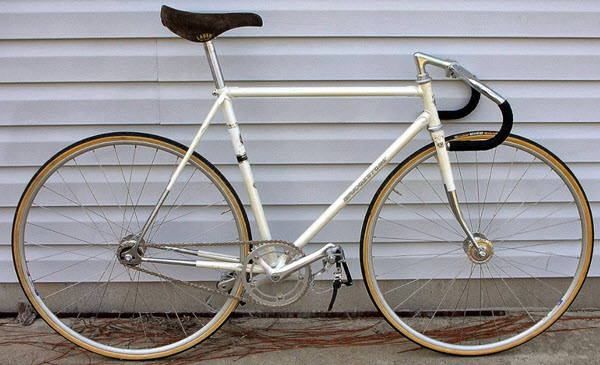
Quick Answer: An NJS bike is a track bicycle built to the standard set by the Japan Keirin Association (NJS), using frames and components approved for sanctioned keirin racing in Japan. NJS-certified parts are made by a limited list of approved makers such as Nitto, Sugino, and MKS. This article features a vintage Bridgestone track frame built with an NJS-style component group.
This week’s Japanese Bicycle of the Week is an NJS bike built around a vintage 54cm Bridgestone track frame. The build was guided by track enthusiasts Covi Hazelwood of Two Wheeler Dealer and Trent Blackburn, who specified a component group drawn largely from NJS-certified Japanese track parts.
Amazon Affiliate I earn from qualified purchases
What Is an NJS Bike?
An NJS bike is a fixed-gear track bicycle whose frame and components meet the standard of the Japan Keirin Association, abbreviated NJS. The certification exists for one reason: equipment used in sanctioned keirin racing in Japan must be approved for safety and fairness, so every legal part carries an NJS stamp. Only a limited list of approved manufacturers may produce certified frames and components.
Because the standard is strict, an NJS bicycle is assembled from parts certified across several approved makers rather than a single branded groupset. Common NJS component suppliers include Nitto for bars and stems, Sugino for cranks and chainrings, MKS for pedals, and Shimano Dura-Ace for cogs and chains. The result is a purpose-built track machine with no brakes, no derailleurs, and a single fixed gear.
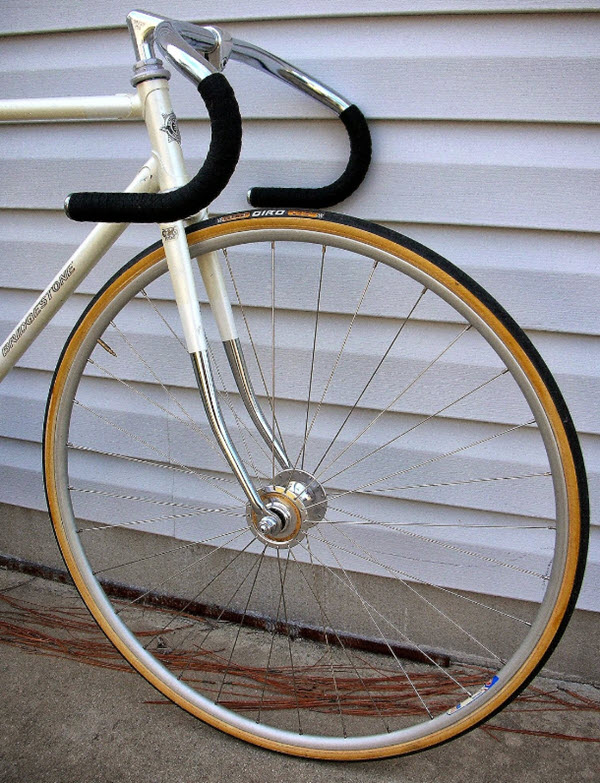
What Makes the Bridgestone Track Frame Distinct
Bridgestone built track frames in Japan from steel tubing, using the short wheelbase, steep angles, and high bottom bracket typical of velodrome bikes. A track frame carries horizontal rear track ends rather than vertical road dropouts, allowing chain tension to be set by sliding the rear wheel. There are no brake bridges, derailleur hangers, or cable stops, because a track bike runs a single fixed gear and no brakes.
Bridgestone is better known to many North American riders for its road models, but the company also produced track and, later, keirin-specific frames. Frames built to the keirin standard carry the NJS stamp. Whether a given vintage Bridgestone frame is formally NJS-stamped depends on the individual frame; the certification applies specifically to equipment legal for sanctioned keirin competition.
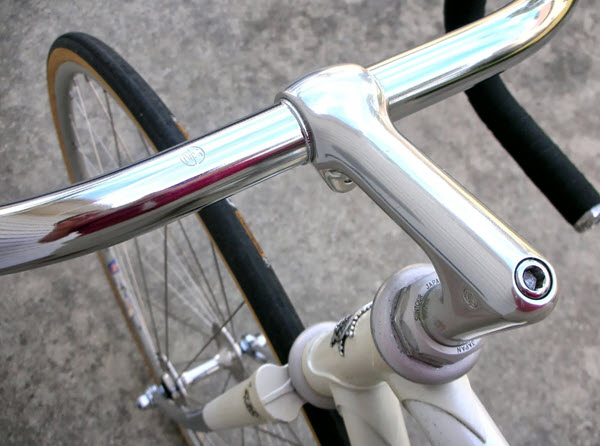
The Frame and Wheelset
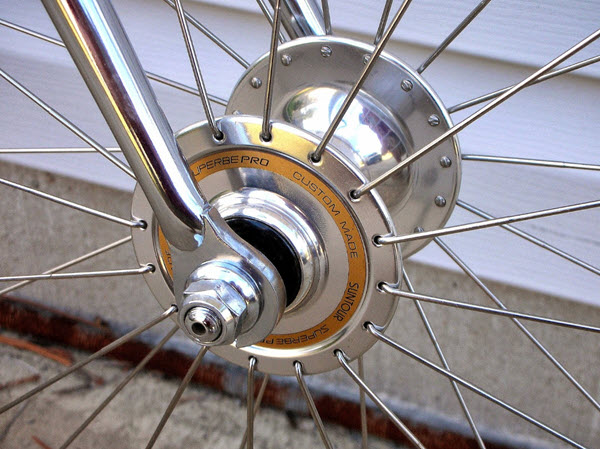
The frame was sourced through Blueprint Bikes of Dallas, Texas. The wheels are a Suntour Superbe Pro and Sun Mistral track set, also from Blueprint Bikes, matched to a Suntour Superbe Pro headset to keep the hub and headset from the same group. Suntour’s Superbe Pro line, introduced in the early 1980s, was the company’s premium track and road group and competed directly with Shimano Dura-Ace for NJS specification.
Building or maintaining a fixed-gear bike like this one calls for a few track-specific tools and parts. While the vintage NJS components here are collector items, riders putting together a modern fixed-gear setup can find current track and maintenance gear at Competitive Cyclist.
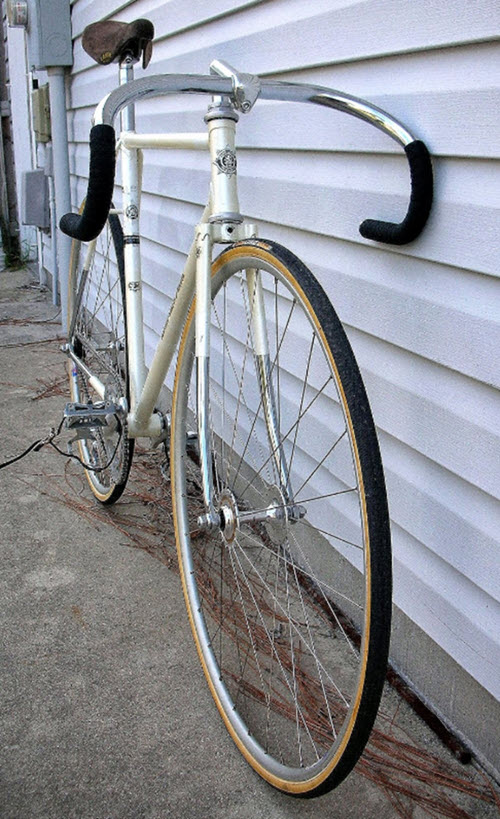
Top Components on This NJS Bike
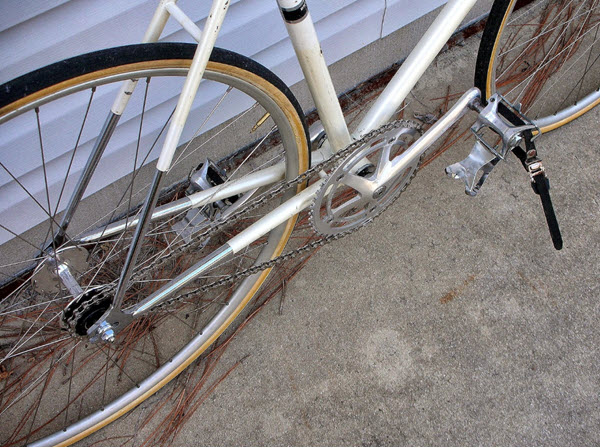
The cockpit uses a Nitto Pearl 100 NJS stem with Nitto B123 NJS track bars in a 40cm width. The drivetrain runs a 48-tooth Sugino Mighty Competition NJS chainring with a Shimano Dura-Ace 15-tooth NJS cog, a common keirin gear combination that yields a fixed ratio suited to track sprinting.
Power transfer is handled by a Sugino bottom bracket and crankset, with the seat post also from the Suntour Superbe Pro group. The pedals are Suntour Sprint track pedals fitted with MKS toe cages. The saddle is a Selle San Marco Laser, finished with cloth handlebar tape for a period-correct appearance. This mixed-maker approach is exactly what defines an NJS bike: a coherent build assembled from parts individually certified by approved manufacturers.
Frame Year vs. Build Year
A note on dating: the frame is vintage, but several components in this build—Suntour Superbe Pro and the Dura-Ace NJS cog among them—date to the 1980s. This is common with track and keirin bikes, where frames outlast multiple component generations and are routinely rebuilt with current NJS-legal parts. The result is best described as a vintage Bridgestone frame with a later NJS-certified build, rather than a fully period-original machine.
Frequently Asked Questions
What is an NJS bike?
An NJS bike is a fixed-gear track bicycle whose frame and components are certified by the Japan Keirin Association for use in sanctioned keirin racing. Certified parts carry an NJS stamp and are made by a limited list of approved manufacturers.
Why are NJS bikes and parts sought after?
NJS components are built to a strict safety and quality standard for professional racing, and many are made in limited numbers by approved Japanese makers. Collectors value the build quality, the keirin heritage, and the consistency of the standard.
Can you ride an NJS track bike on the road?
It can be ridden on the road as a fixed-gear bike, but it ships without brakes and with track geometry. Road use generally requires adding at least a front brake and accepting a stiff, twitchy ride compared with a road frame.
James Hickman is a former USA Cycling Expert-level coach who has worked with cyclists at every level, from beginners to competitive racers. He served as a coach for the Leukemia & Lymphoma Society’s Team In Training program, helping riders prepare for and complete century events. A Masters-category racer himself, he competed and earned podium finishes in Southern California events and holds a Platinum finish at El Tour de Tucson, completing the 100+ miles in under five hours.
Sponsored · Competitive Cyclist
We are an Amazon affiliate and earn from qualified Amazon purchases with no cost to you. This is for ANY product that you purchase through our links. We are also an affiliate for Competitive Cyclist and JensonUSA. This way we can provide you with competitive pricing and products.