
Quick Answer: How to Read Fuji Serial Numbers
Location: Fuji serial numbers are typically stamped on the bottom bracket shell (underside of the frame where the pedal cranks attach) or on the rear dropout.
Common Format (1971-1974): Example K9B10021
• K = Factory code
• 9 = Year (Showa 49 = 1974)
• B = Month (February)
• 10021 = Production number
Common Format (1980-1987): Example FB125349
• F = Factory code
• B = Month (February)
• 1 = Year (1981)
• 25349 = Production number
Month Codes: A=January, B=February, C=March, D=April, E=May, F=June, G=July, H=August, I=September, J=October, K=November, L=December
Fuji bicycle serial numbers reveal your bike’s manufacturing date, production facility, and authenticity. Most Fuji frames stamped between 1971-1987 follow specific alphanumeric formats that decode the year, month, and production sequence. This guide explains how to locate and interpret Fuji serial numbers across different production eras, helping you accurately date your vintage Fuji bicycle and verify its originality.
Amazon Affiliate I earn from qualified purchases
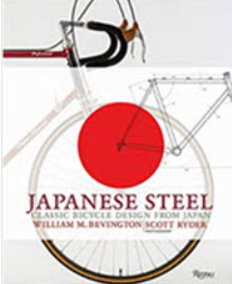
This page is dedicated to Fuji serial numbers. Special thanks to Tom Marshall of Bike forums and William Bevington and Scott Ryder of the book Japanese Steel for information contained in the article.
Restoring or dating a bike from another Japanese manufacturer? See our Bridgestone Serial Numbers guide or the full Serial Numbers hub.
|
SERIAL NUMBERS 1971-1974*:
FUJI (Japan): P designates assumed production facility codes with known characters including F.G. I,J, K and M.
1971-1974: PyMxxxx, where years are based on the Imperial Japanese Calendar (i.e. 6 = Showa 46 = 1971, 7 = Showa 47 = 1972, 8 = Showa 48 = 1973, 9 = Showa 49 = 1974).
Example:
K9B10021
K=Factory area for US import
9=showa year code 1974
B=Month code for Feb
10021=Build number
1975-1979: yyMxxxxx
1980-1989: PMyxxxxx
1984-1986 Special Series: Myxx(x)
Information above provided by Tom Marshall
Serial number format WXYZZZZZ where;
W = a letter, all cases to date being F, K or M, with F presumibly indicating Fuji.
X = a number, indicating the last digit of the Japanese Imperial calendar year, Showa reign (6 = Showa 46 = 1971, 7 = Showa 47 = 1972, etc.)
Y = a letter, indicating the calendar month of manufacturer (A = January, B = February, C = March, etc.)
ZZZZZ = four or five digit number sequence, probably indicating frame number during month
Example: F7C10256 indicates the 10,256th frame manufactured during March 1972.
* The serial number format may extend beyond 1971-1974, in either direction, but to date, data samples lie within this range.
SERIAL NUMBERS 1976-1978*:
Serial number format YYXZZZZZ where:
YY = two numbers indicating the year of production
X = a letter, indicating the calendar month of manufacturer (A = January, B = February, C = March, etc)
ZZZZZ = a five digit number sequence, probably indicating frame number during month
Examples:
77B13425
indicates the 14.425th frame manufactured during February 1977.
75K50034
76=Year built (frames built late in the year were for the following year).
K=Month code for Nov.
5=Build level code for Professional
0034=Build number
* The serial number format may extend beyond 1976-1978, in either direction, but to date, data samples lie within this range.
Sponsored · Competitive Cyclist
SERIAL NUMBERS 1980-1987*:
Serial number format WXYZZZZZ where;
W = a letter, presumably indicating a Fuji facility or contractor. To date, samples have included F, I , J, K & S.
X = a letter, indicating the calendar month of manufacturer (A = January, B = February, C = March, etc)
Y = a number, indicating the last digit of the calendar year of manufacture (0 = 1980, 1 = 1981, 2 = 1982, etc.)
ZZZZZ = a five digit number sequence, probably indicating frame number during month
Example: FB125349 indicates the 25,349th frame manufactured during February 1981.
*The serial number format may extend beyond 1980-1987, in either direction, but to date, data samples lie within this range.
SPECIAL SERIAL NUMBERS 1984-1985*:
Serial number format XYZZZ where;
X = a letter, indicating the calendar month of manufacturer (A = January, B = February, C = March, etc)
Y = a number, indicating the last digit of the calendar year of manufacture (i.e. 5 = 1985)
ZZZ = a two or three number sequence, probably indicating frame number during month
Example: B514 indicates the 14th frame manufactured during February 1985.
This format is found on high end models offered under the Fuji design Series and Fuji Signature Series labels. Based on the unique format and serial number, they appear to be low volume, hand-built models.
*The serial number format may extend beyond 1984-1985, in either direction, but to date, data samples lie within this range.
For more on Fuji’s history and notable models from this era, see our Fuji Brand History page.
Frequently Asked Questions About Fuji Serial Numbers
Where is the serial number located on a Fuji bicycle?
The serial number on most Fuji bicycles is stamped on the bottom bracket shell, which is the cylindrical part of the frame where the pedal cranks attach. Look on the underside of this area. Some Fuji models also have serial numbers stamped on the rear dropout (where the rear wheel attaches to the frame) on the drive side. On certain high-end models from the 1980s, you may find the serial number on the head tube near the fork.
How do I determine what year my Fuji bicycle was made?
The year is encoded differently depending on when your Fuji was manufactured. For bikes made between 1971-1974, the second character is a single digit representing the Showa year (6=1971, 7=1972, 8=1973, 9=1974). For 1976-1978 models, the first two digits indicate the year directly (77=1977). For 1980-1987 bikes, the third character from the left is the last digit of the calendar year (0=1980, 1=1981, etc.). Check the serial number format section on this page that matches your bike’s era.
What do the letters in my Fuji serial number mean?
The letters in Fuji serial numbers serve different purposes depending on the production era. The first letter typically indicates the production facility or contractor (common codes include F, K, M, I, J, and S). Another letter in the sequence represents the month of manufacture using A for January through L for December. The specific position of these letters varies by production period, so compare your serial number to the format examples provided for your bike’s era.
Are all Fuji bicycles stamped with serial numbers in the same location?
No, Fuji used different stamping locations across different model years and product lines. While the bottom bracket shell was the most common location, especially for road bikes and touring models, some mountain bikes and BMX models from the 1980s have serial numbers on the rear dropout. Special edition and hand-built models from the Fuji Design Series and Signature Series sometimes have serial numbers in unique locations. Always check both the bottom bracket and rear dropouts if you cannot locate the number initially.
Did Fuji use serial numbers after 1987?
Fuji continued bicycle production into the 1990s, but well-documented serial number formats for this site currently cover 1971 through 1987. If your Fuji has a serial number that doesn’t match any format above, your bike was likely produced after 1987 using a different numbering system, or it may be a model that doesn’t fit the documented ranges. For additional dating context, check our General Asian Serial Number Guide, which covers cross-manufacturer patterns from the 1970s-1990s.
Find out what your FTP score says about your cycling fitness — take the free 2-minute quiz and get your personalized result.Take the Free FTP Quiz →
James Hickman is a former USA Cycling Expert-level coach who has worked with cyclists at every level, from beginners to competitive racers. He served as a coach for the Leukemia & Lymphoma Society’s Team In Training program, helping riders prepare for and complete century events. A Masters-category racer himself, he competed and earned podium finishes in Southern California events and holds a Platinum finish at El Tour de Tucson, completing the century in under five hours.
and earn from qualified Amazon purchases with no cost to you. This is for ANY product that you purchase through our links. We are also an affiliate for Competitive Cyclist and JensonUSA. This way we can provide you with competitive pricing and products.