
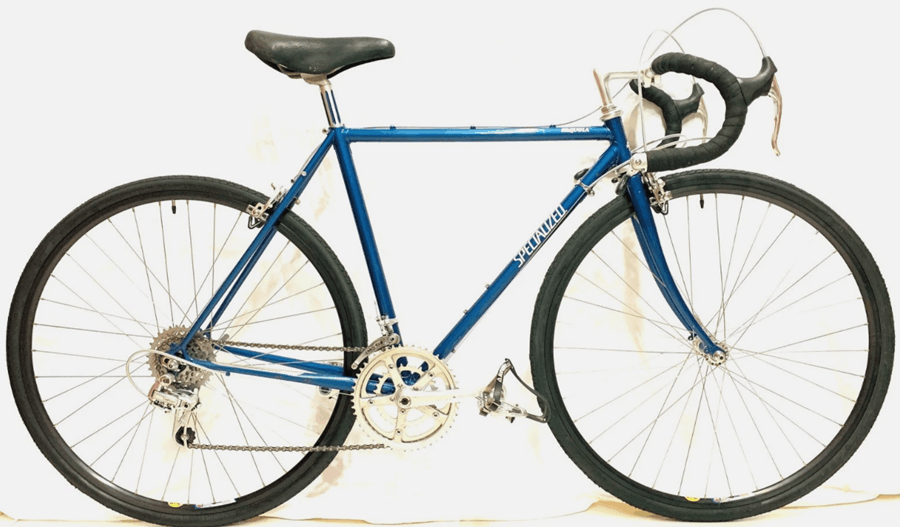
| Quick Answer: This 1981 Specialized Sequoia is a first-batch frame, designed by Tim Neenan and built in Japan by Yoshi Konno’s 3Rensho shop. First-batch bikes are identified by fastback seat stays, cable guides under the bottom bracket, chrome-plated Shimano dropouts, a chrome fork, and a bottom bracket shell stamped with the frame size only — no serial number. This one is a 51cm. |
By James Hickman — Former USA Cycling Expert Coach | Bicycle of the Week: Vintage Japanese Road Bikes | Updated July 2026
A Specialized on a Japanese bicycle site needs one sentence of explanation: the first Sequoias were not built in California. They were built in Chiba, Japan, by Yoshi Konno’s shop — the same hands behind 3Rensho. Specialized designed and specified the bike. Konno brazed it.
1981 was the first year Specialized sold complete bicycles rather than tires and components. The Sequoia was the touring model in that debut lineup, and Tim Neenan drew it. The very first shipment — a few hundred frames — came from Konno before production moved to other Japanese builders. Those first frames are what collectors chase.
Identifying a First-Batch 1981 Sequoia
Four details separate the Konno frames from everything that followed. This bike has all four.
No Serial Number
The first batch left the shop without serial numbers. The bottom bracket shell carries the frame size and nothing else. This one reads 51.
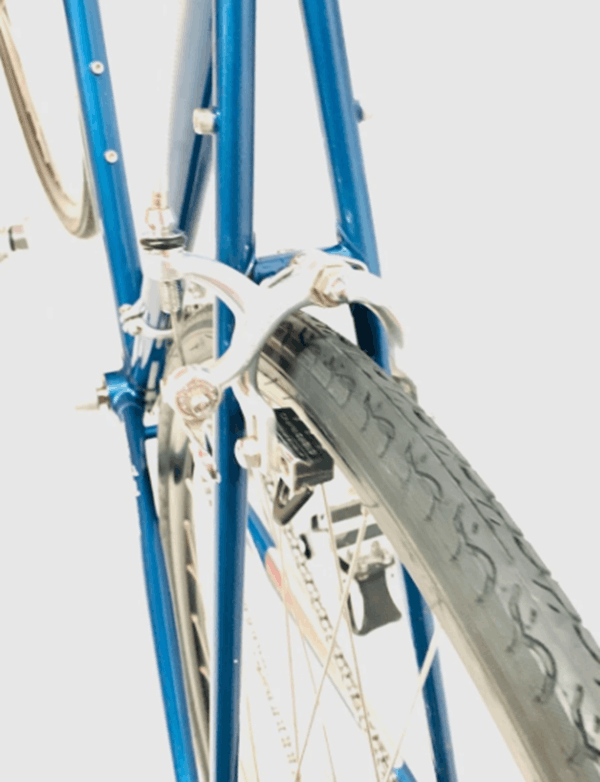
Fastback Seat Stays
The stays wrap tight to the seat lug rather than meeting it in a separate cluster. It is the single fastest way to sort a Konno Sequoia from a later one across a swap meet floor. 1982-and-later frames, redesigned by Jim Merz and built elsewhere in Japan, use a fluted stay treatment instead.
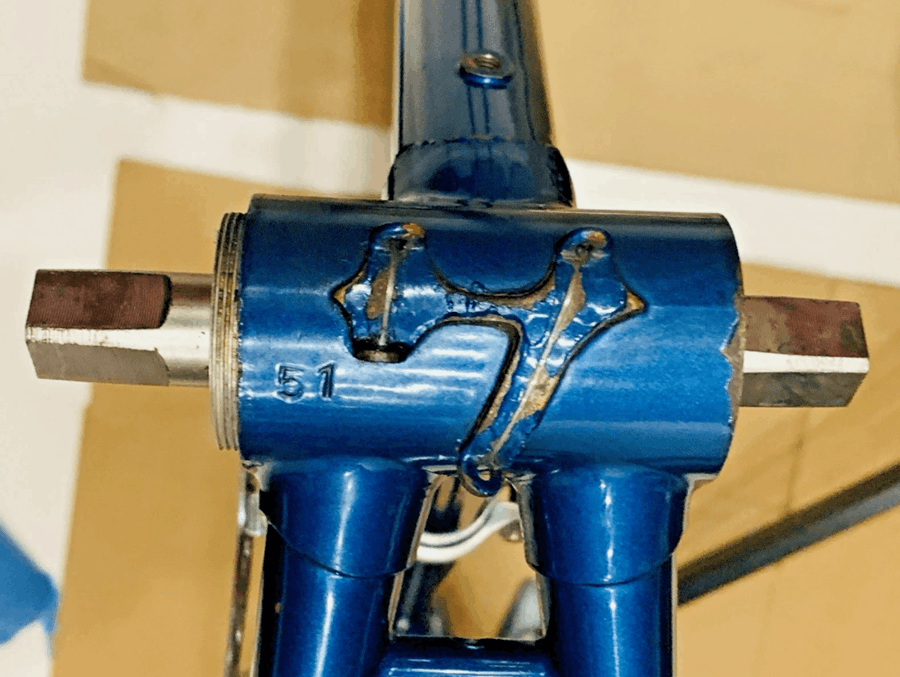
Cable Guides Under the Bottom Bracket
Under-BB routing was not standard practice on production frames in 1981. Konno used the same approach on his own 3Rensho builds, and the guide shape on this Sequoia matches that shop signature.
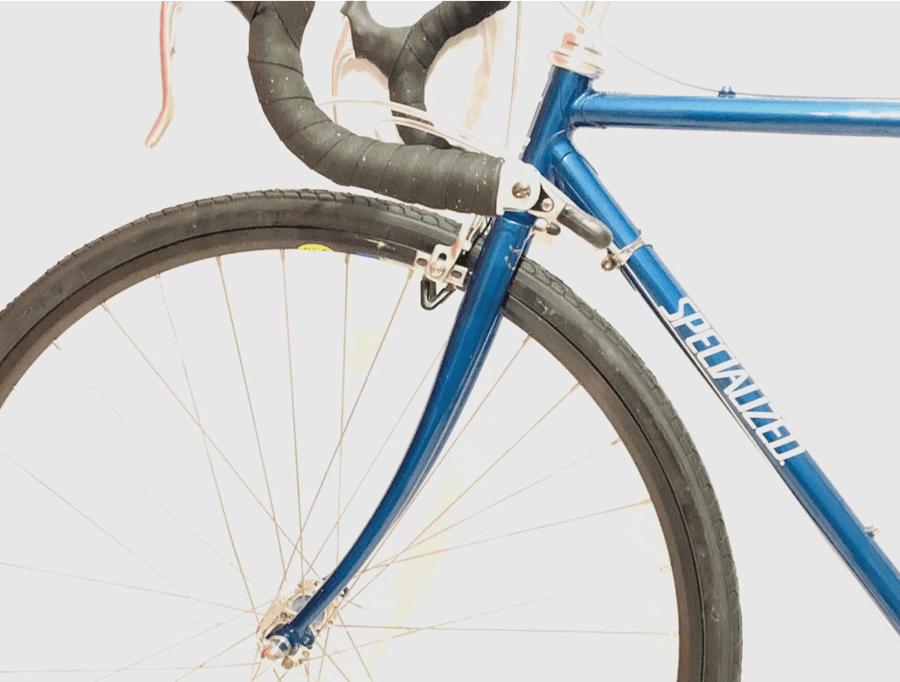
Long, Thin Lugs and a Chrome Fork
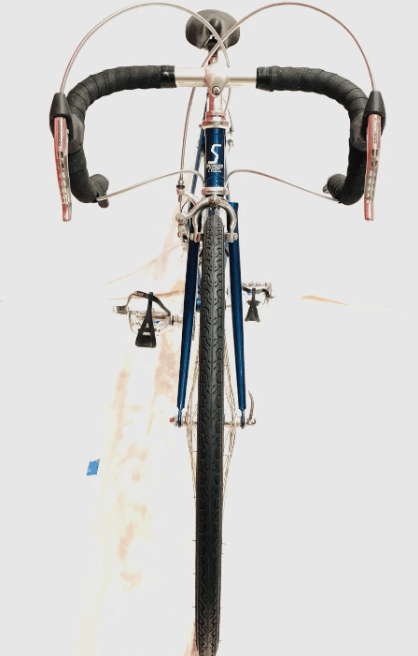
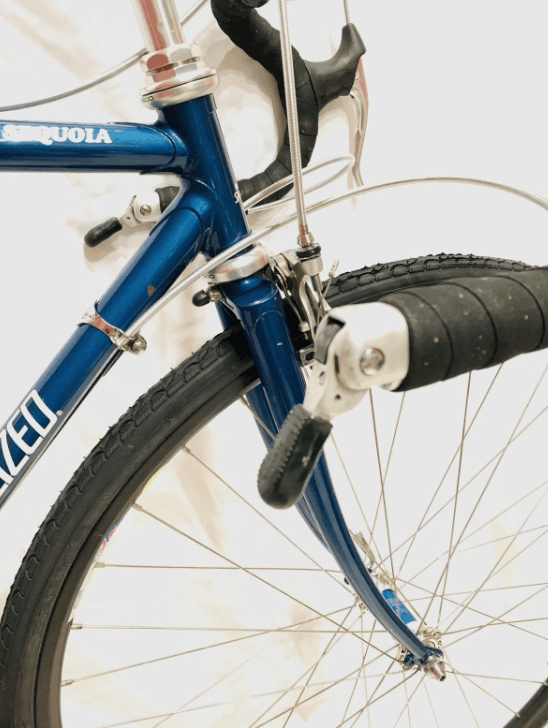
The lugs are long and finely pointed — Konno’s calling card, learned by taking apart 1960s Cinelli frames and rebuilding them. The fork is chrome plated with factory paint over it on this example, with a heart cutout and vent hole, and the frame carries chrome-plated Shimano dropouts.
Decals: An Odd Detail Worth Knowing
The “Specialized” decal appears on both sides of the down tube. The “Sequoia” decal appears only on the right side of the top tube — the left side is blank. A “Designed by Tim Neenan” decal sits on the left chain stay. If a seller tells you the left-side top tube decal fell off, it probably never existed. Mike Sinyard’s own Sequoia hangs in the Specialized museum and shows the same first-generation logo set.
Ride more for less. Check out the great deals on bikes at Bikesonline.
The Build
This is a mixed build drawing from three of the era’s major suppliers, which was normal for a touring bike in 1981 — nobody offered a complete touring group with a wide-range freewheel and the brakes a rider actually wanted.
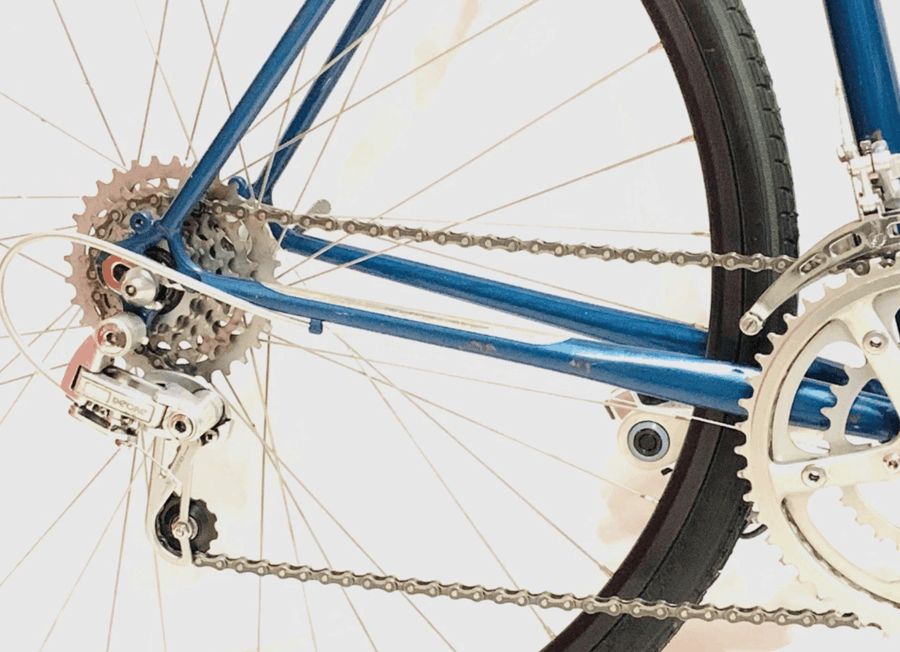
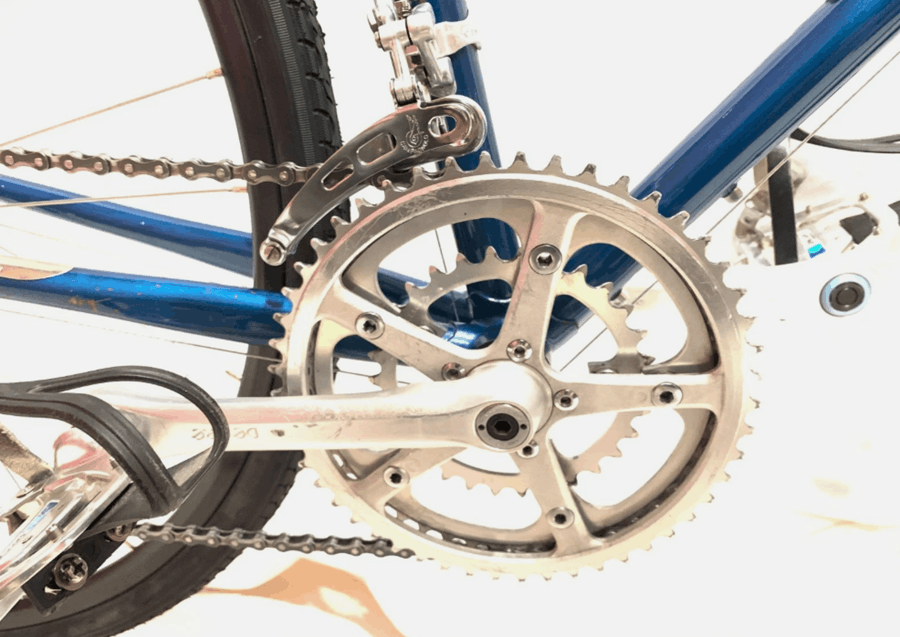
Shimano Deore DE-Series
The crankset (FC-DE20), pedals (PD-DE10) and rear derailleur (RD-DE20) come from Shimano’s Deore group. Deore was Shimano’s first dedicated touring group, developed out of the New 600 EX with better pivot sealing and the Centeron mechanism. Collectors call these parts “Deerhead,” but that badge actually arrived with the group’s later packaging and with Deore XT in 1983 — the first true mountain bike group. Deore’s mountain bike reputation was accidental. It was designed for loaded road touring, and this is exactly the bike it was drawn for. The crankset uses Shimano’s One Key self-extracting crank bolts.
SunTour and Campagnolo
Shifting is handled by SunTour bar-end friction levers feeding a six-speed wide-range freewheel, roughly 14-32T. The front derailleur is a three-hole Campagnolo Record and the brake calipers are Campagnolo Nuovo Record with pad blocks in near-new condition. Brake levers and headset are Shimano 600 — the headset runs cartridge bearings and shows no wear.
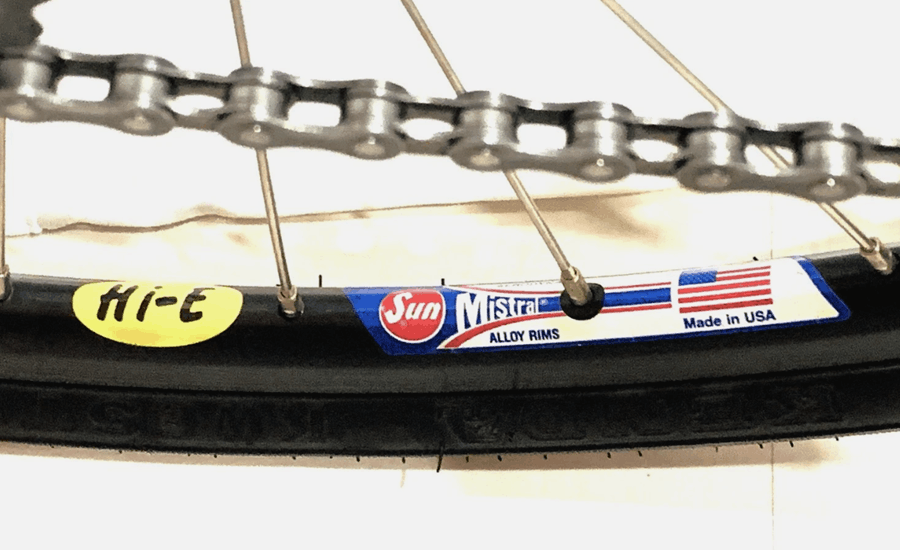
Hi-E Wheels
The wheelset is not original. The current owner had Hi-E build it: Hi-E quick-release hubs, Sun Mistral rims, DT Swiss stainless spokes, and Kenda Kwest 700x28C tires. Factory 1981 Sequoias shipped on 27-inch wheels, so this is a deliberate modernization rather than a period-correct spec. It is worth knowing which one you are buying.
Cockpit and Finishing Kit
Cinelli bars and stem with fresh black cork tape, a Selle San Marco leather saddle, and an SR Laprade fluted seatpost with color-matched flutes — most likely original to the bike. The bottom bracket is unidentified: plated spindle, not Shimano, the tool does not fit, and it spins smoothly.
Frame Measurements
Approximate, taken from the bike:
| Seat tube (c-t) | 510mm / 20″ |
| Top tube (c-c) | 525mm / 20.5″ |
| Down tube (c-c) | 620mm / 24.5″ |
| Head tube | 89mm / 3.5″ |
| Chainstay | 430mm / 17″ |
| Seatstay | 515mm / 20.25″ |
| Wheelbase | 1010mm / 39.75″ |
| BB height | 270mm / 10.75″ |
| Standover | 770mm / 30.5″ |
| Stem length | 100mm / 4″ |
Riding a 45-Year-Old Six-Speed
One thing to understand before riding this bike: the chain line tolerances on a 1981 six-speed friction drivetrain are nothing like a modern eleven or twelve-speed. Avoid cross-chaining — small ring to small cog, or big ring to big cog. On a drivetrain this old, cross-chaining causes noise, accelerated wear, and can jam the chain in the rear derailleur cage. That is how cages get bent and derailleur hangers get pulled. Use the middle of the range and shift the front when you run out.
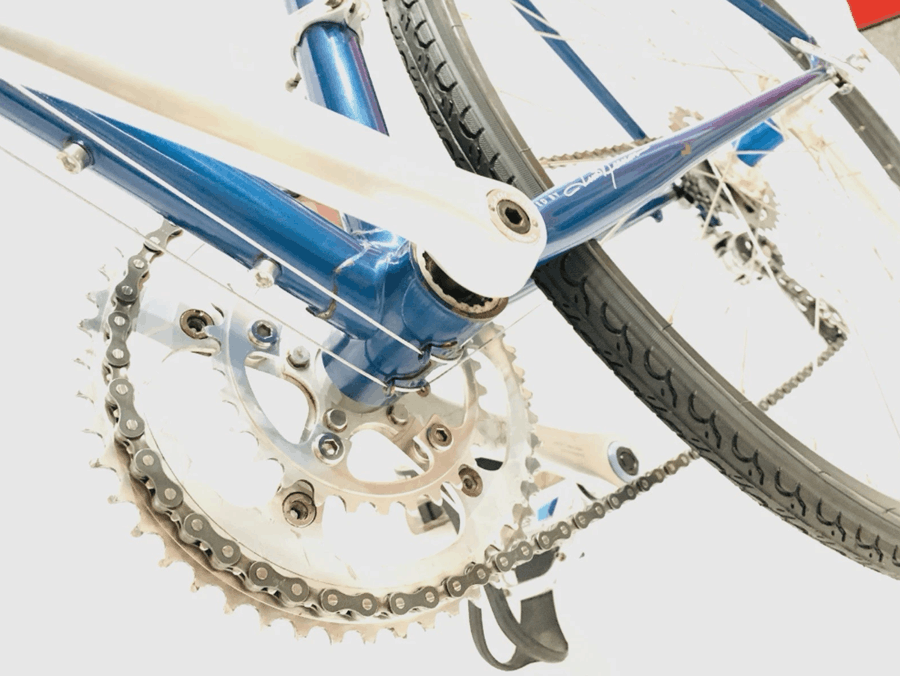
Condition
The bike has been through a full tune-up and cleaning with new tires, cable housings, DiaCompe brake hoods, and bar wrap. Paint shows minor scratches and chips at the usual contact points, which is what 45 years of honest use looks like. Cables, housing, tape and hoods are the consumables that decide whether a vintage bike is pleasant or miserable to ride — worth spending on. Competitive Cyclist carries the housing and cork tape I use on builds like this.
It comes with spare genuine Campagnolo brake pad refills, bottle cages, extra chrome steel toe clip cages, a frame pump, and a seat pack kit.
Why It Matters
Konno built Specialized frames for a short window that ended around 1983. He built road, track, and fewer than ten funny bikes. In 1995 a car accident left him paralyzed, and no new 3Rensho frames will ever exist. A Konno-built Sequoia is a Japanese masterbuilder’s work wearing an American decal — and most people walk past it because the down tube says Specialized.
Frequently Asked Questions
Who built the 1981 Specialized Sequoia?
The first batch was built in Japan by Yoshi Konno’s shop, the builder behind 3Rensho, to a design by Tim Neenan. Later 1982-and-onward Sequoias were redesigned by Jim Merz and built by other Japanese manufacturers.
How can you tell a first-batch Sequoia from a later one?
Look for fastback seat stays, cable guides under the bottom bracket, long thin pointed lugs, a chrome-plated fork, chrome Shimano dropouts, and a bottom bracket shell with no serial number. Later frames use a fluted seat stay treatment and different decals.
Does a 1981 Specialized Sequoia have a serial number?
The first batch does not. The bottom bracket shell is stamped with the frame size only. A missing serial number on an early Sequoia is a positive identifier, not a red flag.
What components came on the early Sequoia?
Builds varied. This example runs Shimano Deore DE-series crankset, pedals and rear derailleur, SunTour bar-end friction shifters with a six-speed wide-range freewheel, Campagnolo front derailleur and Nuovo Record calipers, and Shimano 600 levers and headset.
Is a Specialized Sequoia a Japanese bicycle?
The early ones are. Specialized designed and specified the bike in California, but the first-batch frames were brazed in Japan by a Japanese masterbuilder, which puts them squarely in the Japanese frame building tradition.
James Hickman is a former USA Cycling Expert-level coach who has worked with cyclists at every level, from beginners to competitive racers. He served as a coach for the Leukemia & Lymphoma Society’s Team In Training program, helping riders prepare for and complete century events. A Masters-category racer himself, he competed and earned podium finishes in Southern California events and holds a Platinum finish at El Tour de Tucson, completing the 100+ miles in under five hours.
Related Reading

Sponsored · Competitive Cyclist
We are an Amazon affiliate and earn from qualified Amazon purchases with no cost to you. This is for ANY product that you purchase through our links. We are also an affiliate for Competitive Cyclist and JensonUSA. This way we can provide you with competitive pricing and products.