Categories
Japanese Road Bikes

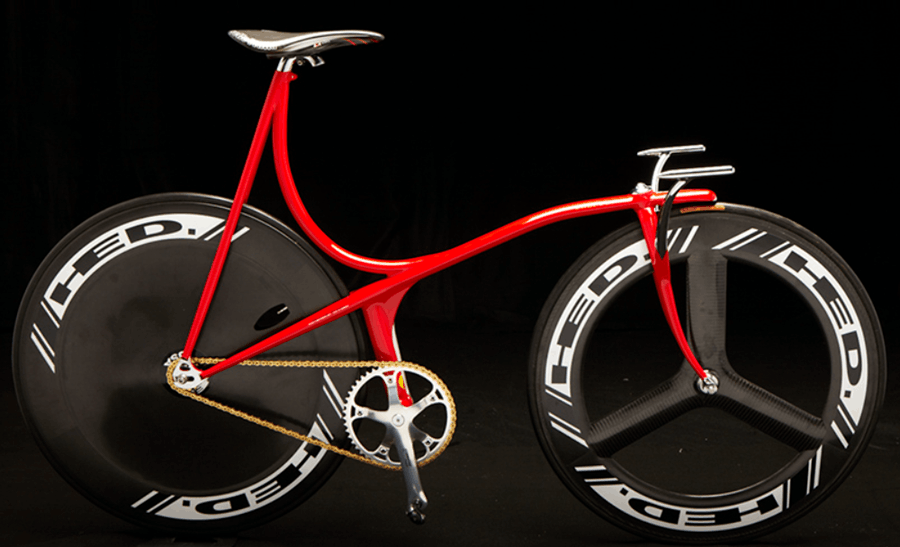
Cherubim Silver Flyer Track Bike

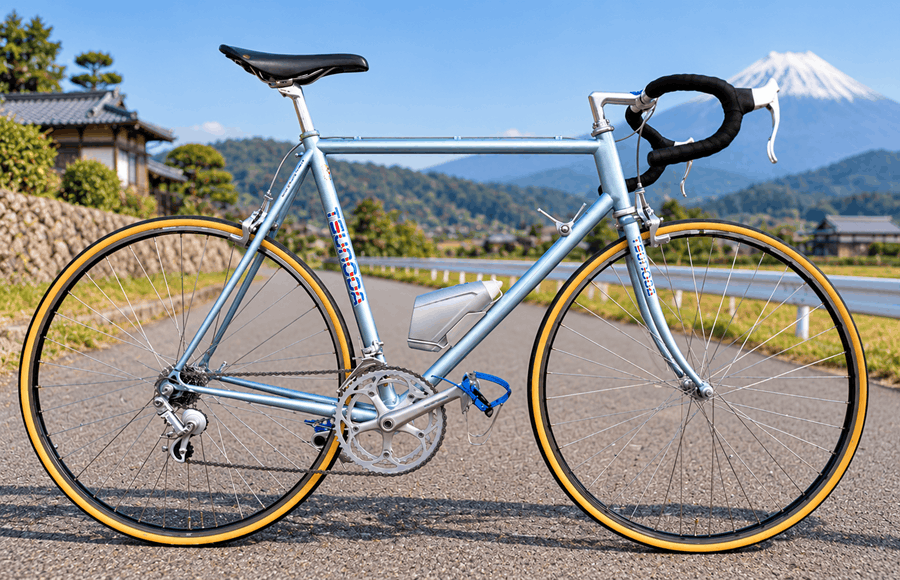
Quick Answer: The Cherubim Silver Flyer is a hand-brazed steel track frame built by Cherubim, the Machida, Tokyo workshop founded in 1965 by Hitoshi Konno and now led by his son, Shinichi Konno. It belongs to Cherubim’s Track lineup, built to order from steel tubing with a 1-inch chromoly bent fork, and reflects the same welding and geometry philosophy that produced Japan’s 6th-place 1000m TT frame at the 1968 Mexico Olympics.

By James Hickman, former USA Cycling Expert-level coach and Masters-category racer
Amazon Affiliate I earn from qualified purchases

A Half-Century of Frame Building in Machida

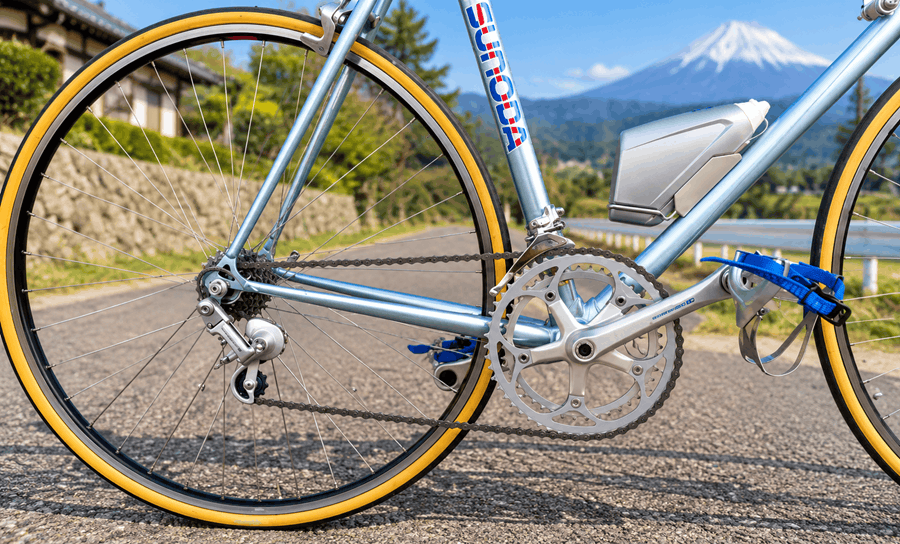
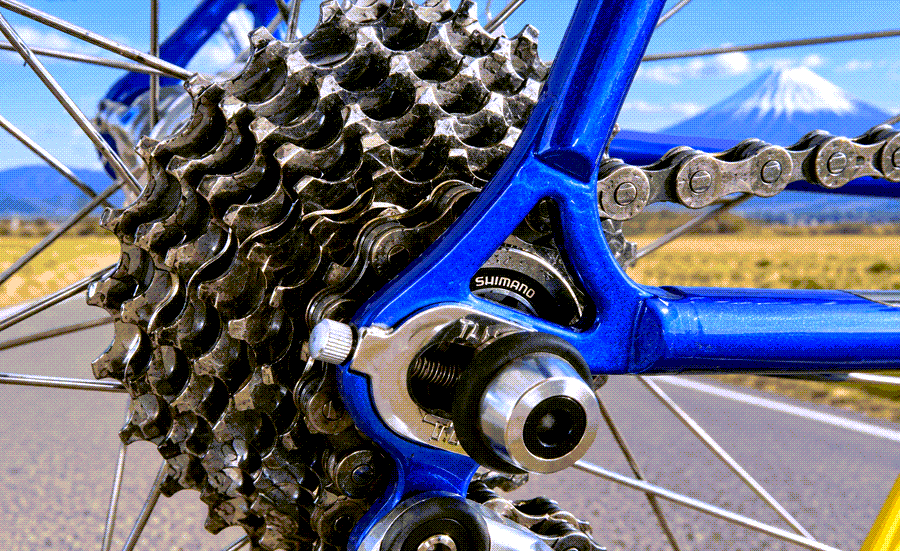
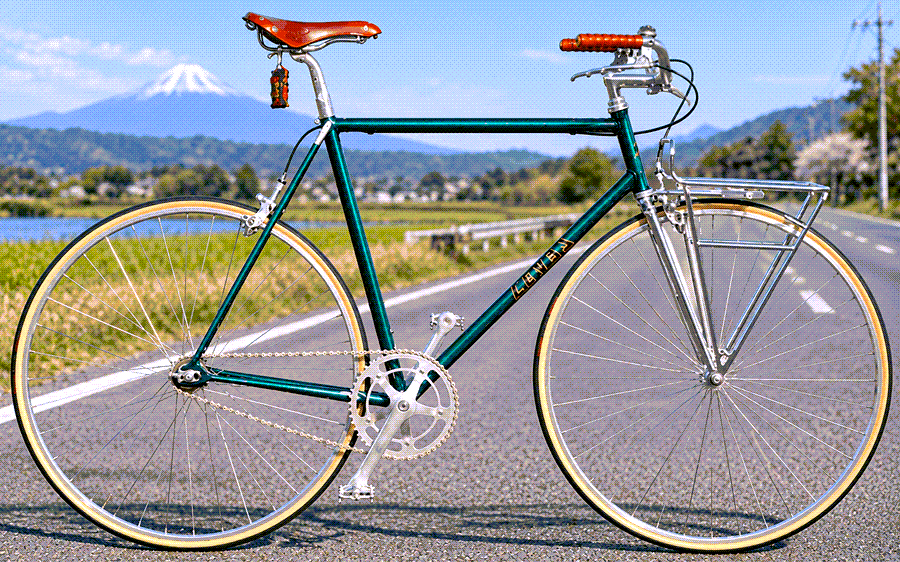
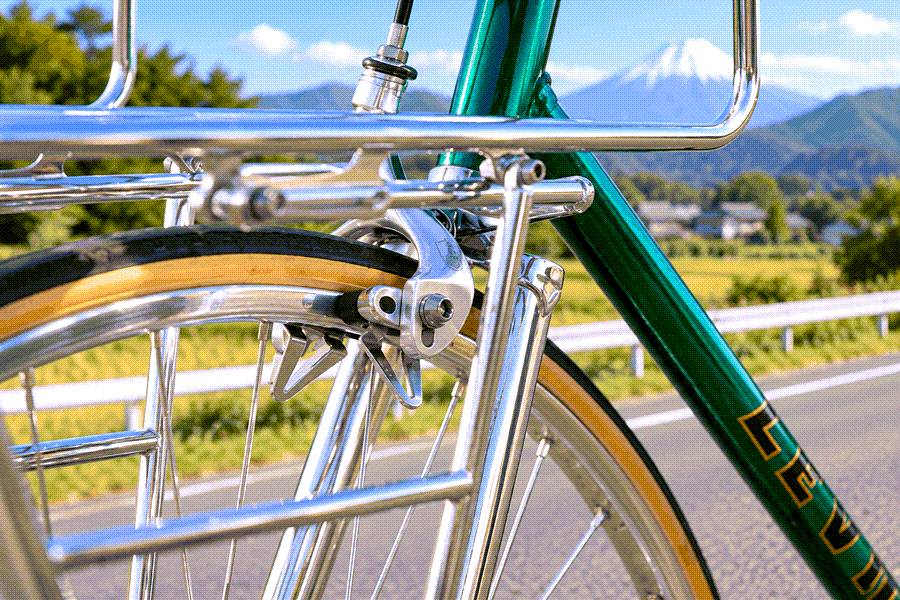
Cherubim Silver Flyer right side

Japanese Steel Book
Amazon Affiliate

Cherubim isn’t a bike brand in the way most riders think of one. It’s a small workshop in Machida City, Tokyo, where Shinichi Konno and a handful of staff braze steel frames by hand, largely to individual order. The shop’s roots trace back to 1965, when founder Hitoshi Konno built a frame that helped set a Japanese national record — 6th place in the 1000m time trial at the 1968 Mexico City Olympics, an early proof point that Cherubim was a serious track builder, not just a custom-frame novelty shop.

What’s Under the Silver Paint

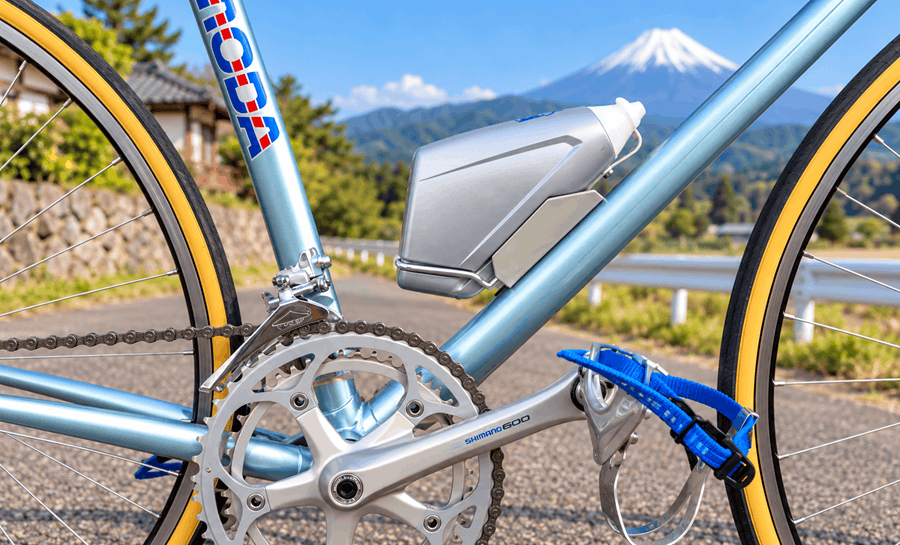
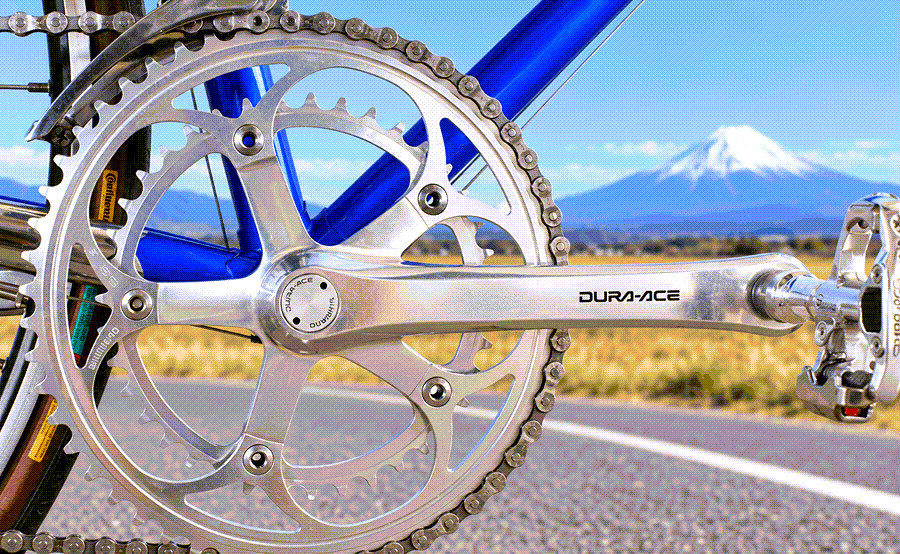
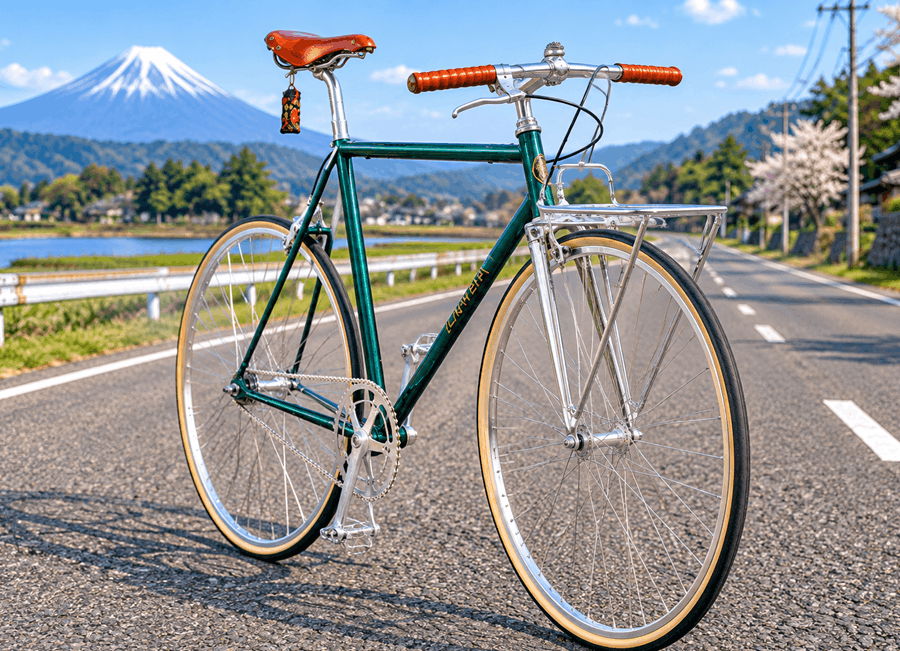
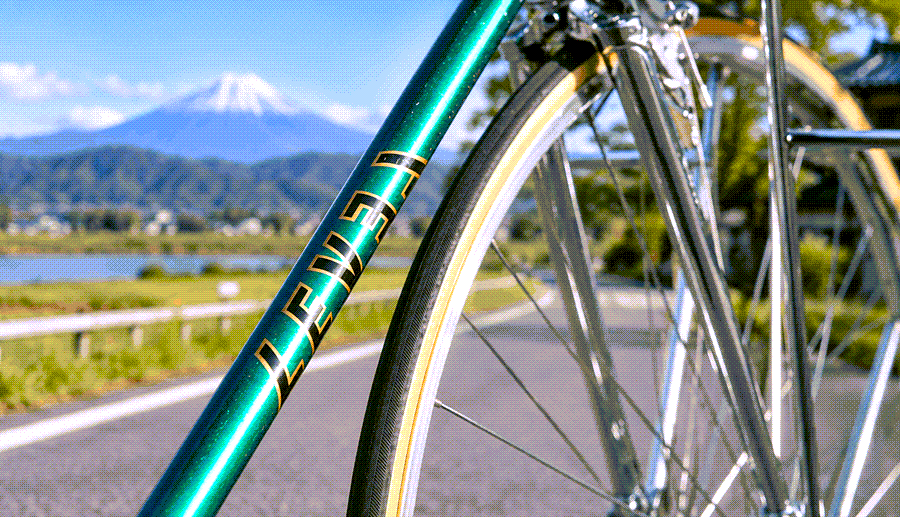
Cherubim Silver flyer track bike

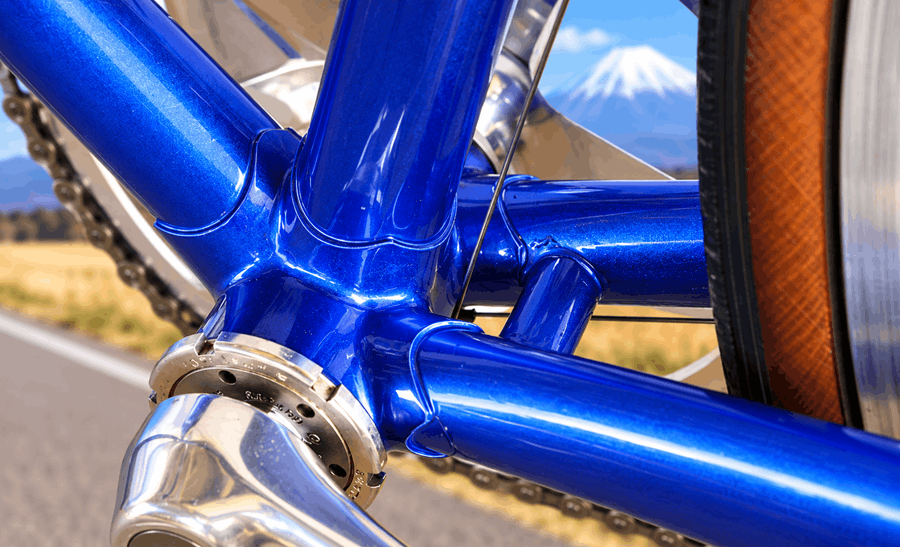
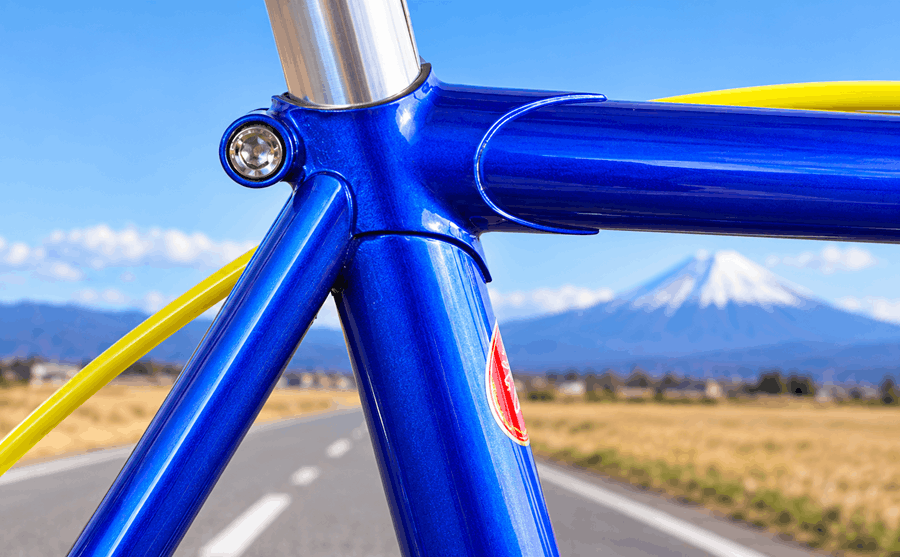
A lot of that cost goes into details most factory-built frames skip entirely. Cherubim machines its own dropouts and sleeve work in-house, rather than buying stock parts off the shelf, so the small connection points on the frame are treated with the same attention as the main tubes. The shop’s move into mixing its own paint follows the same logic — a finish like Silver Flyer isn’t a catalog color option, it’s part of a build process the workshop controls start to finish. As with all Cherubim builds, geometry and tubing are matched to the individual rider, so a “Silver Flyer” isn’t a single fixed spec — it’s a paint and build designation within a frame built to your numbers.

What’s Under the Silver Paint

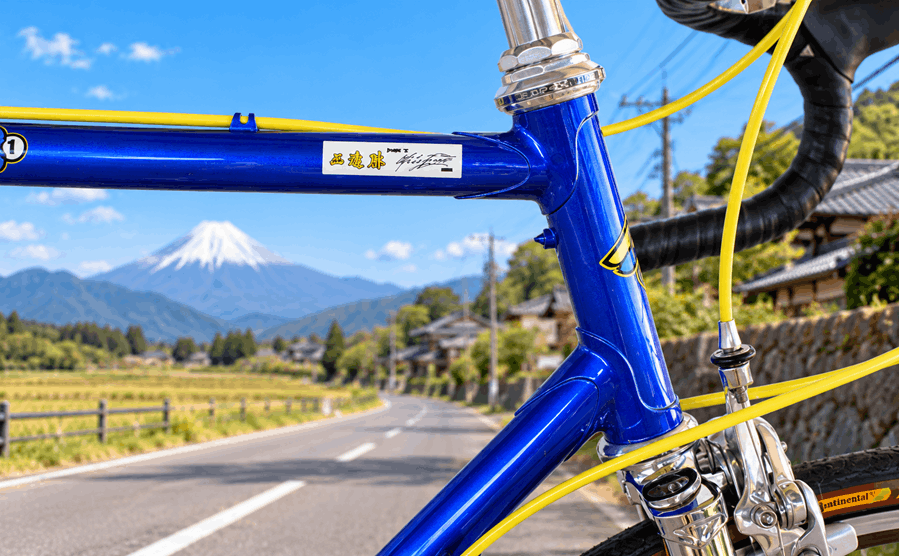
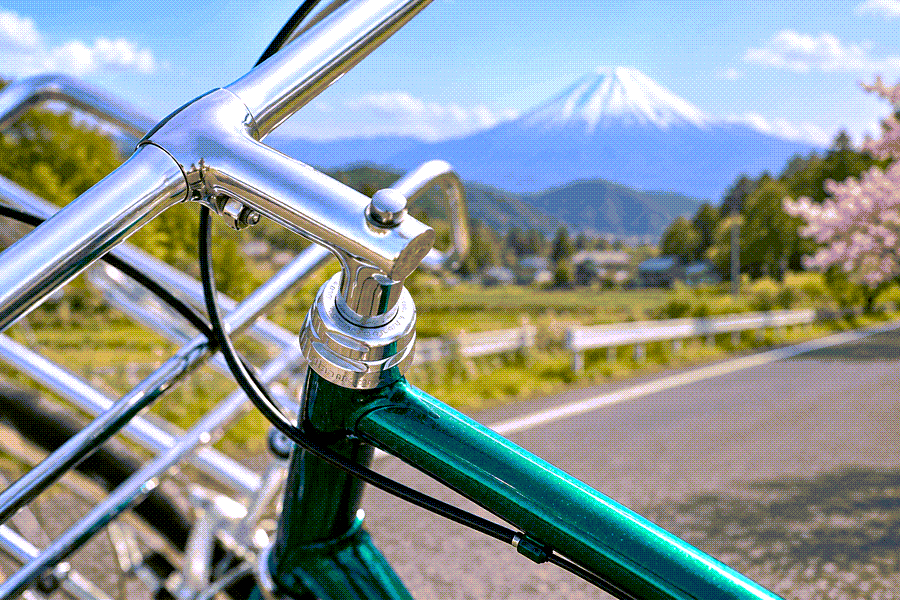
Cherubim Silver Flyer cockpit

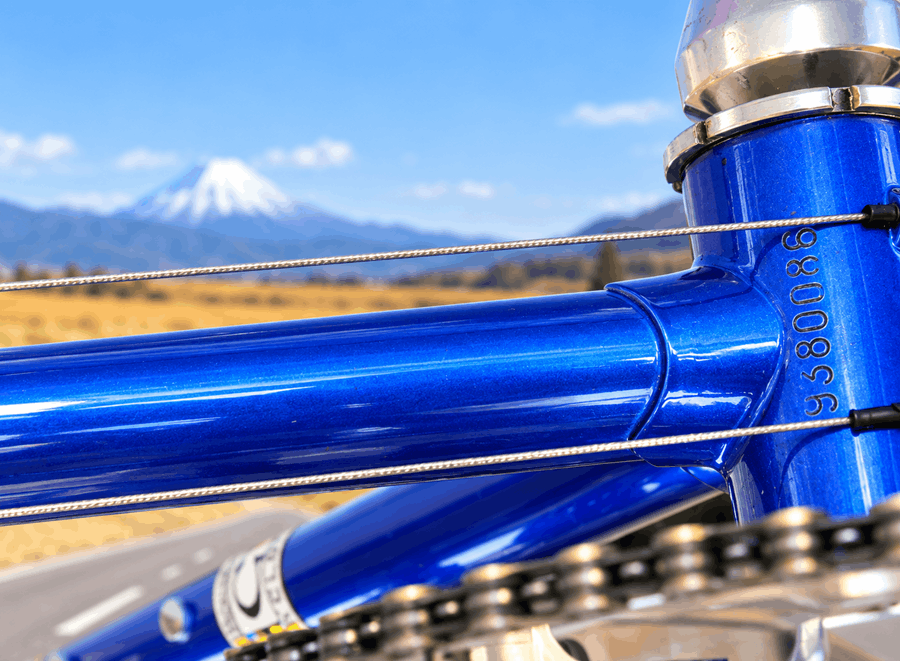
Cherubim’s Track frame line is built from steel tubing and paired with a 1-inch chromoly bent fork. Base pricing for the Triple Crown track frameset runs ¥330,000 including VAT, though final cost depends on tube choice, lug work, and paint specification — Cherubim publishes a detailed spec sheet for buyers who want to see exactly what they’re paying for at each tier. As with all Cherubim builds, geometry and tubing are matched to the individual rider, so a “Silver Flyer” isn’t a single fixed spec — it’s a paint and build designation within a frame built to your numbers.

Cherubim’s Track Pedigree Beyond the Olympics

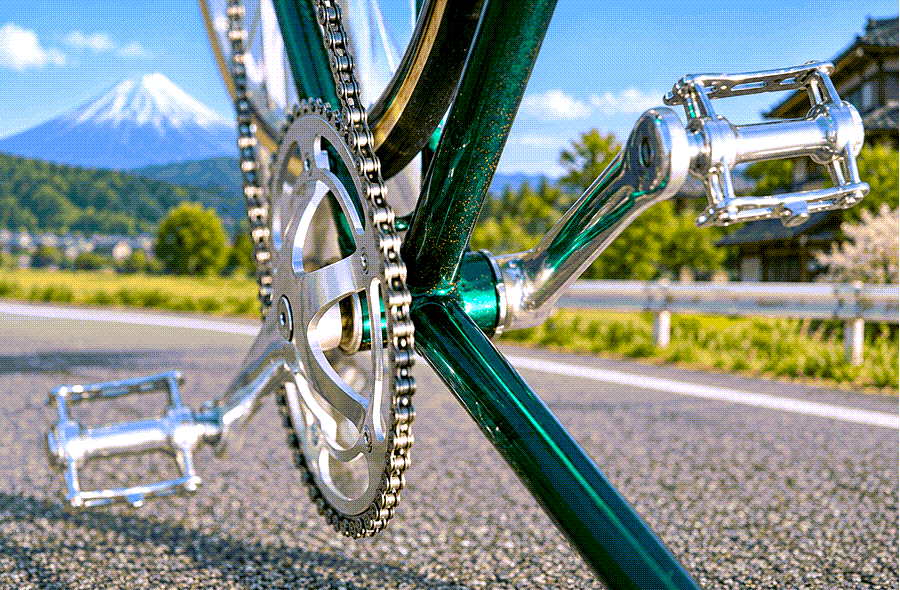
Cherubim Silver Flyer seatpost

The 1968 Olympic result wasn’t a one-off. Track racing has stayed part of Cherubim’s identity for decades since, and the shop’s Track lineup — including the Triple Crown frameset the Silver Flyer belongs to — reflects lessons carried over from building for velodrome racing rather than road use. Stiffness under hard sprint efforts, precise rear-triangle geometry for fixed-gear handling, and a fork built to hold its line at speed are all things a shop with track-racing roots tends to get right by default, rather than as an afterthought bolted onto a road platform.

Riding a Cherubim Track Frame

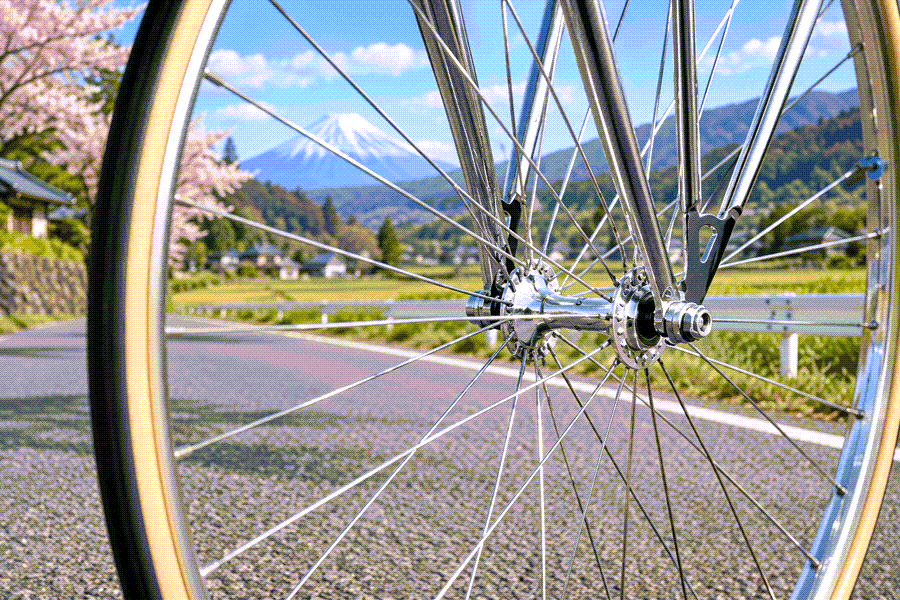
Cherubim Silver Flyer

Steel track frames built this way tend to share a family trait: a stiff front triangle for sprint efforts, paired with just enough compliance in the rear to keep the ride from feeling punishing over a long session on boards or concrete. Because Cherubim builds to the rider rather than to a size chart, the handling characteristics — quick or stable, low or upright — are a conversation with the builder rather than a spec you pick off a menu.

That’s a different experience than most riders are used to coming from a road frame. A dedicated track bike has no brakes, no freewheel, and a much tighter relationship between rider input and what the bike does — there’s no coasting to mask a geometry mismatch. On a custom-fit frame like the Silver Flyer, that directness is the point: every angle is chosen for how you actually ride, not for how a stock frame accommodates an average rider.

How to Order a Cherubim

Cherubim sells direct from Japan — in person, by email, or by video call — and also works through distributors in Indonesia, the Philippines, Thailand, and Canada. Buyers outside those regions order directly with the Machida workshop. Communication is available in Japanese and English, and international buyers can pay via PayPal, while domestic customers can use bank transfer, PayPay, or major credit cards.

Is the Silver Flyer Worth It?

A Cherubim isn’t a bike you buy for the badge. It’s a bike you buy because you want a track frame brazed by a shop with a 1968 Olympic pedigree, built to your exact riding position, and finished in a paint the shop mixes itself. That’s a different value proposition than a production track frame — slower, more expensive, and more personal. For riders who want a frame that fits like nothing off a rack, it’s hard to find a more credible Japanese track builder.

Frequently Asked Questions About the Cherubim Silver Flyer Track Bike

What tubing does the Cherubim Silver Flyer use?
It’s built from steel tubing as part of Cherubim’s Track frame line, with final tube selection matched to the rider and build spec.

How much does a Cherubim track frame cost?
The Triple Crown track frameset starts at ¥330,000 including VAT, with final price depending on paint and craftsmanship level.

Can I order a Cherubim outside Japan?
Yes. Cherubim ships direct to countries without a distributor, and works through distributors in Indonesia, the Philippines, Thailand, and Canada.

Who builds Cherubim frames today?
Shinichi Konno, son of founder Hitoshi Konno, leads the Machida workshop, continuing the shop’s custom steel philosophy.

Related Reading

3Rensho Super Record

Bicycle of the Week

3Rensho Super Record: A Japanese Racing Icon

Koga Miyata Full Pro-A

Bicycle of the Week

Koga Miyata Full Pro-A: Dutch-Japanese Engineering

Maruishi Emperor

Bicycle of the Week

Maruishi Emperor: Japan’s Forgotten Flagship

Sponsored · Competitive Cyclist

Competitive Cyclist
Gear, bikes & nutrition — check current sales.

Browse All Deals →

Gear Up

Apparel
Kit for any condition.

Shop Bikes

Bikes
Road, gravel & more.

Shop Now

Tools
Keep your ride dialed.

Fuel Up

Nutrition
Fuel for race day.

We are an Amazon affiliate and earn from qualified Amazon purchases with no cost to you. This is for ANY product that you purchase through our links. We are also an affiliate for Competitive Cyclist and JensonUSA. This way we can provide you with competitive pricing and products.
Categories
track bicycle

Ravanello Track Bicycle: By S.Takamura

Quick Answer: The Ravanello track bicycle is a fully custom, hand-built frame from Ravanello (Bicycle Engineering Pro Shop Takamura Manufacturing Co.), founded by former Japanese track athlete Seiichi Takamura in Tokyo’s Nerima Ward. This build uses Tange steel with NJS-certified Sugino 75 crankset and Nitto handlebars and stem — the same certification standard required for Japanese keirin racing.

By James Hickman, former USA Cycling Expert-level coach and Masters-category racer
Amazon Affiliate I earn from qualified purchases

Special thanks to eBay’s satansmothers09 for the images and bike specs referenced in this article.

Japanese Steel Book
Amazon Affiliate

I feature builds like this one because I’ve spent years with my hands on Japanese steel — you can see the restorations and component teardowns on my Bicycle Restoration Man YouTube channel. The Ravanello isn’t one I’ve personally restored, but the Tange tubing, NJS hardware, and build quality on display here are the same things I look for — and look at closely — on every bike that comes through my own shop.

Ravanello track bicycle

Who Builds the Ravanello Track Bicycle

This Ravanello track bicycle is this week’s Japanese Bicycle of the Week. Ravanello — officially Bicycle Engineering Pro Shop Takamura Manufacturing Co. — has built fully custom track and road frames one at a time since the workshop opened in 1977 under the phrase “Ravanello for Ride.” The pro shop that preceded it opened three years earlier, in 1974.

Ravanello builds road, track, randonneur, mini-vélo, and tandem frames in steel, aluminum, and carbon, each tailored to the rider ordering it. The aluminum and carbon frames are made in Italy, while steel builds — like the track bike featured here — stay in-house in Japan.

Ravanello bicycle shop storefront

Building or restoring a track bike of your own? JensonUSA stocks the fixed-gear cranksets, track hubs, and NJS-adjacent parts that keep a build like this one true to form. Shop track bike components at JensonUSA →

The Visionary Behind Ravanello Bicycles: Seiichi Takamura

Seiichi Takamura, born March 1, 1943, founded Ravanello. A former top-level track athlete who represented Japan at the Asian Games during his university years, Takamura opened his bike shop in 1974 and began building frames in 1977. He is self-taught in frame construction — a fact that makes his reputation among Japanese track riders, and the nickname “Riding Ravanello,” more notable rather than less.

Seiichi Takamura, founder of Ravanello Bicycles

Track Bicycle: A Legacy of Excellence and Passion

Takamura’s frames are known among elite Japanese riders for their light weight and cornering feel. He also runs Team Ravanello, a club team with three Tour de Hokkaido wins to its name. The brand takes its name from the Nerima daikon radish — “Ravanello” is Italian for radish — a nod to the shop’s home in Tokyo’s Nerima Ward.

Sourcing period-correct saddles or seatposts for a project like this can take weeks of eBay hunting. JensonUSA carries modern equivalents from Selle, Fizik, and others if you’d rather ride than wait. Browse saddles and seatposts at JensonUSA →

Ravanello track bicycle detail

Built with Tange Steel

This track bicycle is built from Tange steel, a tubeset chosen for its strength-to-weight balance rather than for cost. Steel of this quality holds up to intricate lug work without giving up the responsiveness a track frame needs, which is part of why it remains a preferred material for serious track builders decades after aluminum and carbon became mainstream elsewhere.

Ravanello track bicycle chainstay detail

Tange Headset

The Tange headset handles steering duty. It’s a straightforward, well-made component — precise, durable, and built to take repeated track-standing and hard cornering without developing play.

Tange headset on Ravanello track bicycle

Sugino 75 NJS Crankset

The Sugino 75 NJS crankset is built and certified to NJS (Nihon Jitensha Shinkokai) standard — the spec Japanese keirin racing requires of every component on a sanctioned track bike. That certification means the crankset has passed testing most consumer parts never see, which is a large part of why NJS components carry a premium and a following well outside keirin racing itself.

Sugino 75 NJS crankset on Ravanello track bicycle

Nitto NJS Handlebars and Stem

The Nitto NJS handlebars and stem are the other NJS-certified components on this build. Nitto’s reputation in track cycling rests on decades of consistent, minimal-flex construction — not marketing — which is why the brand shows up on nearly every serious Japanese track build, Ravanello’s included.

Nitto NJS stem on Ravanello track bicycle

Dura-Ace Aero Seatpost and Kashimax Aero Saddle

A Dura-Ace aero seatpost and Kashimax aero saddle finish the cockpit. The pairing keeps the rider’s position low and adjustable without adding drag — a small detail, but on a track bike built for speed, exactly the kind of detail that matters.

Kashimax aero saddle and Dura-Ace seatpost on Ravanello track bicycle

If you enjoyed learning about this week’s featured bicycle, don’t miss out on more classic bike content. Visit our other site, pacelinebikes.com, for cycling information you can use. And check out our YouTube channel, Bicycle Restoration Man, for restoration videos and finished builds. Subscribe and join the community.

Frequently Asked Questions About the Ravanello Track Bicycle

Who built the Ravanello track bicycle?
Seiichi Takamura, a former top-level Japanese track athlete, built it. He opened his bike shop in 1974 and began framebuilding under the Ravanello name in 1977, and is self-taught in frame construction.

Is the Sugino 75 crankset on this bike NJS-certified?
Yes. The Sugino 75 crankset and the Nitto handlebars and stem are all NJS-certified, meaning they meet the standard required for Japanese keirin racing.

What does “Ravanello” mean?
Ravanello is Italian for radish. The name refers to the Nerima daikon radish, a nod to the brand’s home in Tokyo’s Nerima Ward.

What does “NJS certified” mean on a track bike component?
NJS certification comes from the Nihon Jitensha Shinkokai, Japan’s keirin racing authority. A component earns it by passing strength and durability testing beyond typical consumer standards, which is why NJS-stamped parts like the Sugino 75 crankset and Nitto handlebars carry a premium among collectors and racers alike.

Related Reading

Cherubim Air Line

Track Bicycle

Cherubim Air Line: A Handmade Steel Aero Frame Built for the Velodrome

3Rensho Super Record Export

Brand History

3Rensho Super Record Export Aerodynamics: Konno’s 1980s Original

TOEI Randonneur

Brand History

TOEI Randonneur: This Week’s Featured Japanese Bicycle

Sponsored · Competitive Cyclist

Competitive Cyclist
Gear, bikes & nutrition — check current sales.

Browse All Deals →

Gear Up

Apparel
Kit for any condition.

Shop Bikes

Bikes
Road, gravel & more.

Shop Now

Tools
Keep your ride dialed.

Fuel Up

Nutrition
Fuel for race day.

We are an Amazon affiliate and earn from qualified Amazon purchases with no cost to you. This is for any item you were going to buy anyway, purchased through any of our links. We are also an affiliate for Competitive Cyclist and JensonUSA. This lets us provide competitive pricing and products while supporting the site. Thank you for your support!

Categories
Japanese Road Bikes

PANASONIC BICYCLE PICS TITANIUM 1988

Quick Answer: The Panasonic PICS (Panasonic Individual Custom System) was a semi-custom bicycle program launched in 1987 that let riders select frame material (including titanium), groupset, and one of roughly 1,000 paint combinations, then receive a made-to-order bike from Japan in two to six weeks. The 1988 titanium PICS model shown here remains one of the most sought-after Panasonic bikes among collectors for its aerospace-grade tubing and factory-direct customization.

Special thanks to the Panasonic Bike Museum and Darin Nederhoff for the images used in this article.
Amazon Affiliate I earn from qualified purchases

Panasonic Titanium cockpit

Japanese Steel Book
AMAZON AFFILIATE

This week’s Japanese Bicycle of the Week is a 1988 titanium Panasonic built through the company’s PICS program — a system that, for a brief window in the late 1980s, let an ordinary rider spec a bike closer to a custom framebuilder’s order form than anything else on a shop floor. Introduced in 1988, the Panasonic PICS system represented a genuine leap forward for off-the-shelf bicycles: it married mass-production speed with individual measurements, component choice, and paint. Constructed from aerospace-grade titanium, the frame was prized for a strength-to-weight ratio that steel simply couldn’t touch at the time, and for a ride quality that riders of the era described as noticeably smoother over rough pavement than comparable steel frames.

What Was the Panasonic PICS System?

PANASONIC BICYCLE PICS TITANIUM Seat Post

Panasonic Corporation, founded in 1918 by Konosuke Matsushita, built its early reputation on electronics and household appliances before expanding into automotive components, batteries, industrial equipment, and — starting in the 1950s — bicycles. By the mid-1980s, Panasonic’s bicycle division had the manufacturing precision to attempt something few competitors could: true build-to-order production at scale.

PANASONIC BICYCLE PICS TITANIUM saddle and seat stays

That effort became reality in 1987, when Panasonic introduced their PICS program (Panasonic Individual Custom System), giving customers the ability to spec a high-quality custom bicycle through their local dealer rather than ordering from a boutique framebuilder. Turnaround ran two to six weeks — remarkably fast for the era. Participating shops were equipped with a VHS player that ran a factory tour video, walking customers through exactly how their bike would be built before they ever signed an order form.

Sponsored

Restoring or riding a vintage frame? Competitive Cyclist stocks the modern parts that keep a classic build rolling.

Shop Competitive Cyclist →

Titanium vs. Steel: The Two PICS Frame Options

PANASONIC BICYCLE PICS TITANIUM Top Tube

The first step in a PICS order had customers choosing their bike style — road, mountain, or time trial — and then their frame material: steel or titanium. Sizing ran across a wide range for both mountain and road platforms, so the “semi-custom” claim held up in practice, not just in the brochure. Titanium commanded a premium over steel but delivered the lighter, more compliant ride that made the 1988 model, in particular, a standout among PICS-era bikes.

Components and Paint: Building a One-of-a-Kind Panasonic

PANASONIC BICYCLE PICS TITANIUM Head tube

The customization extended to the group set as well as the frame. Mountain builds could be speced with either of two Shimano mountain component tiers, while road builds offered a real ladder to climb: Shimano 105, 600, Sante, or Dura-Ace. Paint was equally deep. A glossy dealer brochure displayed single, dual, and tri-color schemes alongside a wide range of stripe, panel, and fade treatments — enough that no two PICS orders needed to look alike.

In fact, bike shops kept roughly a thousand different paint combinations on hand as sample tubes so a customer could see the actual finish, not just a printed swatch, before committing. Panasonic pushed personalization further than most manufacturers dared: each PICS bike could carry up to 12 laser-etched characters on the stem, or a silkscreened name on the top tube — a level of detail closer to a track bike commissioned from a Japanese keirin builder than anything typically found on a production frame.

Ordering Process: Fax Machines, VHS Tapes, and FedEx Delivery

PANASONIC BICYCLE PICS TITANIUM bottom bracket

Once finalizing all selections, the shop used a dedicated Panasonic fax machine to transmit the order form directly to Japan — cutting-edge logistics technology for 1988, when most bike orders still moved by mail or phone. After a short production window, the finished bike arrived by Federal Express, completing what was, for its era, a remarkably fast and personalized build-to-ship pipeline.

Why the 1988 PICS Titanium Still Matters to Collectors

PANASONIC BICYCLE PICS TITANIUM drive train

The 1988 Panasonic PICS titanium is long out of production, but its influence on how manufacturers think about customization hasn’t faded. It’s an early, tangible example of mass-customization done right — years before “build your own bike” configurators became a standard part of any brand’s website. Collectors and restorers seek these frames out today specifically because titanium ages well: unlike steel, it doesn’t rust, so a well-kept PICS frame from 1988 can still ride true nearly four decades later.

To this day, cycling enthusiasts actively seek out, restore, and preserve these vintage PICS models. Panasonic’s legacy in the cycling world endures as a case study in what a manufacturer can pull off when it treats customization as a real engineering problem rather than a marketing gimmick — a period when pioneering materials and meticulous, per-order design briefly changed how riders could get a bike built.

Frequently Asked Questions

What was the Panasonic PICS system?

PICS (Panasonic Individual Custom System) was a build-to-order bicycle program Panasonic launched in 1987. Customers chose their bike type, frame material, component group, and paint scheme through a dealer, and received a custom-built bike from Japan within two to six weeks.

What made the 1988 titanium PICS frame special?

The 1988 model used aerospace-grade titanium tubing, giving it a lighter weight and smoother ride than the steel PICS option while resisting the corrosion that affects steel frames over decades. That combination is a major reason it’s still actively collected today.

Can you still buy a Panasonic PICS bicycle today?

No — the PICS program and the 1988 titanium model are long out of production. Surviving frames circulate through vintage bicycle collectors, restoration enthusiasts, and occasionally specialty auctions or marketplaces for classic Japanese bikes.

Sponsored · Competitive Cyclist

Competitive Cyclist
Gear, bikes & nutrition — check current sales.

Browse All Deals →

Gear Up

Apparel
Kit for any condition.

Shop Bikes

Bikes
Road, gravel & more.

Shop Now

Tools
Keep your ride dialed.

Fuel Up

Nutrition
Fuel for race day.


Train Smarter, Ride Stronger—Expert Cycling Tips Every Week

Get expert cycling training insights, nutrition strategies, and proven product recommendations delivered weekly to help you ride stronger and smarter.

We respect your email privacy


Categories
Japanese Road Bikes

3Rensho Super Record Export Aerodynamics: Konno’s 1980s Original

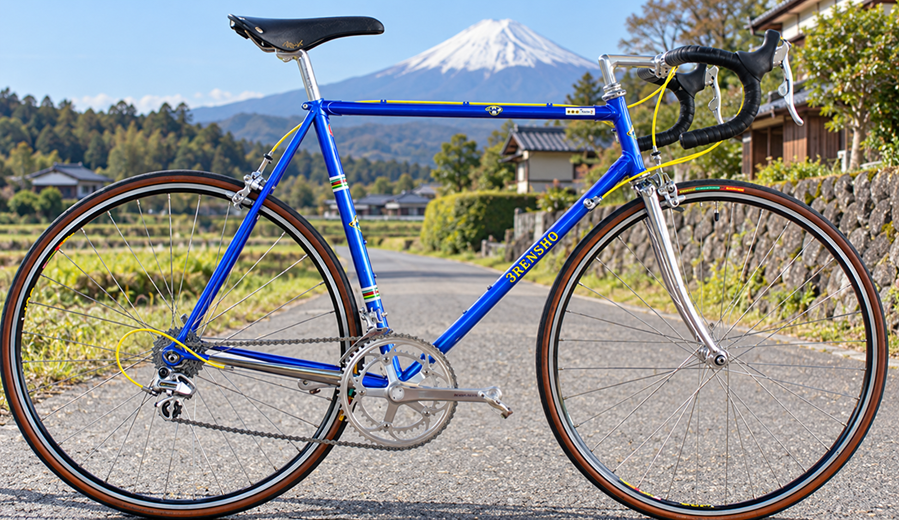
Quick Answer: The 3Rensho Super Record Export “Aerodynamics” is a mid-1980s Japanese steel road frame handbuilt by Yoshi Konno in Chiba, Japan. It replaced the earlier non-aero Super Record Export and is identified by its aero fork crown, teardrop-section seatstays and flush down tube shifter bosses. This example is a 575mm center-to-top frame in original paint and decals, built with Ishiwata “Super Strong” tubing and a Shimano 600 groupset, with 3Rensho-engraved stem, seatpost and branded tubular tires. Unrestored, well-preserved originals like this are the most collectible configuration.

By James Hickman — Former USA Cycling Expert Coach | Bicycle of the Week: Vintage Japanese Road Bikes
Amazon Affiliate I earn from qualified purchases

3Rensho Aerodynamics
SPECIAL THANKS TO EBAY AND KOT1334 FOR THE IMAGE CONTAINED IN THIS ARTICLE!

Every so often a bike crosses my bench that I hesitate to touch. This 3RENSHO Super Record Export “Aerodynamics” is one of them. I have spent years buying, stripping, and rebuilding Japanese steel, and my instinct is almost always to disassemble and refresh. Not here. This one has survived four decades with its original finish, original decals, and its 3RENSHO-specific parts still on it. The right move is preservation, not restoration.

Yoshi Konno

Who Was Yoshi Konno?

Japanese Steel Book
Amazon Affiliate

3RENSHO was created by Yoshi Konno, who opened the CYCLONE shop in Chiba around 1974, a year after helping establish Cherubim in Tokyo with his brother Hitoshi. The name “San Rensho” means three consecutive victories, a reference to a keirin rider winning heats, semi-final and final on three straight days. It did not happen often, which was exactly the point.

Konno famously taught himself by unbrazing Cinelli frames acquired after the 1964 Tokyo Olympics, then went on to design his own proprietary lugs and fittings. At its peak the shop ran with six apprentices, two of whom, Masahiko Makino and Koichi Yamaguchi, became significant builders in their own right. Yamaguchi left in the 1980s to build for the U.S. national team. Konno’s building career ended in 1995 after a catastrophic drunk-driving crash that killed five people and left him paralyzed. The marque closed shortly after, which is a large part of why nothing new will ever be added to the supply.

3Rensho Aerodynamics handlebar and stem

What “Aerodynamics” Actually Means

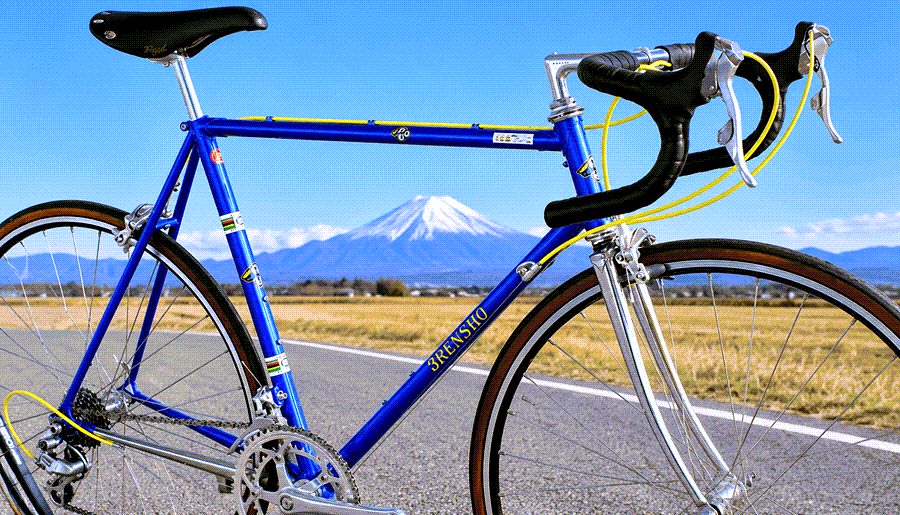
The word on the top tube is not decoration. According to Andrew Muzi of Yellow Jersey, 3RENSHO’s longtime North American importer, the aero model superseded the standard Super Record Export around 1984–85. The visual tells are consistent across surviving examples: a smooth, blended fork crown instead of a traditional sloping crown, teardrop or oval-section seat stays rather than round, and the flush “type B” down tube shifter mounting that matched the aero-era Shimano groups. Get the bike up on a quality repair stand before you buy — these details are easy to miss at floor level and easy to spot at eye height.

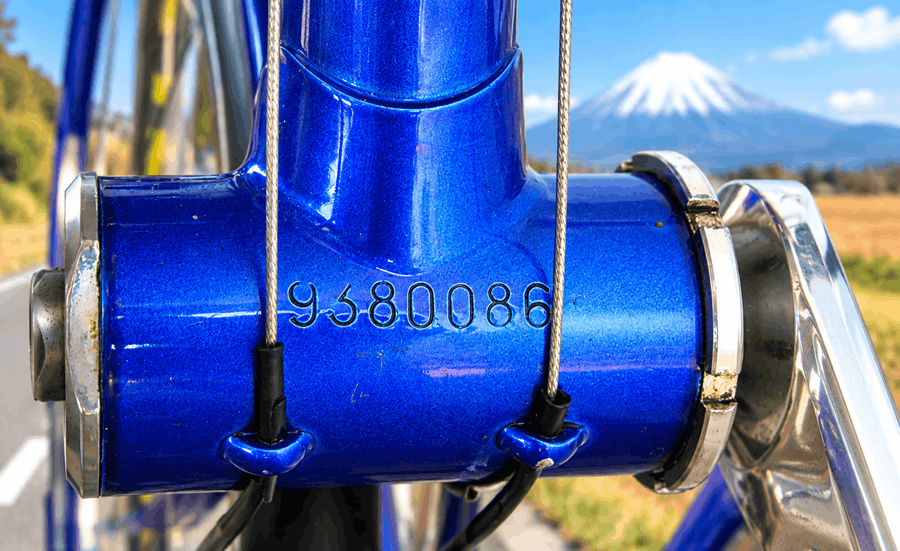
3Rensho Aerodynamics bottom bracket

Worth knowing before you go hunting: the Super Record Export and Super Record Aero frames imported to the United States did not get 3RENSHO’s cast Super Ends dropouts. Those were reserved for premium models like the Katana and the later NJS track frames. If a seller is telling you an SRE Aero should have them, they are working from the wrong catalog page.

3Rensho Aerodynamics top tube

The Tubing Question

This frame carries the ISHIWATA 3RENSHO SUPER STRONG decal, the one with the small elephant. Here is the honest answer that most listings will not give you: Ishiwata never published a spec sheet for “Super Strong” the way it did for 015, 019, 022 and 024. Long-running owner discussions point to 022 or 024, sometimes possibly mixed within a single set, and seatpost sizing on surviving frames has not settled the argument. Treat it as a quality Ishiwata chrome-moly set chosen by Konno for a stiff, durable road frame, and be suspicious of anyone quoting an exact wall thickness with total confidence.

If you do put a frame like this back on the road, the one piece of modern equipment I will add is a computer that mounts without touching the paint — the CYCPLUS G1 wireless GPS bike computer weighs 70g and needs no wheel magnet or fork sensor, so nothing gets clamped to original chrome or decals.  As an Amazon Associate, I earn from qualifying purchases at no additional cost to you.

3Rensho Aerodynamics Shimano 600

The Shimano 600 Build

The group set here is Shimano 600, and that is period-correct rather than a compromise. In the mid-1980s, 600 was Shimano’s fast road group sitting just under Dura-Ace, and on export-market 3RENSHOs it was a common factory specification. It shifts cleanly, it is still serviceable, and parts remain findable.

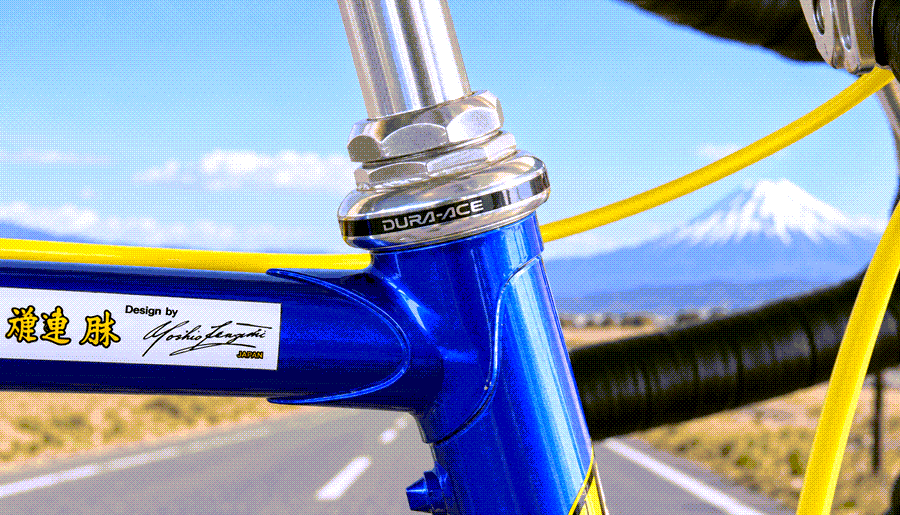
What elevates this particular build is the small stuff. The stem is a Shimano Dura-Ace unit engraved 3RENSHO. The seatpost is a Shimano 600, also 3RENSHO engraved. Those pantographed pieces were shop-level details, not mass-production items, and they are the first things to disappear when a bike gets parted out or “upgraded” over the decades. The bike also still wears 3RENSHO-branded tubulars, which at this age are display items rather than riding tires, but their survival tells you how little this frame was used.

3Rensho Aerodynamics chain stays

Sizing: 575mm Center-to-Top

The seat tube measures 575mm center to top, with a 560mm center-to-center top tube. In modern terms that is roughly a 56cm frame with a slightly long-feeling reach by today’s standards, because 1980s road geometry paired a level top tube with a longer front-center than most riders now expect. If you normally ride a 56 with a 100mm stem, plan on a shorter stem here, and check your saddle height against the seatpost insertion before you commit.

The other thing period geometry asks of you is a bit more time in the drops, and that is where saddle comfort stops being optional. Vintage saddles look correct and ride like a plank.

3Rensho Aerodynamics crankset

A proper chamois solves most of it, and a pair of 3D-padded Bikewa cycling shorts with UPF 50+ and zipper pockets will do more for a two-hour ride on a 40-year-old frame than any component swap.
As an Amazon Associate, I earn from qualifying purchases at no additional cost to you.

3Rensho Aerodynamics brake levers

Why Original Beats Restored

I restore bikes for a living and I will still say it: repainting this frame would destroy most of its value. Original 3RENSHO paint and decals cannot be replicated convincingly, and the collector market has moved decisively toward preservation. Sales data going back nearly two decades shows 3RENSHO road bikes trading well below the track and keirin frames, in part because road examples in genuinely untouched condition are uncommon. Most got ridden hard, refinished, or stripped for parts.

If you own one of these, my advice is narrow. Clean it, do not polish through the decals. Service the bearings and replace the cables and chain. Store it indoors, out of sunlight, with the tires off the ground. Photograph the serial number and every decal now, while they are intact. Everything else can wait.

Frequently Asked Questions

What year is a 3RENSHO Super Record Export “Aerodynamics”?

Most examples date to roughly 1984 through the late 1980s. The aero model replaced the standard Super Record Export around 1984–85 according to the U.S. importer. 3RENSHO serial numbers do not follow a decodable sequence, so dating relies on features like the fork crown, seatstay shape and shifter boss style.

Is Ishiwata Super Strong good tubing?

Yes. It is a butted Japanese chrome-moly set, widely believed to be in the 022/024 range, chosen for durability rather than the lowest possible weight. Ishiwata never published formal specs under the Super Strong name.

Was Shimano 600 original equipment on 3RENSHO road bikes?

Yes. Shimano 600 was a common factory specification on export-market Super Record Export models, sitting one tier below Dura-Ace in the mid-1980s lineup.

Can you use a modern bike computer on a vintage road bike?

Yes. A self-contained GPS unit is the least invasive option because it requires no wheel magnet, no fork-mounted sensor and no adhesive on the frame. Use a rubber-strap or bar-clamp mount rather than anything that grips painted tubes.

Are 3RENSHO road bikes as collectible as the track frames?

Generally the keirin and track frames command more, since that is where the marque built its reputation. Road models in original, unrestored condition with 3RENSHO-engraved components are the exception and are increasingly sought after.

Should I restore an original 3RENSHO?

No, if the paint and decals are intact. Preservation retains far more value than a repaint. Limit work to cleaning, bearing service and consumables.

Related Reading

Koga Miyata FullPro-A vintage Japanese road bicycle

Bike of the Week

Koga Miyata FullPro-A: Dutch Design, Japanese Build

Maruishi Emperor 901-SXR classic Japanese road bicycle

Bike of the Week

Maruishi Emperor 901-SXR: An Underrated Classic

3Rensho brand history and frame builder profile

Brand Profile

3Rensho: The Complete Brand History


Sponsored · Competitive Cyclist

Competitive Cyclist.
Check for current sales.

Browse All Deals →

Gear Up

Apparel
All-weather and performance cycling kit for every condition.
Shop Bikes

Bikes
Road, gravel, and performance bikes. Sales available — check current pricing.
Shop Now

Tools & Maintenance
Everything you need to keep your ride dialed.

We are an Amazon affiliate and earn from qualified Amazon purchases with no cost to you. This is for ANY product that you purchase through our links. We are also an affiliate for Competitive Cyclist and JensonUSA. This way we can provide you with competitive pricing and products.