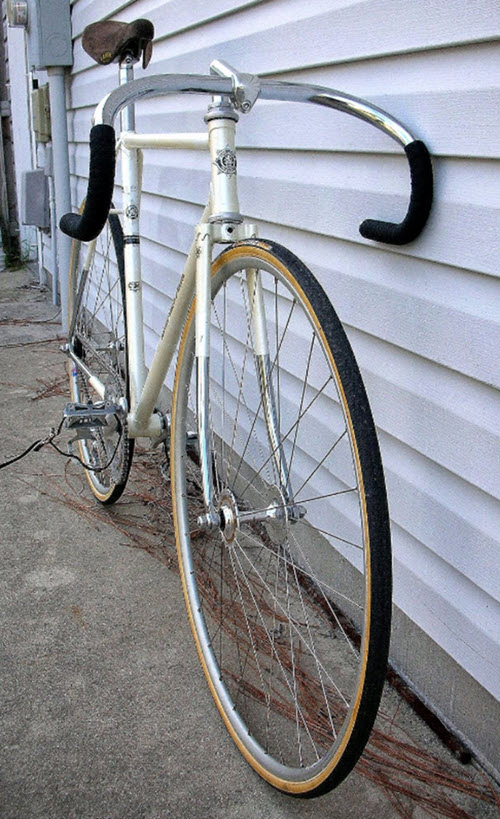
Categories
Classic Japanese Bicycles

Cherubim Bicycles Air Line: A Handmade Steel Aero Frame Built for the Velodrome

Quick Answer

The Cherubim Air Line is a handmade steel aerodynamic bicycle produced by Tokyo-based Cherubim (Konno Cycle Works), founded in 1965. Designed by second-generation master builder Shinichi Konno, the Air Line eliminates all right angles and hard edges from the frame geometry, replacing them with elongated ellipses and flowing curves intended to minimize aerodynamic drag. It is built for velodrome and hour record competition.

Most handmade steel bicycles are celebrated for their rideJapanese Steel Book quality, their geometry, or the precision of their welds. Among Cherubim bicycles, the Air Line is celebrated for something different: it looks unlike any other bicycle ever built. No right angles. No hard edges. No concession to the conventional diamond frame that has dominated bicycle design for over two centuries. What Shinichi Konno created with the Air Line is a fully rideable machine that also functions as a serious argument about the future of aerodynamic bicycle design.
Amazon Affiliate I earn from qualified purchases
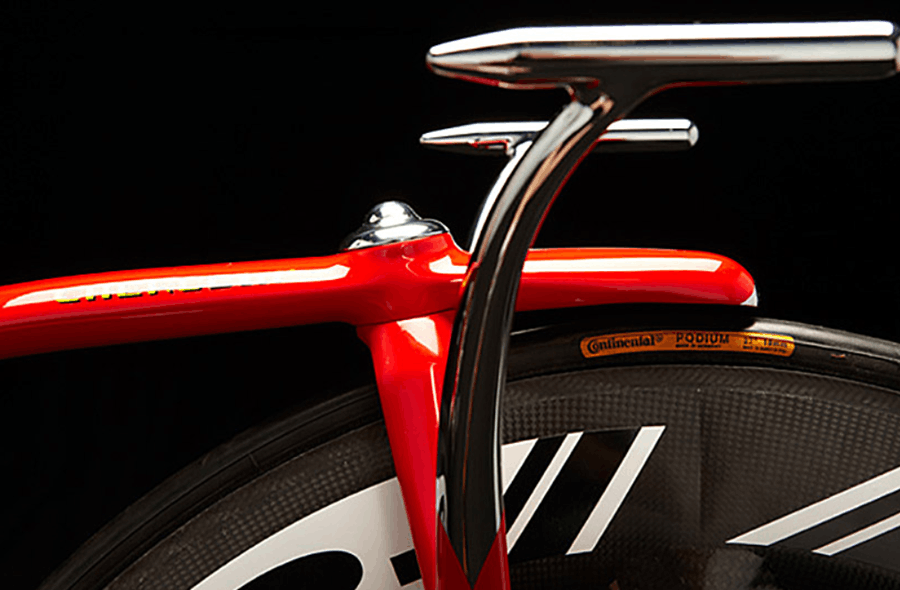
cherubim bicycles the future of aerodynamic bicycle design
SPECIAL THANKS TO DESIGNBOOM.COM FOR THE IMAGES CONTAINED IN THIS ARTICLE!

This week’s Bicycle of the Week profile takes a close look at the Cherubim Air Line — its design philosophy, the engineering decisions behind it, and the six-decade history of the workshop that produced it.

The History of Cherubim Bicycles

Cherubim bicycles trace their origin to 1965, when Hitoshi Konno founded the company in what was then a virtually nonexistent custom frame building industry in Japan. According to Subsequence Magazine, the company started out as a garage brand in the most literal sense, but within three years a track bike made by Hitoshi in his tiny workshop had debuted at the 1968 Mexico City Olympics and set a new Japanese national record. That result — just three years after founding — established Cherubim as synonymous with the highest level of Japanese frame building.
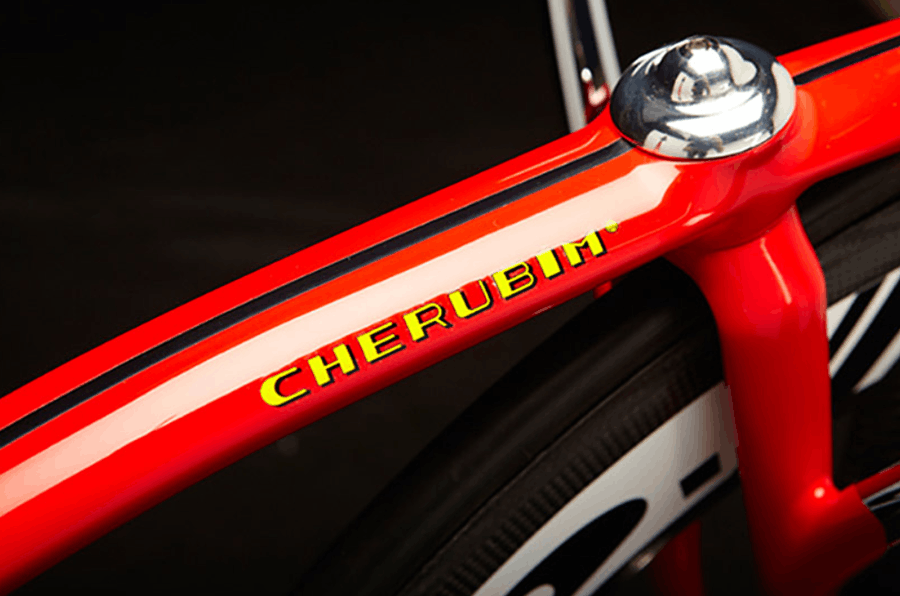
Cherubim bicycles synonymous with the highest level of Japanese frame building
SPECIAL THANKS TO DESIGNBOOM

The name itself carries meaning. The brand name Cherubim was chosen by Hitoshi’s mother, a Christian, and the angelic name was intended to give wings not only to the riders of Cherubim bicycles but to their family members as well. Hitoshi’s approach to frame building became legendary within the industry. Industry insiders referred to his passionate approach as “welding mania,” as he continued to churn out novel ideas and revolutionary designs throughout his career.

The Konno family’s influence on Japanese frame building extended beyond Cherubim. Three Konno brothers and their frames — Cherubim, 3Rensho, and Miyuki — led the early age of the frame building industry in Japan. Cherubim is the only surviving brand carrying the family tradition forward. Cherubim bicycles also won seven consecutive Best Handmade Bicycle Awards from 1998 to 2005 at the prestigious annual show sponsored by the Japan Cycling Association.
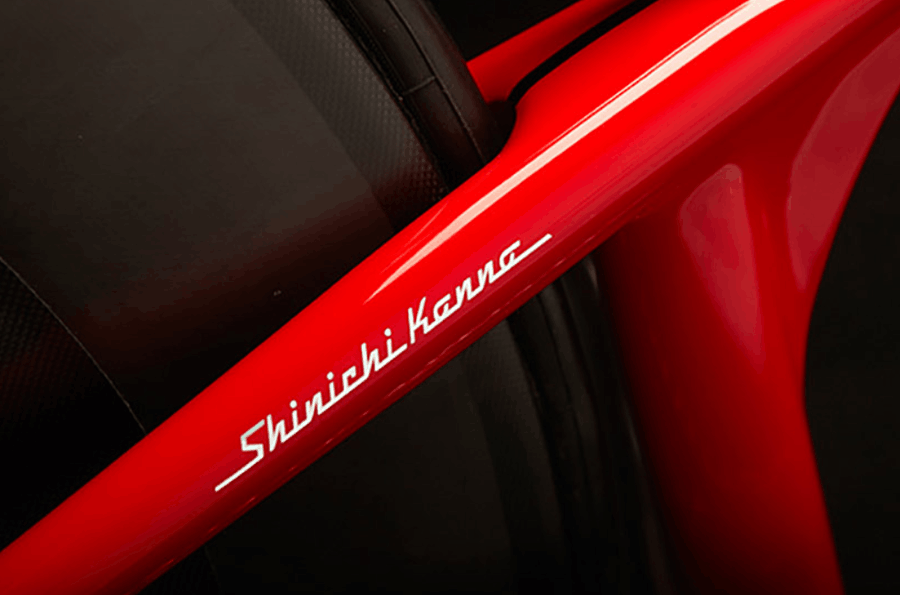
Cherubim bicycles Awards from 1998 to 2005 at the prestigious annual show sponsored by the Japan Cycling Association
SPECIAL THANKS TO DESIGNBOOM

After Hitoshi retired, his son Shinichi Konno took over. Shinichi operates from the belief that the best bike is a custom steel frame that can be adapted to the rider’s physique, riding style, and preferences — creating bikes of functional beauty that combine the best ride with a shape that appeals to the rider at a high level, without being bound by existing ideas. Today Cherubim operates from a workshop in Machida, a suburb of Tokyo, producing made-to-order chromoly steel frames one at a time.

The Air Line: Design Philosophy

The Cherubim Air Line is not a production bicycle. It is a concept machine, built to challenge the foundational assumption that a bicycle frame must consist of straight tubes joined at angles. Every element of the Air Line’s design flows from a single aerodynamic principle: eliminate anything that creates a hard edge against moving air.

As reported by Designboom, the Air Line’s minimalist form is designed to avoid the right angles and hard edges that cause air resistance in conventional bicycles. Instead it rides on undulating lines and elongated ellipses — a frame geometry that draws more from fluid dynamics than from traditional bicycle engineering. The result is a machine that appears to have been shaped by wind rather than built by hand.
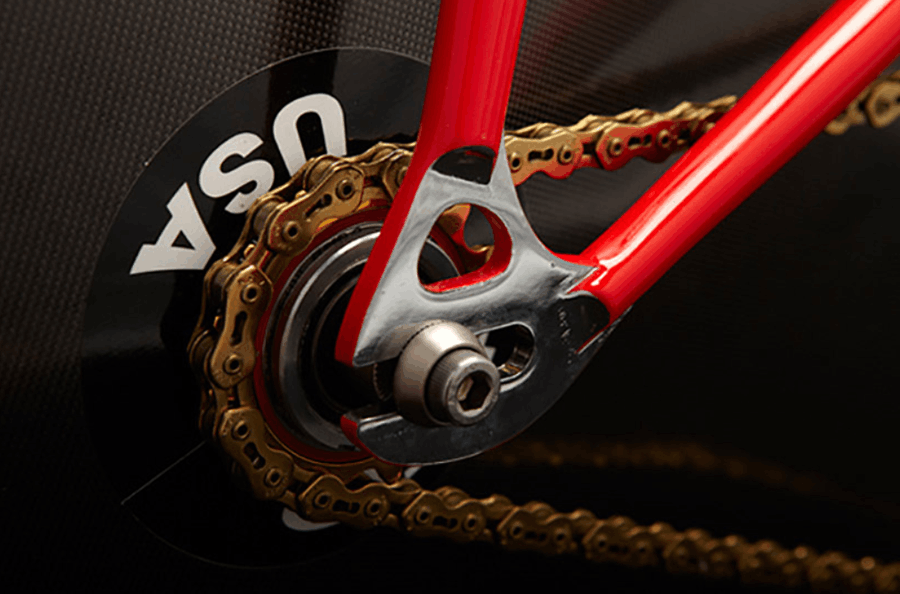
Cherubim bicycles a frame geometry that draws more from fluid dynamics than from traditional bicycle
SPECIAL THANKS TO DESIGNBOOM

The frame is finished in a deep red coat with chrome accents. There are no visible welds in the conventional sense — the transitions between tubes dissolve into curves, making it genuinely difficult to identify where one structural element ends and another begins. The Air Line features an integrated electrical shifting system and 31.8 steel seat tubing, permitting the rider to maneuver efficiently while the low wind drag allows for optimal speed.

Sponsored · Competitive Cyclist

If aerodynamics drives your equipment decisions as much as it drove the Air Line’s design, browse aero helmets at Competitive Cyclist.

What Konno Set Out to Solve

Shinichi Konno has been direct about the engineering problem the Air Line was built to address. The conventional diamond frame — a design with over 200 years of documented history — is structurally efficient but aerodynamically compromised. Every junction, every tube angle, every abrupt transition creates turbulence. For road racing in a peloton, that drag is manageable. For solo events like the hour record or velodrome time trials, it represents a measurable and addressable performance loss.

Konno’s position on this is unambiguous. In his own words: “Aerodynamics is the largest theme in bicycle history all the time. Cherubim created this bike by breaking the regulations and traditional concepts, because we believe this is the only way to expand the horizon of bicycle design. We’re too wedded to the traditional diamond-shaped bike. Air Line presents the new possibility for the race like the hour record and velodrome time trials.”

This is not a decorative claim. The UCI’s regulations for competitive cycling prohibit many frame designs that deviate significantly from the traditional diamond shape — which is precisely the point. Konno built the Air Line outside those constraints intentionally, as an exploration of what is physically possible when regulations are removed from the design process. The resulting machine is as much a research object as it is a bicycle.
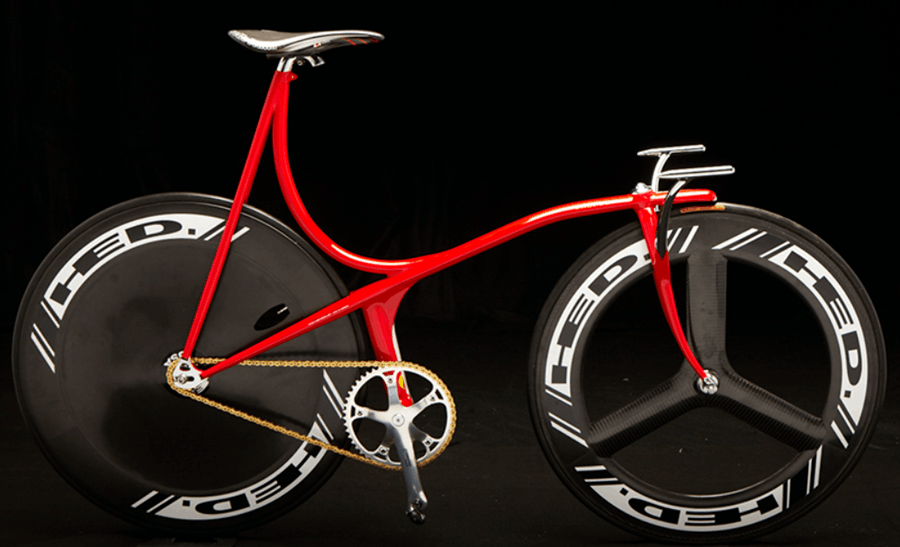
Cherubim bicycles Despite its unconventional appearance, the Air Line is built using the same fundamental material that defines all Cherubim bicycles
SPECIAL THANKS TO DESIGNBOOM

Construction and Materials

Despite its unconventional appearance, the Air Line is built using the same fundamental material that defines all Cherubim bicycles in production: chromoly steel. All Cherubim frames are made from chromoly steel, a special alloy composed of chromium and molybdenum. In contrast to more common carbon or alloy frames, individually hand-welded chromoly tube frames require a high level of skill to produce, and are becoming scarce even in European ateliers.

Chromoly is a deliberate choice for Konno, not a compromise. The material’s properties — its elasticity, its ability to be formed into complex shapes, its response to skilled welding — make it uniquely suited to the organic geometries the Air Line demands. Carbon fiber, while lighter, does not bend and flow the way chromoly can under the hands of a skilled builder. The Air Line could not exist as a carbon frame.

Cherubim bicycles are made to order. Based on a rider’s height and cycling needs, a builder will assemble the frame to exacting specifications. The workshop in Machida operates with a small team, and the hand-built works of Cherubim bicycles have won numerous international accolades including awards from the Hand Made Cycle Fair in Japan and the North American Handmade Bicycle Show (NAHBS).

Sponsored · Competitive Cyclist

For the track and time trial cyclist who appreciates purpose-built equipment, browse road and track bikes at Competitive Cyclist.

The Air Line in Context

The Air Line did not emerge in isolation. Shinichi Konno has a history of producing experimental frames that challenge conventional geometry while competing alongside his mainstream chromoly production work. His Silver Flyer track bike won both Best in Show and the President’s Choice award at the North American Handmade Bicycle Show. The Air Line represents a continuation of that same experimental impulse taken further — to the point where the frame no longer resembles a bicycle in any conventional sense.

What separates the Air Line from purely aesthetic bicycle art projects is that it remains functional. It is fitted with real components, real gearing, real contact points. Konno built it to be ridden, not displayed — though it has been displayed extensively and photographed widely since its introduction. The tension between those two identities — art object and race machine — is part of what makes it one of the most discussed frames in contemporary handmade bicycle building.

For collectors and enthusiasts of classic and contemporary Japanese bicycle craftsmanship, the Air Line represents the current outer edge of what Cherubim bicycles’ six-decade tradition of handmade steel frame building has made possible. It is, in both literal and figurative terms, what happens when a master builder stops asking whether something is allowed and starts asking whether it is possible.

Plan Your Race Day and Ride Day Nutrition

Use our free Race & Ride Day Nutrition Planner to dial in your fueling strategy — fluid intake, sodium, and calories calculated for your body weight and conditions.

Use the Free Nutrition Planner →

Frequently Asked Questions

Who makes the Cherubim Air Line bicycle?

The Air Line is made by Cherubim, also known as Konno Cycle Works, a handmade steel bicycle workshop based in Machida, Tokyo. It was designed and built by Shinichi Konno, the second-generation master builder who took over the company from his father Hitoshi Konno, who founded Cherubim in 1965.

What makes the Cherubim Air Line different from other bicycles?

The Air Line eliminates all right angles and hard edges from the frame, replacing conventional straight-tube diamond geometry with elongated ellipses and continuous flowing curves. The design is intended to minimize aerodynamic drag for velodrome and hour record competition. It is built from hand-welded chromoly steel and is made entirely by hand in Cherubim’s Tokyo workshop.

Is the Cherubim Air Line a rideable bicycle or a display piece?

It is a fully functional bicycle. Despite its sculptural appearance, the Air Line is fitted with real drivetrain components including an integrated electrical shifting system and is built to be ridden on the velodrome. Shinichi Konno has stated that the bike was designed specifically with the hour record and velodrome time trials in mind, not as a display piece.

Related Reading

Levi's and Cherubim Bicycle Collaboration


Sakae Ringyo Litage


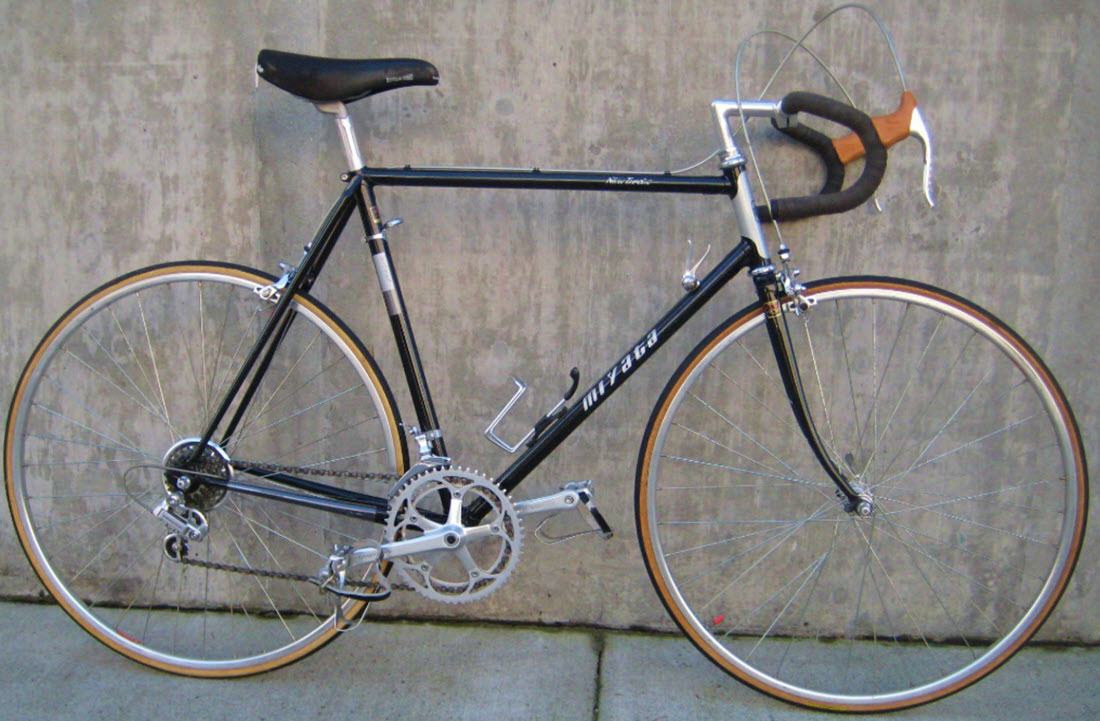
Vintage Miyata 912

Sponsored · Competitive Cyclist

Competitive Cyclist.
Check for current sales.

Browse All Deals →

Gear Up

Apparel
All-weather and performance cycling kit for every condition.
Shop Bikes

Bikes
Road, gravel, and performance bikes. Sales available — check current pricing.
Shop Now

Tools & Maintenance
Everything you need to keep your ride dialed.

We are an Amazon affiliate and earn from qualified Amazon purchases with no cost to you. This is for ANY product that you purchase through our links. We are also an affiliate for Competitive Cyclist and JensonUSA. This way we can provide you with competitive pricing and products.
Categories
Japanese bicycles

Sakae Ringyo Litage: Japan’s Bonded Aluminum Road Racer

Quick Answer: The Sakae Ringyo Litage is a bonded aluminum road racing frame produced by Japanese component maker Sakae Ringyo (SR) from 1987 into the early 1990s. Built with 5056 aluminum tubes adhesive-bonded to AC4C alloy lugs, it was one of the first Japanese aluminum road frames and was sold under both the SR and 3Rensho brand names. A complete Litage built with Shimano 600 represents a lightweight, historically significant machine from the transitional era of aluminum frame technology.

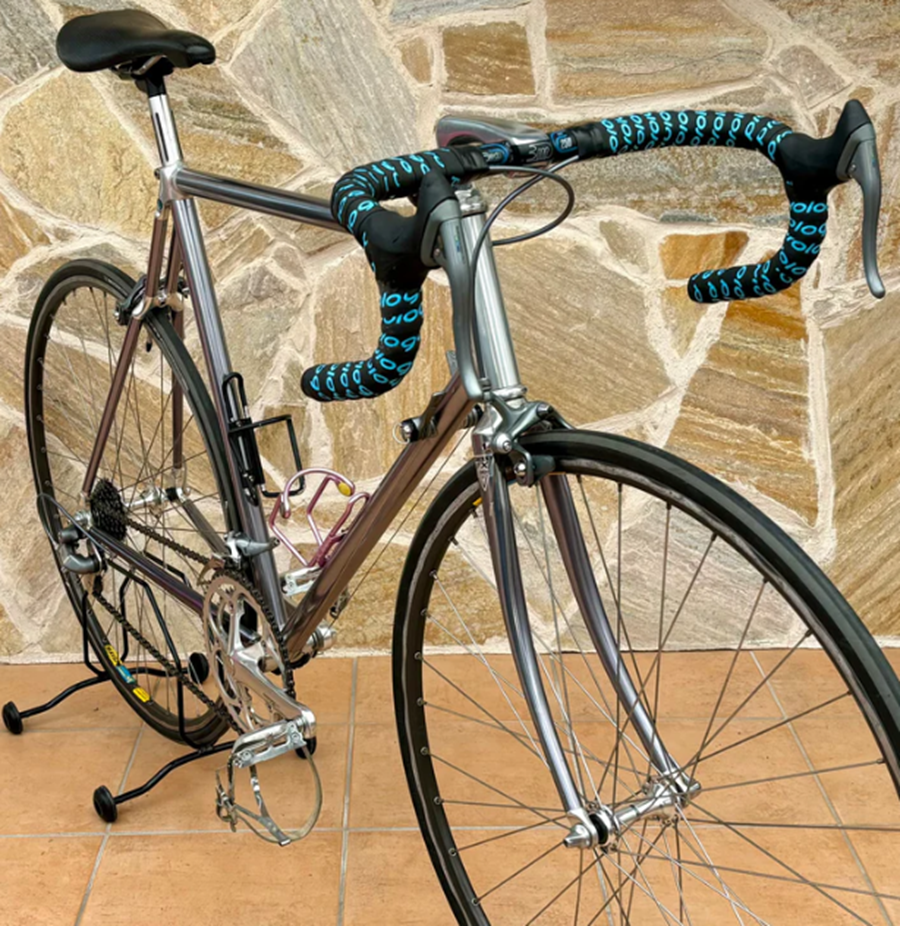
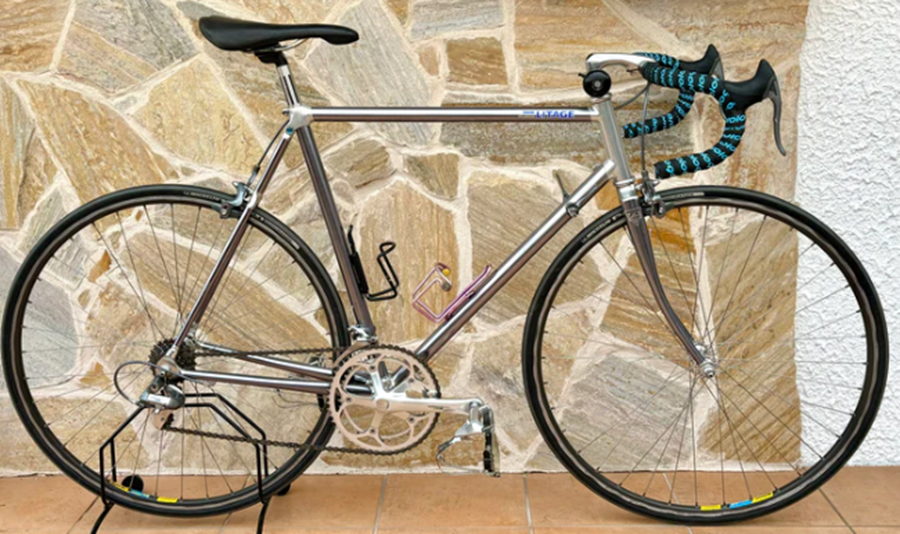
This week’s feature is a Sakae Ringyo Litage road racing bikeJapanese Steel Book — a complete build in exceptional condition that represents a specific and often overlooked chapter in Japanese bicycle history. The Litage sits at the intersection of Sakae Ringyo’s (SR) component expertise and the early global shift toward aluminum frame construction. Built on bonded alloy tubing with a full Shimano 600 groupset, it is a machine worth understanding in detail.
Amazon Affiliate I earn from qualified purchases

Sakae bicycle
SPECIAL THANKS TO MASTROCLASSICS.COM FOR THE IMAGES CONTAINED IN THIS ARTICLE!

Who Was Sakae Ringyo?

Sakae Ringyo Ltd. was a Japanese manufacturer founded in the 1950s, best known for aluminum cranks, stems, handlebars, headsets, and bottom brackets. The SR brand supplied components to major European and American manufacturers throughout the 1970s and 1980s, with clients that included Motobécane, Raleigh, and Pinarello. Their aluminum work was respected for precision and weight savings at a time when alloy components were still considered premium.

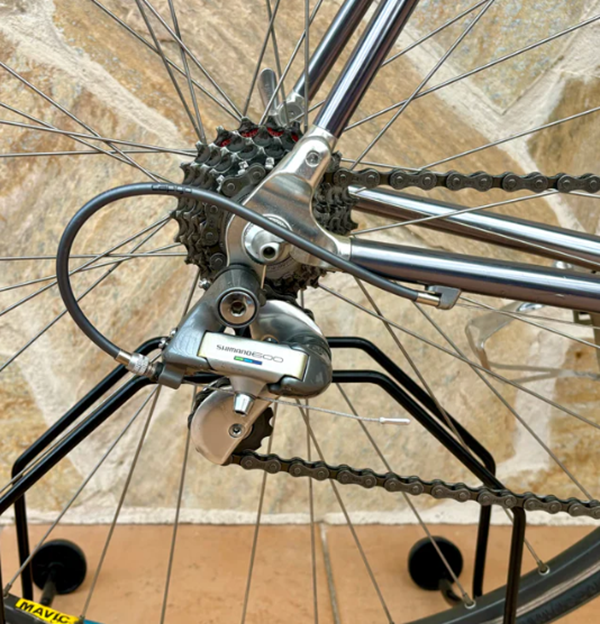
Sakae Bicycle rear derailleur

In 1987, Mori Industries Inc. acquired Sakae Ringyo, and in 1990 the company purchased the bankrupt SunTour (Maeda) name to form SR Suntour, which continues today as a Taiwanese suspension and component brand. At the time of the Litage’s introduction, however, Sakae Ringyo was still operating as a Japanese manufacturer at the height of its component production.

Sakae Bicycle Japan's Bonded Aluminum Road Racer

The Litage Frame: Bonded Aluminum Construction

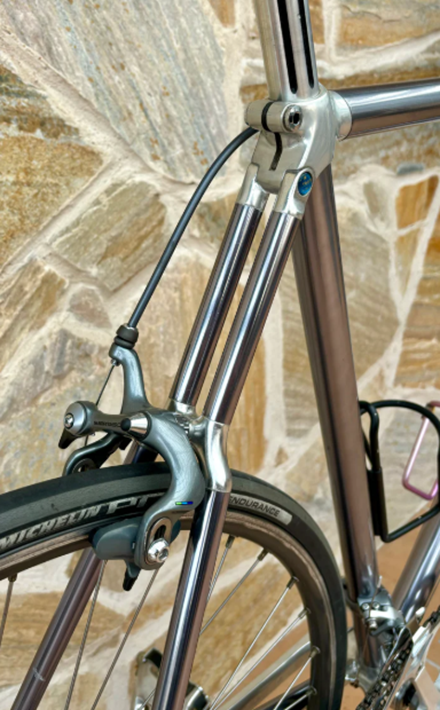
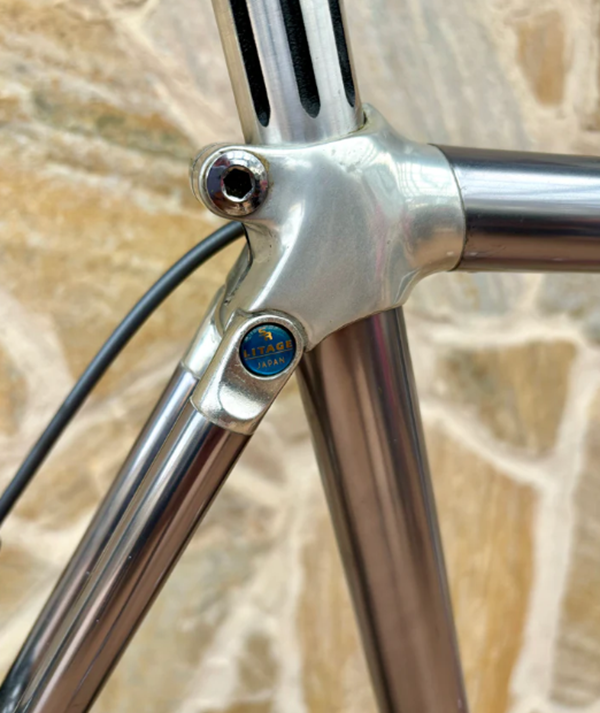
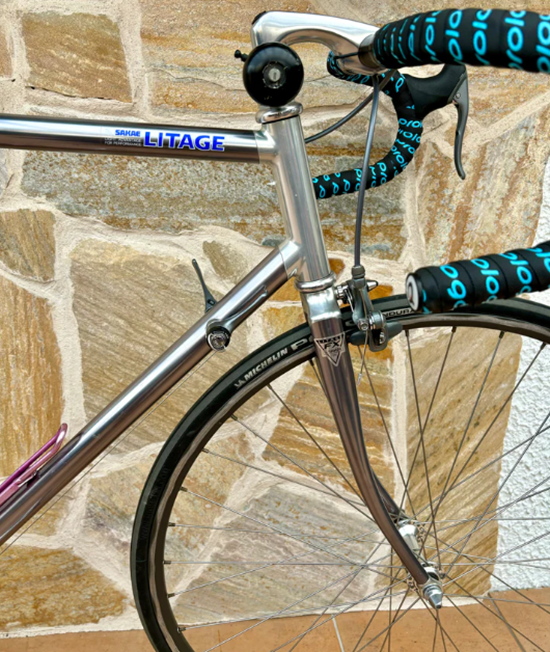
The Sakae Ringyo Litage followed the bonded aluminum frame construction pioneered by European builders ALAN and Vitus. The method — sometimes called “screwed and glued” — involves press-fitting tubes into lugs (or lugs into tubes, in the Vitus-derived approach) and securing them with thermal adhesive rather than welding. Sakae Ringyo used 5056 aluminum alloy tubes bonded to AC4C aluminum-cast lugs. Their catalog described the process: adhesive is injected through a port in the lug after the tube is press-fitted, flowing evenly into an injection space designed to ensure a uniform bond around the entire joint.

SR debuted this design in 1987 under the name “Prizm,” then rebranded it as the “Litage” — a portmanteau of “Light Age.” The frames were available in road and mountain bike configurations, in both aluminum and carbon tube variants. The design attracted enough attention that 3Rensho boss Yoshi Konno adopted it for his line in the late 1980s, selling SR Litage frames in 3Rensho livery — a detail that still generates debate among collectors.

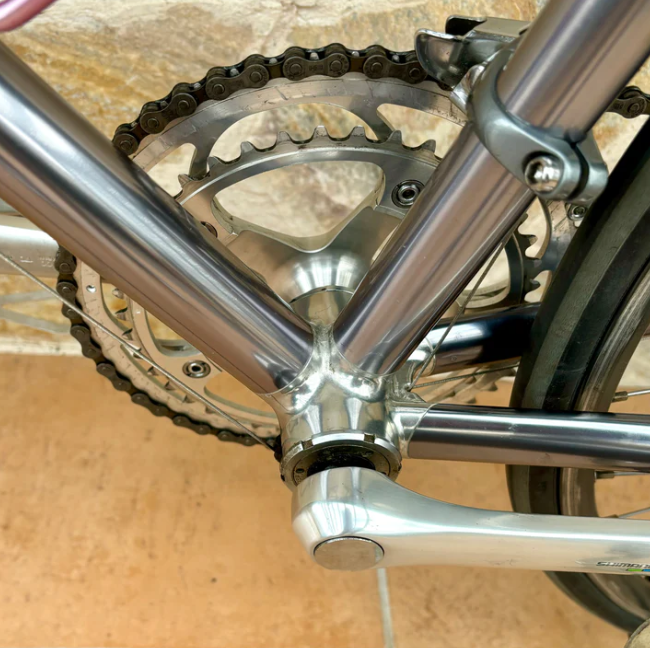
Sakae Bicycle bottom bracket

Production ran from 1987 through the early 1990s, placing this bike firmly in the period when bonded aluminum was a legitimate high-performance option before TIG-welded aluminum took over.

Sponsored · Competitive Cyclist

Competitive Cyclist.
Check for current sales.

Browse All Deals →

Gear Up

Apparel
All-weather and performance cycling kit for every condition.
Shop Bikes

Bikes
Road, gravel, and performance bikes. Sales available — check current pricing.
Shop Now

Tools & Maintenance
Everything you need to keep your ride dialed.

Sakae Bicycle Seat stays

This Build: Specifications and Component Notes

The example here is a 57cm (center-to-top) seat tube, 56cm (center-to-center) top tube frame with a 15cm head tube — a geometry suited to a medium-tall rider with a moderate reach. The condition is excellent: no dents, no cracks, with the alloy showing no structural concerns.

Sakae Bicycle lugs

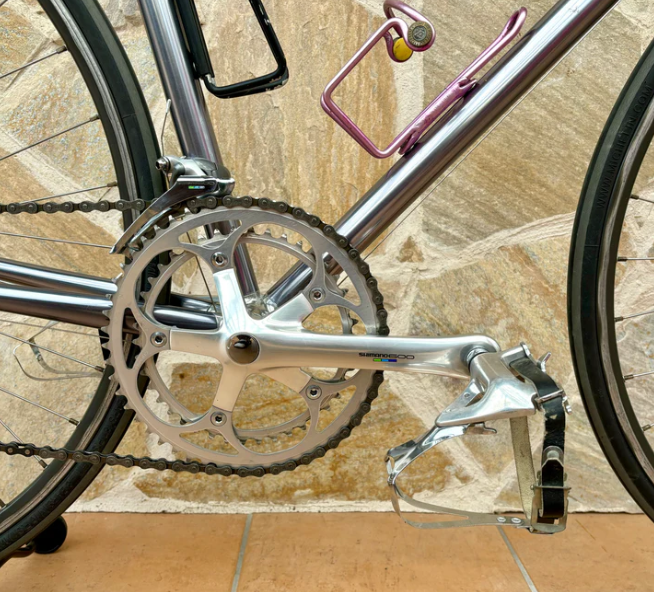
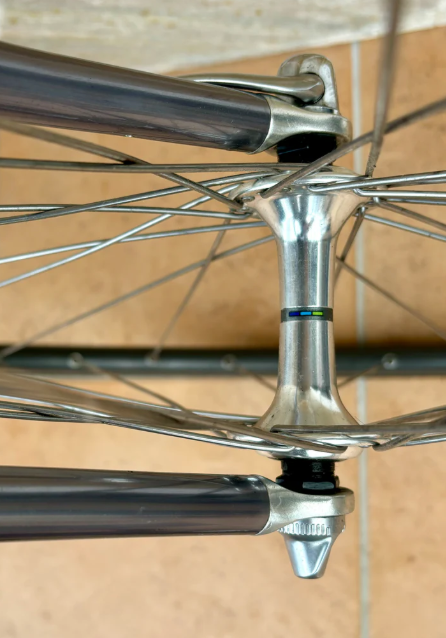
The complete groupset is Shimano 600, which was Shimano’s second-tier road group during this era, positioned below Dura-Ace but above 105. It covered virtually every contact point on this bike:

  • Crankset: Shimano 600, 170mm, 52/42 chainring combination — a standard road racing setup for the period
  • Brakes: Shimano 600 dual-pivot calipers with matching 600 brake levers
  • Drivetrain: Shimano 600 front and rear derailleurs with 600 downtube shifters
  • Pedals & Headset: Shimano 600 throughout
  • Handlebar: Deda Deep 250 — a classic Italian drop bar known for its shallow drop and compact reach
  • Stem: 3ttt — one of the benchmark Italian stems of the era
  • Saddle: Selle Italia Flite — a widely used racing saddle that remains in production today
  • Rims: Mavic Open 4CD clinchers — an anodized alloy clincher rim from Mavic that was a standard choice for performance builds through the late 1980s and 1990s

The 3ttt stem and Deda handlebar are a European touch that pairs logically with the Japanese frame and Shimano components. The Mavic Open 4CD rims complete a build that reads as a working road racer from the late 1980s or very early 1990s.

Sakae Bicycle chain rings

Collectibility and Context

The Sakae Ringyo Litage occupies a specific niche in the vintage Japanese bicycle market. It is not a common find — SR produced frames in smaller numbers than major Japanese bicycle manufacturers, and the bonded construction makes condition critical. Frames with compromised lug bonds or cracked tubes are not repairable in any practical sense, which makes a clean example worth noting. This bike shows no such issues.

Sakae Bicycle hub

Its interest to collectors comes from several angles: it documents Sakae Ringyo’s ambition beyond components into complete frame production, it uses a manufacturing method now largely extinct, and the Shimano 600 groupset represents a period-correct and fully functional drivetrain that remains easy to service with widely available parts.

Still Riding Your Classic? Find Out What Your FTP Should Be.

Answer 7 quick questions and get a personalized training roadmap — whether you’re riding a vintage Bridgestone or a modern race bike.

Take the Free FTP Quiz →

Frequently Asked Questions

What does “Litage” mean on a Sakae Ringyo bicycle?

Litage is a portmanteau of “Light Age,” used by Sakae Ringyo as the brand name for their bonded aluminum frame line introduced in 1987. The name reflected the marketing position of aluminum as the next generation of lightweight frame material, following the European bonded aluminum designs from ALAN and Vitus that influenced SR’s construction method.

How was the Sakae Ringyo Litage frame constructed?

The Litage used 5056 aluminum alloy tubes press-fitted into AC4C cast aluminum lugs, then bonded with an injected thermal adhesive. This method — known as bonded aluminum construction — was the dominant approach for aluminum frames from the late 1970s through the early 1990s before TIG welding became standard. SR’s process injected adhesive through a port in each lug to ensure even distribution around the joint.

Is Shimano 600 still serviceable today?

Yes. Shimano 600 components from the late 1980s and early 1990s are compatible with standard tools and widely available replacement parts. The derailleurs accept standard cables, the brake calipers use common pads, and the crankset uses a conventional square-taper bottom bracket interface. The downtube shifters function in friction mode, which bypasses any indexing compatibility concerns entirely.

Sponsored
JENSON USA
America’s Bike & Adventure Shop
★ FREE 1-Day Shipping over $50 to California
Tools & Maintenance — everything to keep your bike dialed.
Shop Tools & Maintenance →

We are an Amazon affiliate and earn from qualified Amazon purchases with no cost to you. This is for ANY product that you purchase through our links. We are also an affiliate for Competitive Cyclist and JensonUSA. This way we can provide you with competitive pricing and products.


Categories
Japanese Road Bikes

Levi’s and Cherubim Bicycle Collaboration

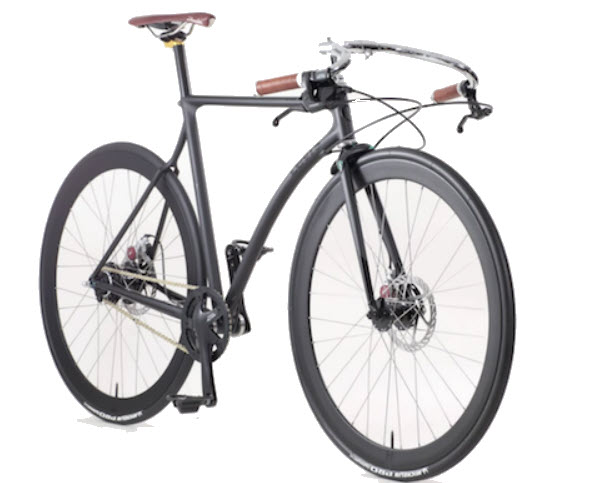
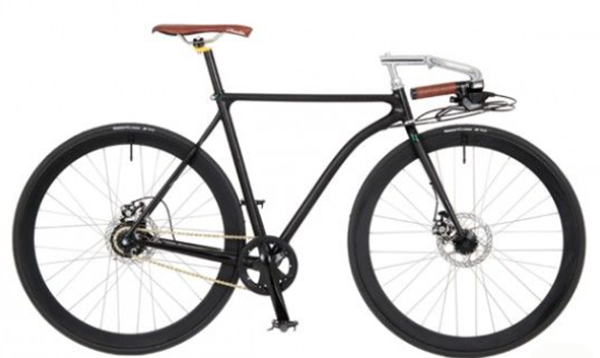
Quick Answer: The Levi’s and Cherubim Bicycle collaboration debuted in 2012 as the concept bike for the “Levi’s Commuter” line, with limited-order production beginning in 2013. Hand-built by Shinichi Konno of Cherubim, the matte-black urban bike featured Shimano Alfine internal gear shifting, disc brakes, and an eccentric bottom bracket for chain tension. It originally sold for roughly $4,725 including tax.

cherubim bicycle
SPECIAL THANKS TO CYCLING-EX.COM FOR THE INFORMATION AND IMAGES CONTAINED IN THIS ARTICLE.

This week’s Japanese Bicycle of the Week isJapanese Steel Book another Cherubim Bicycle masterpiece — and one of the most unusual machines the famed Tokyo framebuilder ever produced. In 2012, when Levi’s unveiled their “Levi’s Commuter” apparel line, they tapped Cherubim to build a concept bike that married denim-brand heritage with Japanese handbuilt craftsmanship. The response was strong enough that Levi’s released it for limited-order production, and the example shown here is believed to have rolled off the line in 2013.
Amazon Affiliate I earn from qualified purchases

For collectors who know the marque, this bike sits in interesting company. Cherubim is best known for race-bred steel and showpiece customs, so a commuter built for a fashion label is a genuine outlier in the catalog. If you want the fuller picture of the brand’s range, our Cherubim Bicycle Review: Super Touring Edition covers a very different side of Konno’s work.

A Matte-Black Frame With Dual Branding

The matte-black painted frame is the bike’s defining visual. Both the Cherubim and Levi’s logos appear in subtle black-on-black, so the branding reads as texture rather than decoration — exactly the understated look you’d expect from a denim collaboration. It’s a finish that has aged remarkably well, and one reason the bike still turns up in collector conversations more than a decade later.

Up front, a semi-drop handlebar gives riders both a comfortable upright position and a more aerodynamic grip when needed, paired with a clean thumb shifter for the internal hub. It’s a layout built for real city riding, not weekend posing.

Shimano Alfine Drivetrain and Disc Brakes

The standout technical feature on this Cherubim Bicycle is its use of Shimano Alfine internal gear shifting combined with reliable disc brakes. The internally geared hub keeps the drivetrain sealed against weather and road grime — ideal for a commuter that needs to start every morning without fuss. Disc brakes round out the all-weather, low-maintenance philosophy.

🔧 Coach’s Pick: Restoring a vintage internal-hub bike? Keep stored chains and hardware rust-free with Evapo-Rust — a staple in my own restoration kit.

The bottom bracket is eccentric, which lets the rider adjust chain tension easily — a necessity on a single-cog internal-hub setup. Shinichi Konno explained that Cherubim chose the eccentric design specifically to keep the wheel-to-seat-tube distance constant, rather than relying on a horizontal sliding-dropout mechanism. It’s the kind of detail that separates a true frame builder’s solution from an off-the-shelf one.

cherubim bicycle

What Did the Levi’s Cherubim Cost?

At launch, the price worked out to roughly $4,725 including tax after converting from yen. That positioned it well above a typical commuter and squarely in boutique-handbuilt territory — fair, given that every frame came from one of Japan’s most respected workshops. Surviving examples rarely surface on the used market, which keeps demand high among collectors of vintage Japanese bicycles.

If your interest runs to other handbuilt Tokyo machines, the Mr.I Equilibrium titanium-carbon hybrid shows where Konno’s design thinking went next, while the Zunow KYGM 650B custom is another collector-grade example worth a look.

The BB is eccentric, allowing for easy chain tension adjustment. Shinichi Konno explained that they chose an eccentric design to keep the wheel-seat tube distance constant, rather than using a sliding mechanism.

Frequently Asked Questions

Who built the Levi’s Cherubim bicycle?
It was hand-built by Shinichi Konno of Cherubim, a renowned Tokyo frame building workshop, as a concept and limited-production bike for the Levi’s Commuter line introduced in 2012.

What drivetrain does the Levi’s Cherubim use?
The bike uses a Shimano Alfine internally geared hub paired with disc brakes and an eccentric bottom bracket for chain-tension adjustment, making it a low-maintenance all-weather commuter.

How much did the Levi’s Cherubim bicycle cost?
At release in 2013 it sold for approximately $4,725 including tax, converted from the original yen price — placing it in boutique hand built territory.

Sponsored · Competitive Cyclist

Competitive Cyclist Deals.
No code required.

Browse All Deals →

Up to 50% off

Gorewear Apparel
All-weather cycling kit built for serious conditions.
Up to 40% off

Bikes on Sale
Selected road and performance bikes at reduced pricing.
Shop Now

Tools & Maintenance
Everything you need to keep your ride dialed.

We are an Amazon affiliate and earn from qualified Amazon purchases with no cost to you. This is for ANY product that you purchase through our links. We are also an affiliate for Competitive Cyclist and JensonUSA. This way we can provide you with competitive pricing and products.
Categories
Japanese Road Bikes

What Is an NJS Bike? A Bridgestone Example

Quick Answer: An NJS bike is a track bicycle built to the standard set by the Japan Keirin Association (NJS), using frames and components approved for sanctioned keirin racing in Japan. NJS-certified parts are made by a limited list of approved makers such as Nitto, Sugino, and MKS. This article features a vintage Bridgestone track frame built with an NJS-style component group.

SPECIAL THANKS TO THE BROKENSPOKENC.COM FOR THE IMAGES AND INFORMATION CONTAINED IN THIS ARTICLE.

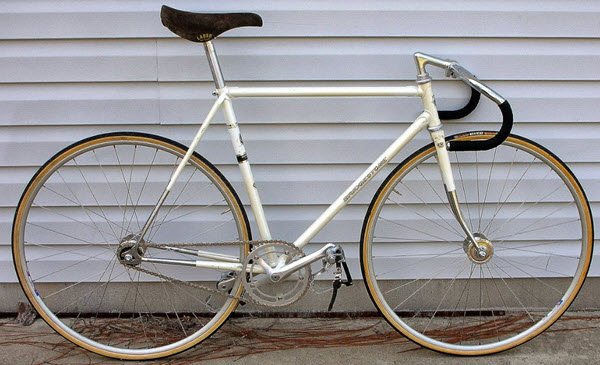
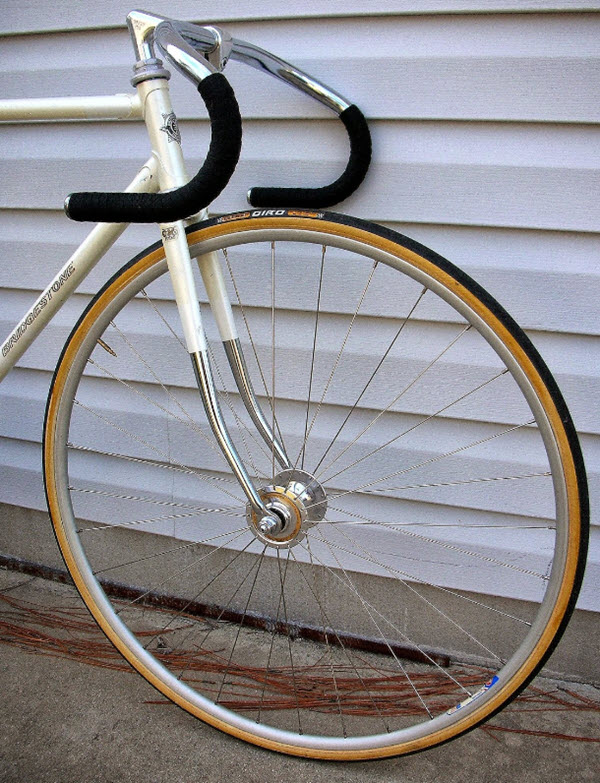
This week’s Japanese Bicycle of the Week is an NJS bikeJapanese Steel Book built around a vintage 54cm Bridgestone track frame. The build was guided by track enthusiasts Covi Hazelwood of Two Wheeler Dealer and Trent Blackburn, who specified a component group drawn largely from NJS-certified Japanese track parts.
Amazon Affiliate I earn from qualified purchases

bridgestone

What Is an NJS Bike?

An NJS bike is a fixed-gear track bicycle whose frame and components meet the standard of the Japan Keirin Association, abbreviated NJS. The certification exists for one reason: equipment used in sanctioned keirin racing in Japan must be approved for safety and fairness, so every legal part carries an NJS stamp. Only a limited list of approved manufacturers may produce certified frames and components.

Because the standard is strict, an NJS bicycle is assembled from parts certified across several approved makers rather than a single branded groupset. Common NJS component suppliers include Nitto for bars and stems, Sugino for cranks and chainrings, MKS for pedals, and Shimano Dura-Ace for cogs and chains. The result is a purpose-built track machine with no brakes, no derailleurs, and a single fixed gear.

What Makes the Bridgestone Track Frame Distinct

Bridgestone built track frames in Japan from steel tubing, using the short wheelbase, steep angles, and high bottom bracket typical of velodrome bikes. A track frame carries horizontal rear track ends rather than vertical road dropouts, allowing chain tension to be set by sliding the rear wheel. There are no brake bridges, derailleur hangers, or cable stops, because a track bike runs a single fixed gear and no brakes.

Bridgestone is better known to many North American riders for its road models, but the company also produced track and, later, keirin-specific frames. Frames built to the keirin standard carry the NJS stamp. Whether a given vintage Bridgestone frame is formally NJS-stamped depends on the individual frame; the certification applies specifically to equipment legal for sanctioned keirin competition.

The Frame and Wheelset

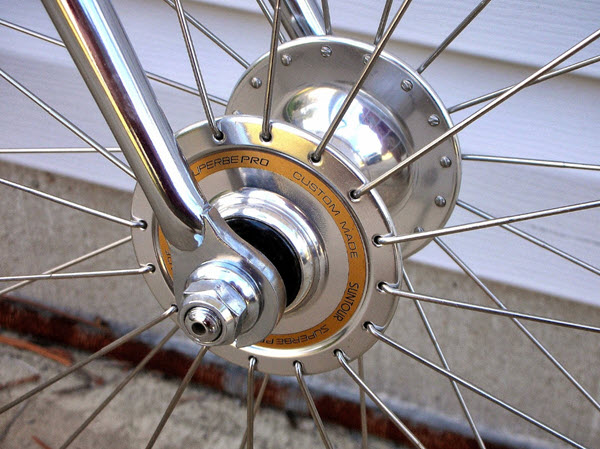
The frame was sourced through Blueprint Bikes of Dallas, Texas. The wheels are a Suntour Superbe Pro and Sun Mistral track set, also from Blueprint Bikes, matched to a Suntour Superbe Pro headset to keep the hub and headset from the same group. Suntour’s Superbe Pro line, introduced in the early 1980s, was the company’s premium track and road group and competed directly with Shimano Dura-Ace for NJS specification.

Building or maintaining a fixed-gear bike like this one calls for a few track-specific tools and parts. While the vintage NJS components here are collector items, riders putting together a modern fixed-gear setup can find current track and maintenance gear at Competitive Cyclist.

Top Components on This NJS Bike

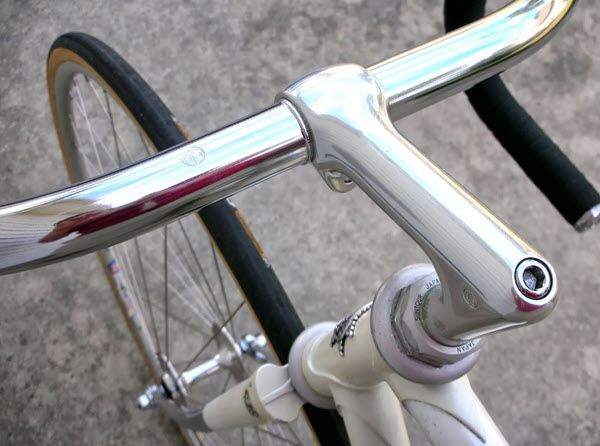
The cockpit uses a Nitto Pearl 100 NJS stem with Nitto B123 NJS track bars in a 40cm width. The drivetrain runs a 48-tooth Sugino Mighty Competition NJS chainring with a Shimano Dura-Ace 15-tooth NJS cog, a common keirin gear combination that yields a fixed ratio suited to track sprinting.

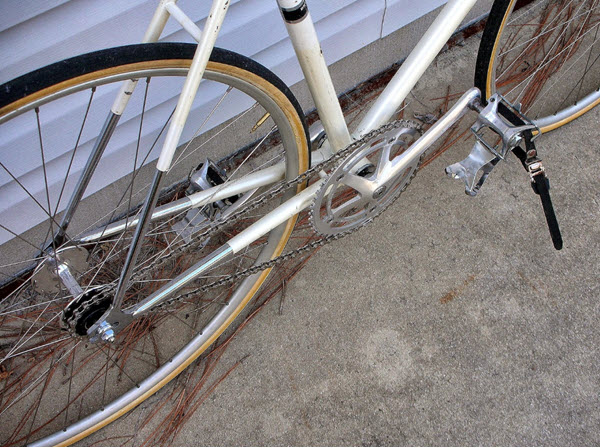
Power transfer is handled by a Sugino bottom bracket and crankset, with the seat post also from the Suntour Superbe Pro group. The pedals are Suntour Sprint track pedals fitted with MKS toe cages. The saddle is a Selle San Marco Laser, finished with cloth handlebar tape for a period-correct appearance. This mixed-maker approach is exactly what defines an NJS bike: a coherent build assembled from parts individually certified by approved manufacturers.

Frame Year vs. Build Year

A note on dating: the frame is vintage, but several components in this build—Suntour Superbe Pro and the Dura-Ace NJS cog among them—date to the 1980s. This is common with track and keirin bikes, where frames outlast multiple component generations and are routinely rebuilt with current NJS-legal parts. The result is best described as a vintage Bridgestone frame with a later NJS-certified build, rather than a fully period-original machine.

Frequently Asked Questions

What is an NJS bike?

An NJS bike is a fixed-gear track bicycle whose frame and components are certified by the Japan Keirin Association for use in sanctioned keirin racing. Certified parts carry an NJS stamp and are made by a limited list of approved manufacturers.

Why are NJS bikes and parts sought after?

NJS components are built to a strict safety and quality standard for professional racing, and many are made in limited numbers by approved Japanese makers. Collectors value the build quality, the keirin heritage, and the consistency of the standard.

Can you ride an NJS track bike on the road?

It can be ridden on the road as a fixed-gear bike, but it ships without brakes and with track geometry. Road use generally requires adding at least a front brake and accepting a stiff, twitchy ride compared with a road frame.

Sponsored · Competitive Cyclist

Competitive Cyclist Deals.
No code required.

Up to 50% off

Gorewear Apparel
All-weather cycling kit built for serious conditions.

Up to 40% off

Bikes on Sale
Selected road and performance bikes at reduced pricing.

Shop Now

Tools & Maintenance
Everything you need to keep your ride dialed.

Browse All Deals →

We are an Amazon affiliate and earn from qualified Amazon purchases with no cost to you. This is for ANY product that you purchase through our links. We are also an affiliate for Competitive Cyclist and JensonUSA. This way we can provide you with competitive pricing and products.