
The Innovation of the 1981 Vista Aero Bicycle Team Shimano
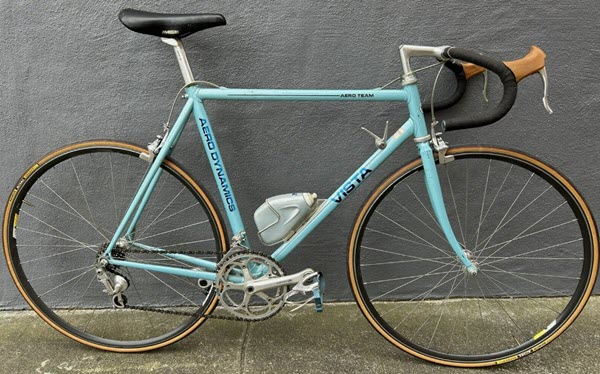
What is the 1981 Vista Aero Bicycle Team Shimano?
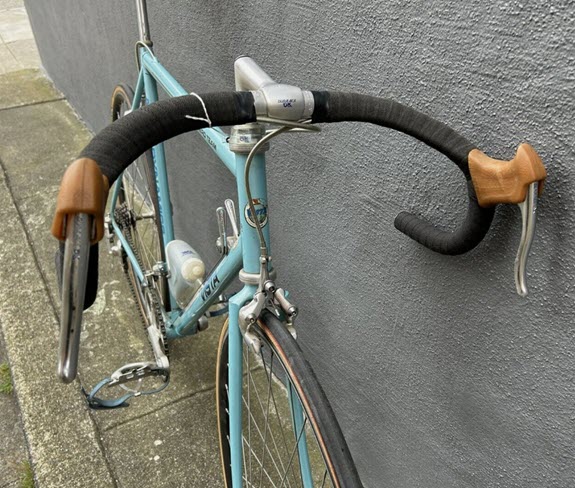
The 1981 Vista Aero Bicycle is a Japanese-made road bike built by Araya and spec’d with the Shimano Dura-Ace AX 7300 aerodynamic groupset and Tange multi-shaped aero tubing. Produced during the short-lived Aero Era of the early 1980s, it was built specifically to showcase Shimano’s AX component system. It is now a sought-after collector’s bicycle valued for its technical specifications and period-correct engineering.

Background and Origin
The 1981 Vista Aero Bicycle was manufactured by Araya, a Japanese wheel and frame builder with a long production history. This was not a general-production road bike — it was built as a platform vehicle to demonstrate the Shimano Dura-Ace AX 7300 aerodynamic component group. Production was limited to the Aero Era, a brief window in the early 1980s when aerodynamic road equipment was being aggressively developed by Japanese component manufacturers.
The frame used Tange chromoly tubing with multi-dimensional aero profiling, meaning tube cross-sections varied in shape to reduce frontal drag — a significant departure from the round butted tubing standard of the time. The combination of an aero-profiled frame with a fully matched aero groupset made the Vista Aero a technically coherent package, uncommon among production bicycles of this period.
Sponsored · Competitive Cyclist
Shimano Dura-Ace AX 7300 Components
The Shimano Dura-Ace AX 7300 groupset was introduced in 1981 and discontinued by approximately 1984. The AX designation stood for “Aero X” and represented Shimano’s first systematic attempt to engineer drag reduction across every component in a drivetrain.
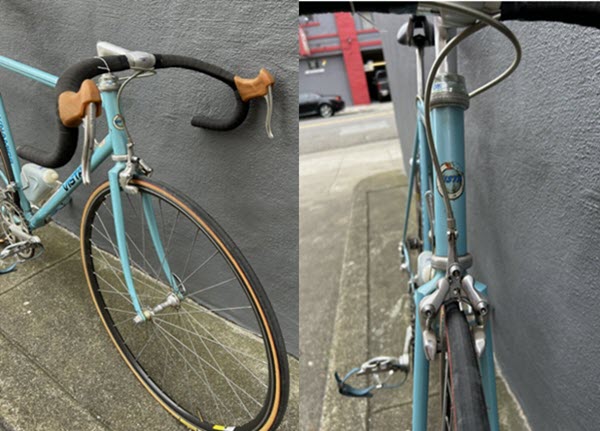
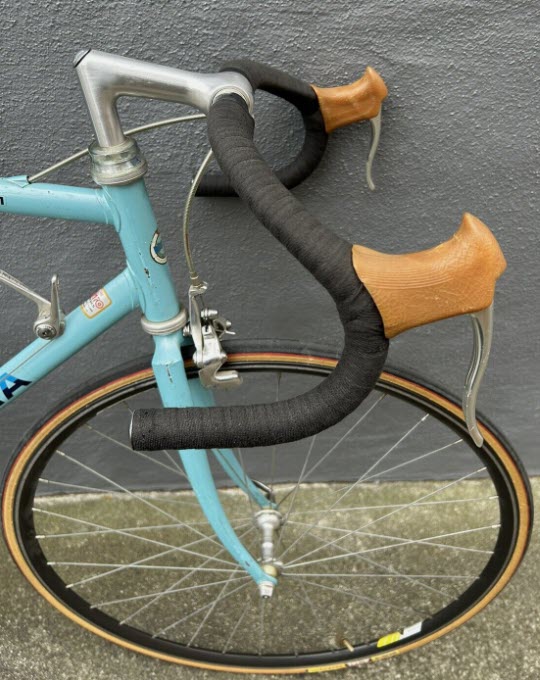
Brake levers used fully internal cable routing, eliminating exposed housings along the handlebar — a feature that would not become standard practice until decades later. Derailleurs featured low-profile curved body shapes with the rear cable path routed under the bottom bracket shell rather than through a conventional down tube stop.
The crankset incorporated early chainring ramp and pin engineering within a streamlined spider profile. Pedals used a recessed cleat system with a flatter body than standard Dura-Ace of the era. Headset and seatpost components continued the cohesive aero shaping across the complete build.
|
The AX 7300 group faced practical criticism over cable tension consistency with the internal routing system, contributing to its short market life. This is also why complete, unmolested builds are uncommon today — the brake lever internal routing is the most frequently damaged or modified piece on surviving examples.

Tange Aero Tubing Construction
The Vista Aero frame used Tange chromoly with oval and teardrop-profile shaping on the fork blades and seat stays, with non-circular cross-sections incorporated into the main triangle. Multi-shaped tubing was technically demanding to produce — non-round tubes require specific jig setups and present different stress distribution characteristics than round tubing under load. Lugless construction was used throughout, consistent with higher-end Japanese frames of this period that prioritized clean joinery over European-style lugwork.
Collector Status and Market Value
Complete, unrestored examples with matching AX 7300 group sets are uncommon. The three-year production window of the AX group means sourcing replacement parts for incomplete builds is difficult. NOS AX components surface occasionally on eBay and Japanese auction platforms at significant premiums.
“For high-end component sourcing on restored builds, Competitive Cyclist carries an extensive road groupset selection.”
Collector condition priorities in order: AX groupset completeness, original frame finish, and correct wheel spec. A complete original-condition example in rideable spec represents a specific, documented moment in Japanese bicycle engineering that does not repeat elsewhere in the vintage market.
Legacy
Japanese manufacturers were not replicating European road bikes during this period — they were independently engineering aerodynamic solutions the broader industry would not fully address until the 1990s. The AX system, Tange aero tubing, and Araya frame construction represent a coherent engineering program. The 1981 Vista Aero Bicycle remains technically relevant both as a collector artifact and as a rideable example of early aero development done right.
Frequently Asked Questions
Q: Who manufactured the 1981 Vista Aero Bicycle frame?
A: The frame was built by Araya, a Japanese
manufacturer known for wheel production and frame building. The Vista Aero was built as a showcase platform for the Shimano Dura-Ace AX 7300 aerodynamic group during the early 1980s Aero Era.
Q: What made the Shimano Dura-Ace AX 7300 groupset technically distinctive?
A: The AX 7300 was Shimano’s first full-system aerodynamic drivetrain, featuring internally routed brake cables, low-profile aero derailleur bodies, and cable routing running under the bottom bracket shell. Produced from 1981 to approximately 1984, complete intact builds are rare today.
Q: What type of tubing was used on the Vista Aero frame?
A: Tange chromoly with multi-dimensional aero profiling — oval and teardrop cross-sections on fork blades and seat stays — combined with lugless construction. This was designed to reduce frontal air resistance and was technically more demanding to manufacture than standard round-tube frames.
 About the Author
James Hickman is a former Expert coach with USA Cycling who coached cyclists across all skill levels, from CAT 2 racers to intermediate and beginning riders. He also served as a coach for the Leukemia and Lymphoma Society’s Team In Training program, where he successfully trained individuals of varying abilities to complete century (100-mile) rides, combining his passion for cycling with meaningful community impact.
We are an Amazon affiliate and earn from qualified Amazon purchases with no cost to you. This is for ANY product that you purchase through our links. We are also an affiliate for Competitive Cyclist and JensonUSA. This way we can provide you with competitive pricing and products.