
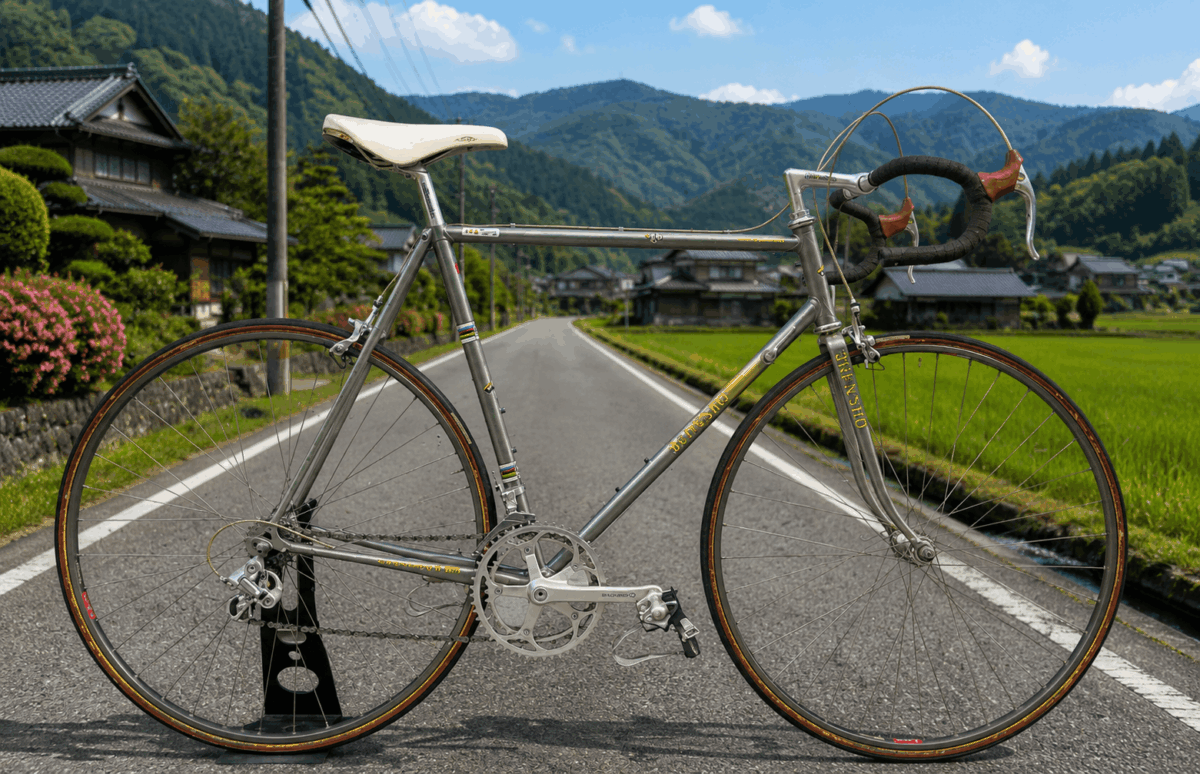
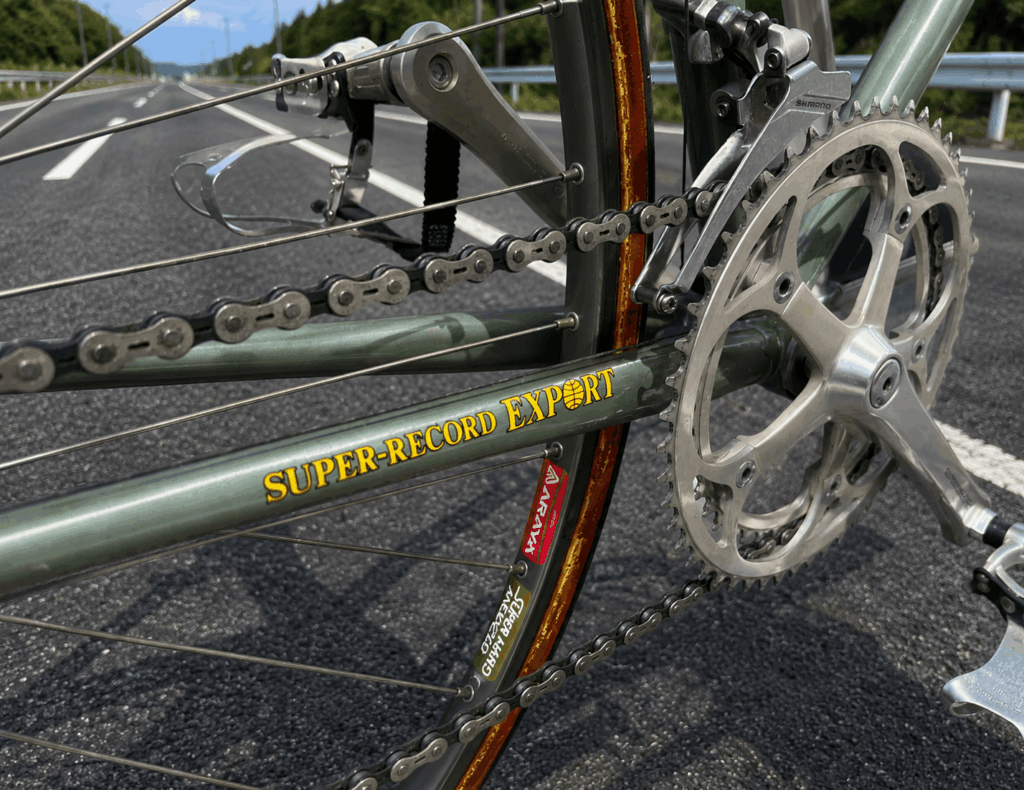
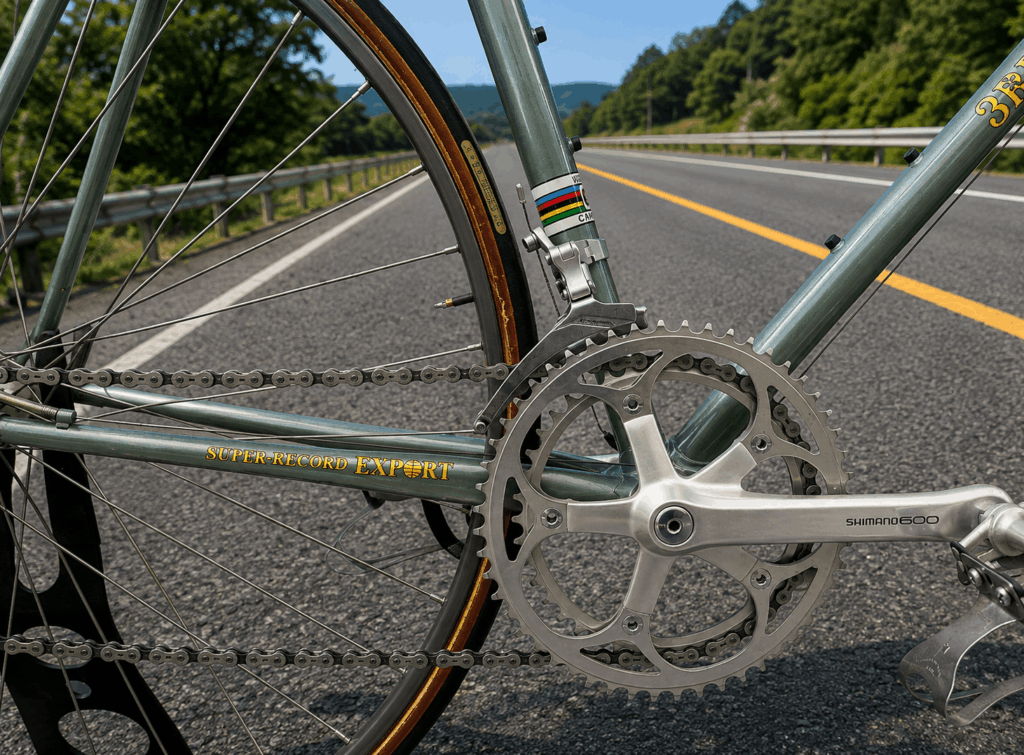
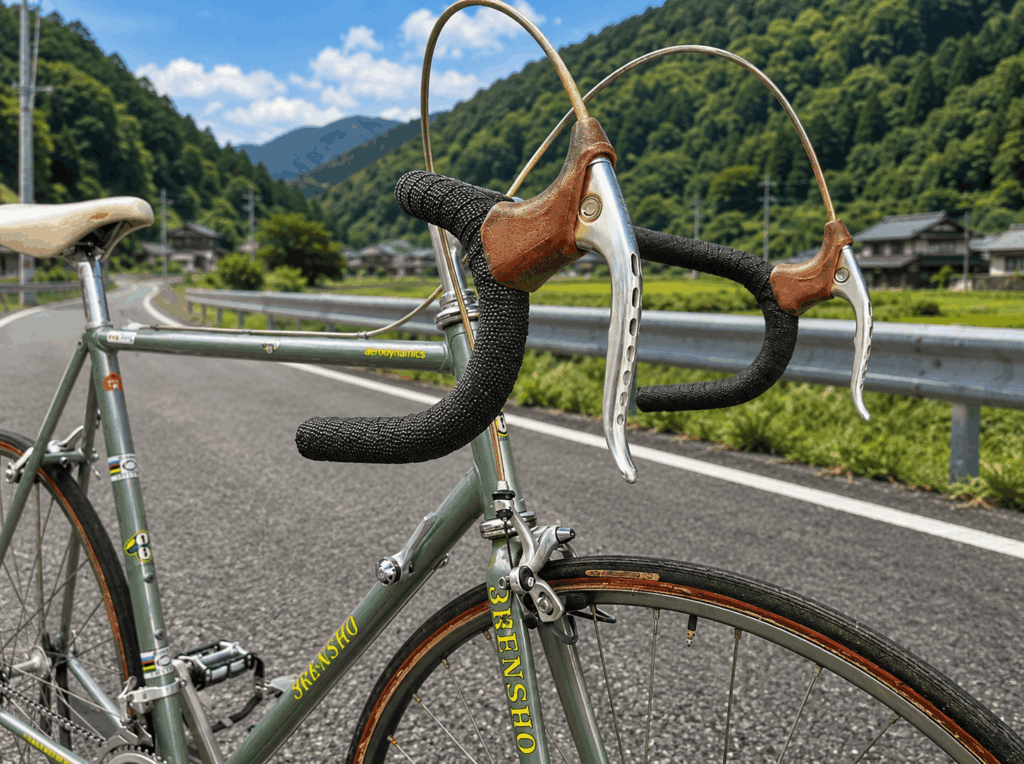
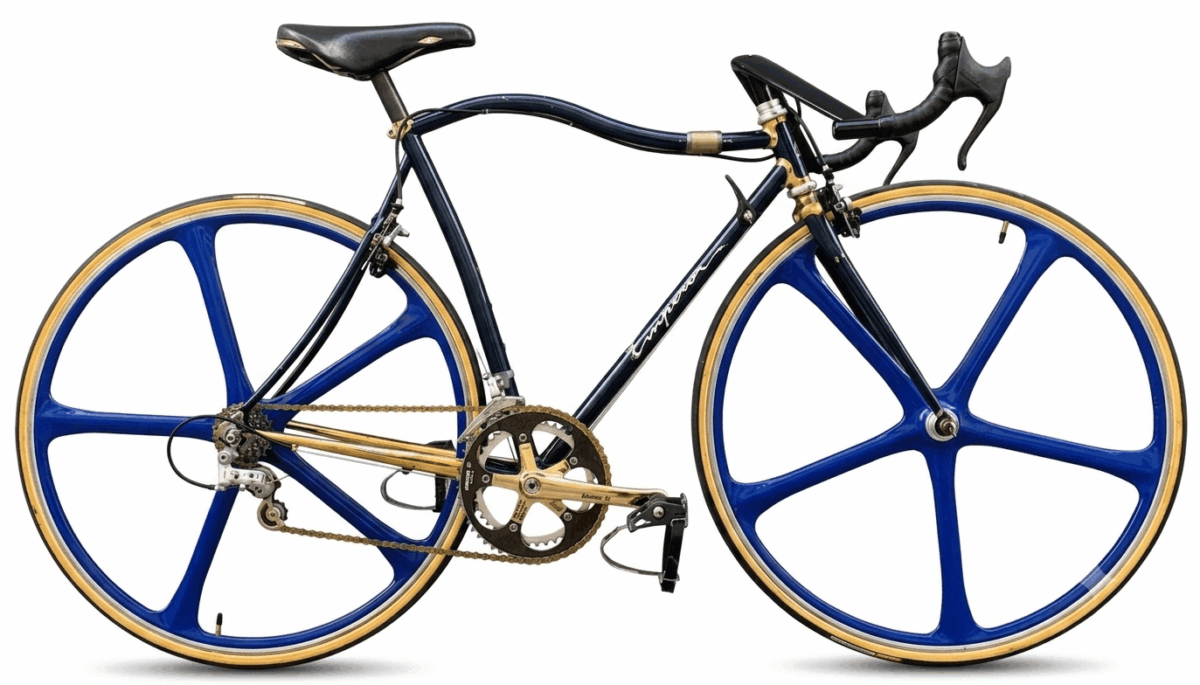
Quick Answer: The 3Rensho Super Record Export “Aerodynamics” is a mid-1980s Japanese steel road frame handbuilt by Yoshi Konno in Chiba, Japan. It replaced the earlier non-aero Super Record Export and is identified by its aero fork crown, teardrop-section seatstays and flush down tube shifter bosses. This example is a 575mm center-to-top frame in original paint and decals, built with Ishiwata “Super Strong” tubing and a Shimano 600 groupset, with 3Rensho-engraved stem, seatpost and branded tubular tires. Unrestored, well-preserved originals like this are the most collectible configuration.
By James Hickman — Former USA Cycling Expert Coach | Bicycle of the Week: Vintage Japanese Road Bikes
Amazon Affiliate I earn from qualified purchases
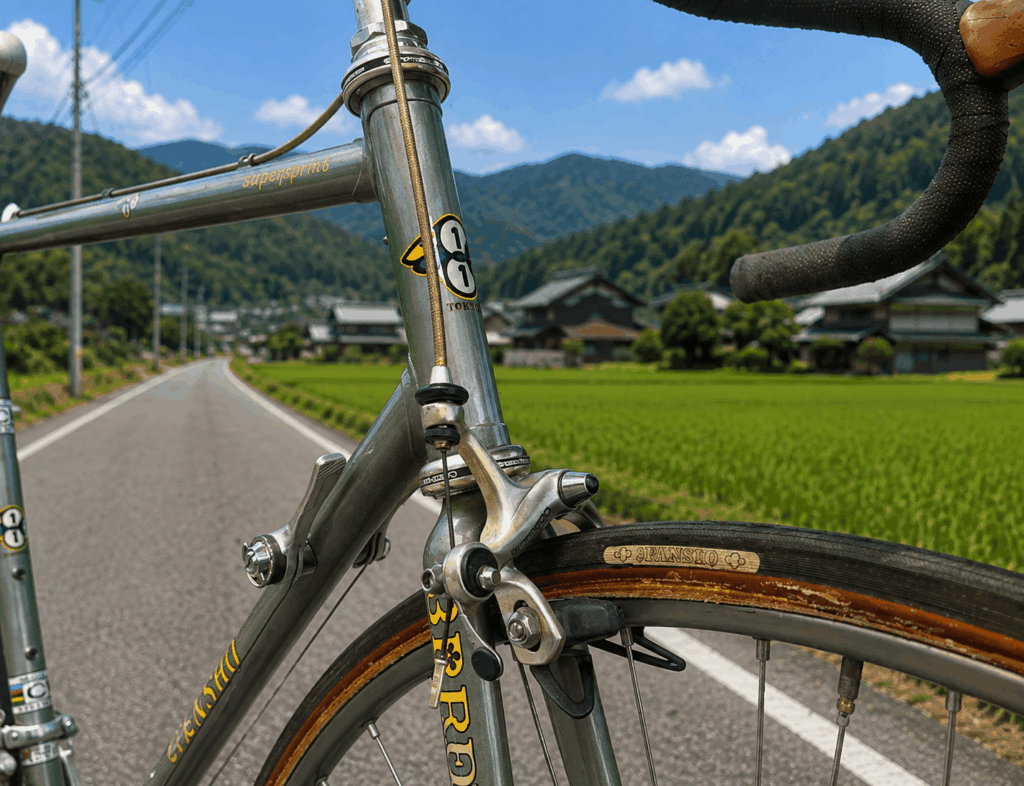
Every so often a bike crosses my bench that I hesitate to touch. This 3RENSHO Super Record Export “Aerodynamics” is one of them. I have spent years buying, stripping, and rebuilding Japanese steel, and my instinct is almost always to disassemble and refresh. Not here. This one has survived four decades with its original finish, original decals, and its 3RENSHO-specific parts still on it. The right move is preservation, not restoration.
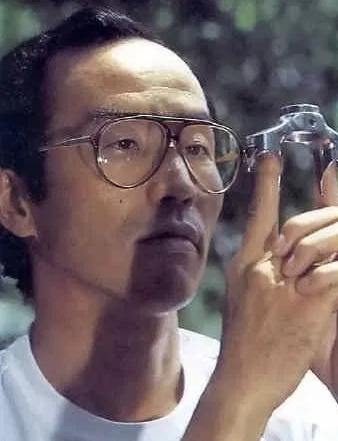
Who Was Yoshi Konno?
3RENSHO was created by Yoshi Konno, who opened the CYCLONE shop in Chiba around 1974, a year after helping establish Cherubim in Tokyo with his brother Hitoshi. The name “San Rensho” means three consecutive victories, a reference to a keirin rider winning heats, semi-final and final on three straight days. It did not happen often, which was exactly the point.
Konno famously taught himself by unbrazing Cinelli frames acquired after the 1964 Tokyo Olympics, then went on to design his own proprietary lugs and fittings. At its peak the shop ran with six apprentices, two of whom, Masahiko Makino and Koichi Yamaguchi, became significant builders in their own right. Yamaguchi left in the 1980s to build for the U.S. national team. Konno’s building career ended in 1995 after a catastrophic drunk-driving crash that killed five people and left him paralyzed. The marque closed shortly after, which is a large part of why nothing new will ever be added to the supply.
What “Aerodynamics” Actually Means
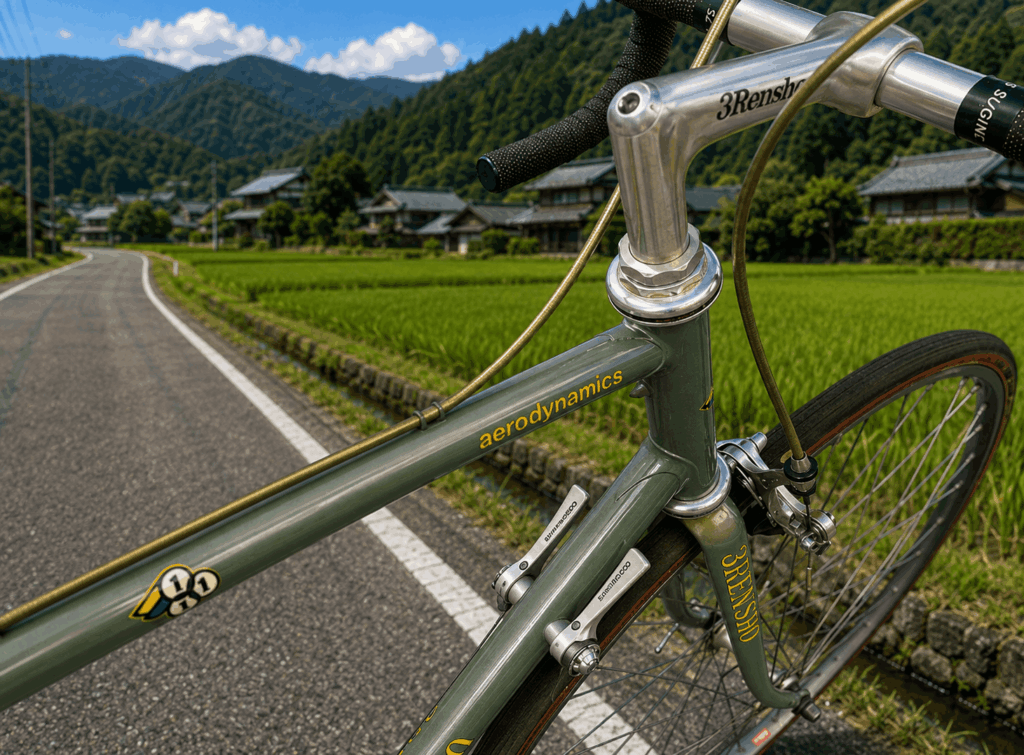
The word on the top tube is not decoration. According to Andrew Muzi of Yellow Jersey, 3RENSHO’s longtime North American importer, the aero model superseded the standard Super Record Export around 1984–85. The visual tells are consistent across surviving examples: a smooth, blended fork crown instead of a traditional sloping crown, teardrop or oval-section seat stays rather than round, and the flush “type B” down tube shifter mounting that matched the aero-era Shimano groups. Get the bike up on a quality repair stand before you buy — these details are easy to miss at floor level and easy to spot at eye height.
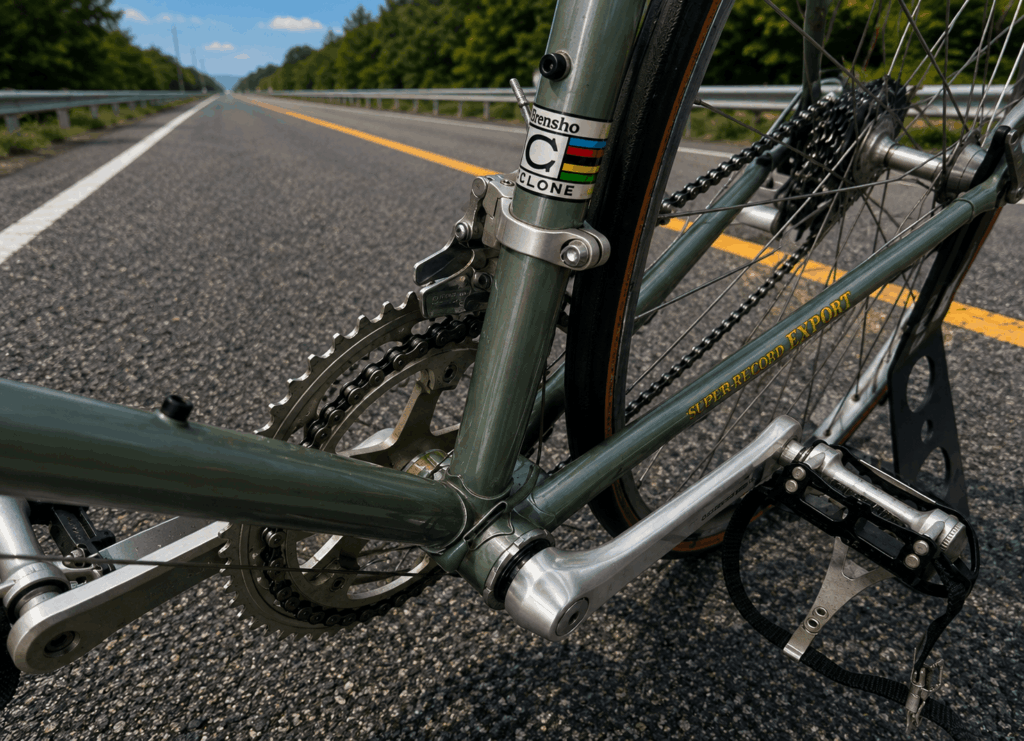
Worth knowing before you go hunting: the Super Record Export and Super Record Aero frames imported to the United States did not get 3RENSHO’s cast Super Ends dropouts. Those were reserved for premium models like the Katana and the later NJS track frames. If a seller is telling you an SRE Aero should have them, they are working from the wrong catalog page.
The Tubing Question
This frame carries the ISHIWATA 3RENSHO SUPER STRONG decal, the one with the small elephant. Here is the honest answer that most listings will not give you: Ishiwata never published a spec sheet for “Super Strong” the way it did for 015, 019, 022 and 024. Long-running owner discussions point to 022 or 024, sometimes possibly mixed within a single set, and seatpost sizing on surviving frames has not settled the argument. Treat it as a quality Ishiwata chrome-moly set chosen by Konno for a stiff, durable road frame, and be suspicious of anyone quoting an exact wall thickness with total confidence.
If you do put a frame like this back on the road, the one piece of modern equipment I will add is a computer that mounts without touching the paint — the CYCPLUS G1 wireless GPS bike computer weighs 70g and needs no wheel magnet or fork sensor, so nothing gets clamped to original chrome or decals. As an Amazon Associate, I earn from qualifying purchases at no additional cost to you.
The Shimano 600 Build
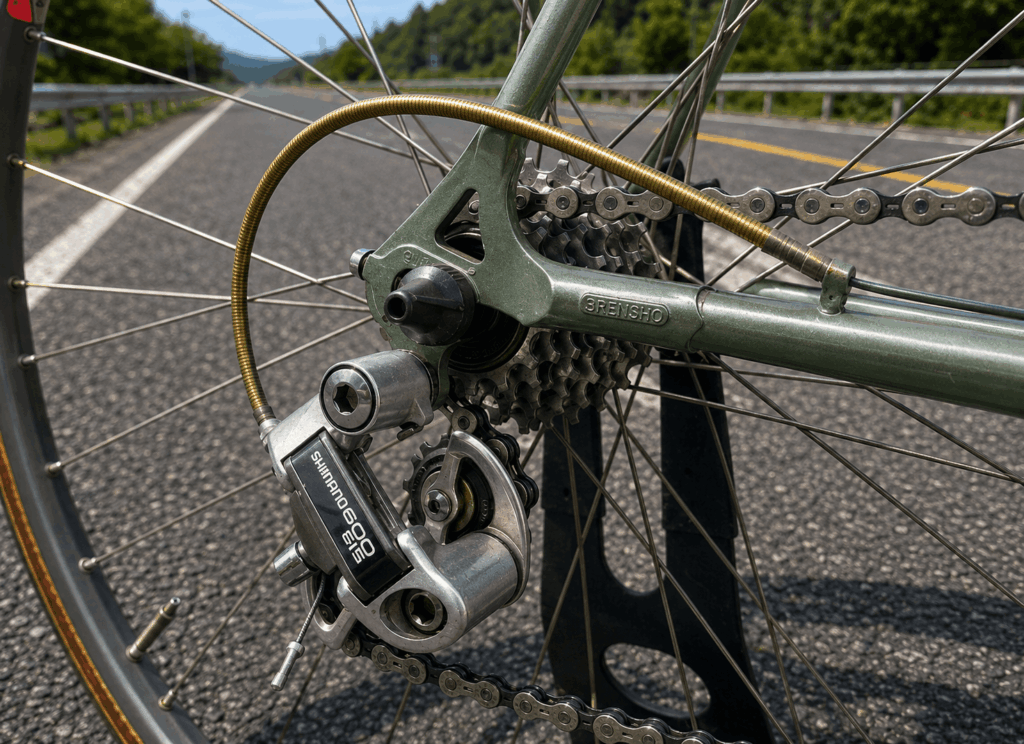
The group set here is Shimano 600, and that is period-correct rather than a compromise. In the mid-1980s, 600 was Shimano’s fast road group sitting just under Dura-Ace, and on export-market 3RENSHOs it was a common factory specification. It shifts cleanly, it is still serviceable, and parts remain findable.
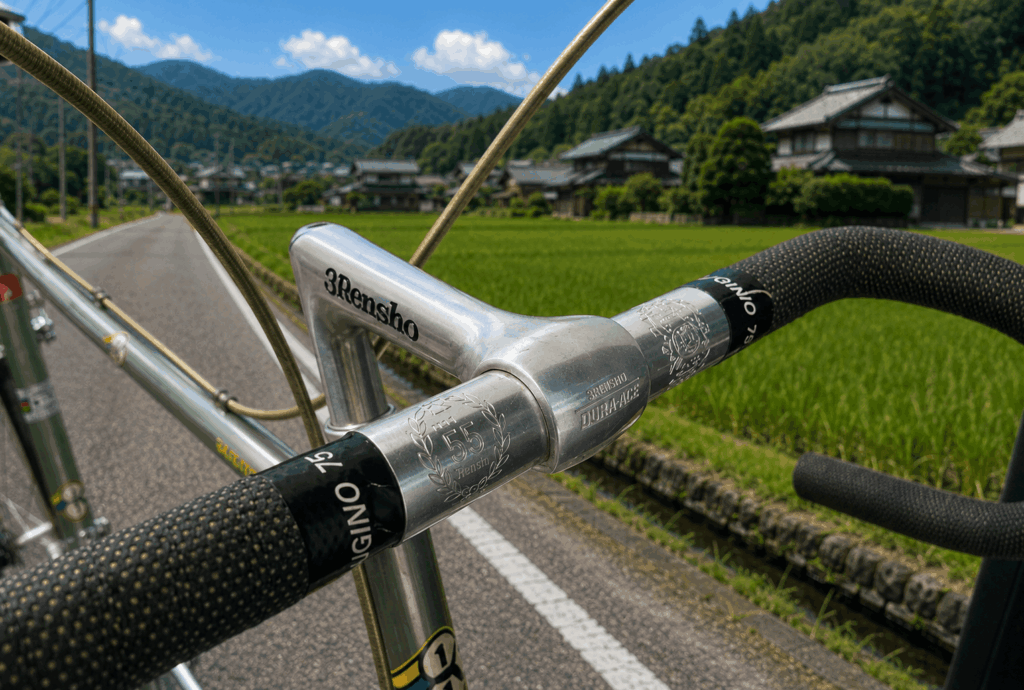
What elevates this particular build is the small stuff. The stem is a Shimano Dura-Ace unit engraved 3RENSHO. The seatpost is a Shimano 600, also 3RENSHO engraved. Those pantographed pieces were shop-level details, not mass-production items, and they are the first things to disappear when a bike gets parted out or “upgraded” over the decades. The bike also still wears 3RENSHO-branded tubulars, which at this age are display items rather than riding tires, but their survival tells you how little this frame was used.
Sizing: 575mm Center-to-Top
The seat tube measures 575mm center to top, with a 560mm center-to-center top tube. In modern terms that is roughly a 56cm frame with a slightly long-feeling reach by today’s standards, because 1980s road geometry paired a level top tube with a longer front-center than most riders now expect. If you normally ride a 56 with a 100mm stem, plan on a shorter stem here, and check your saddle height against the seatpost insertion before you commit.
The other thing period geometry asks of you is a bit more time in the drops, and that is where saddle comfort stops being optional. Vintage saddles look correct and ride like a plank.
A proper chamois solves most of it, and a pair of 3D-padded Bikewa cycling shorts with UPF 50+ and zipper pockets will do more for a two-hour ride on a 40-year-old frame than any component swap.
As an Amazon Associate, I earn from qualifying purchases at no additional cost to you.
Why Original Beats Restored
I restore bikes for a living and I will still say it: repainting this frame would destroy most of its value. Original 3RENSHO paint and decals cannot be replicated convincingly, and the collector market has moved decisively toward preservation. Sales data going back nearly two decades shows 3RENSHO road bikes trading well below the track and keirin frames, in part because road examples in genuinely untouched condition are uncommon. Most got ridden hard, refinished, or stripped for parts.
If you own one of these, my advice is narrow. Clean it, do not polish through the decals. Service the bearings and replace the cables and chain. Store it indoors, out of sunlight, with the tires off the ground. Photograph the serial number and every decal now, while they are intact. Everything else can wait.
Frequently Asked Questions
What year is a 3RENSHO Super Record Export “Aerodynamics”?
Most examples date to roughly 1984 through the late 1980s. The aero model replaced the standard Super Record Export around 1984–85 according to the U.S. importer. 3RENSHO serial numbers do not follow a decodable sequence, so dating relies on features like the fork crown, seatstay shape and shifter boss style.
Is Ishiwata Super Strong good tubing?
Yes. It is a butted Japanese chrome-moly set, widely believed to be in the 022/024 range, chosen for durability rather than the lowest possible weight. Ishiwata never published formal specs under the Super Strong name.
Was Shimano 600 original equipment on 3RENSHO road bikes?
Yes. Shimano 600 was a common factory specification on export-market Super Record Export models, sitting one tier below Dura-Ace in the mid-1980s lineup.
Can you use a modern bike computer on a vintage road bike?
Yes. A self-contained GPS unit is the least invasive option because it requires no wheel magnet, no fork-mounted sensor and no adhesive on the frame. Use a rubber-strap or bar-clamp mount rather than anything that grips painted tubes.
Are 3RENSHO road bikes as collectible as the track frames?
Generally the keirin and track frames command more, since that is where the marque built its reputation. Road models in original, unrestored condition with 3RENSHO-engraved components are the exception and are increasingly sought after.
Should I restore an original 3RENSHO?
No, if the paint and decals are intact. Preservation retains far more value than a repaint. Limit work to cleaning, bearing service and consumables.
James Hickman is a former USA Cycling Expert-level coach who has worked with cyclists at every level, from beginners to competitive racers. He served as a coach for the Leukemia & Lymphoma Society’s Team In Training program, helping riders prepare for and complete century events. A Masters-category racer himself, he competed and earned podium finishes in Southern California events and holds a Platinum finish at El Tour de Tucson, completing the 100+ miles in under five hours.
Related Reading

Bike of the Week |
Bike of the Week |

Brand Profile |
Sponsored · Competitive Cyclist
We are an Amazon affiliate and earn from qualified Amazon purchases with no cost to you. This is for ANY product that you purchase through our links. We are also an affiliate for Competitive Cyclist and JensonUSA. This way we can provide you with competitive pricing and products.