Categories
Japanese Road Bikes

Ultimate NJS Samson Keirin: Racing Machine

Japanese Keirin Frame Heritage and NJS Certification

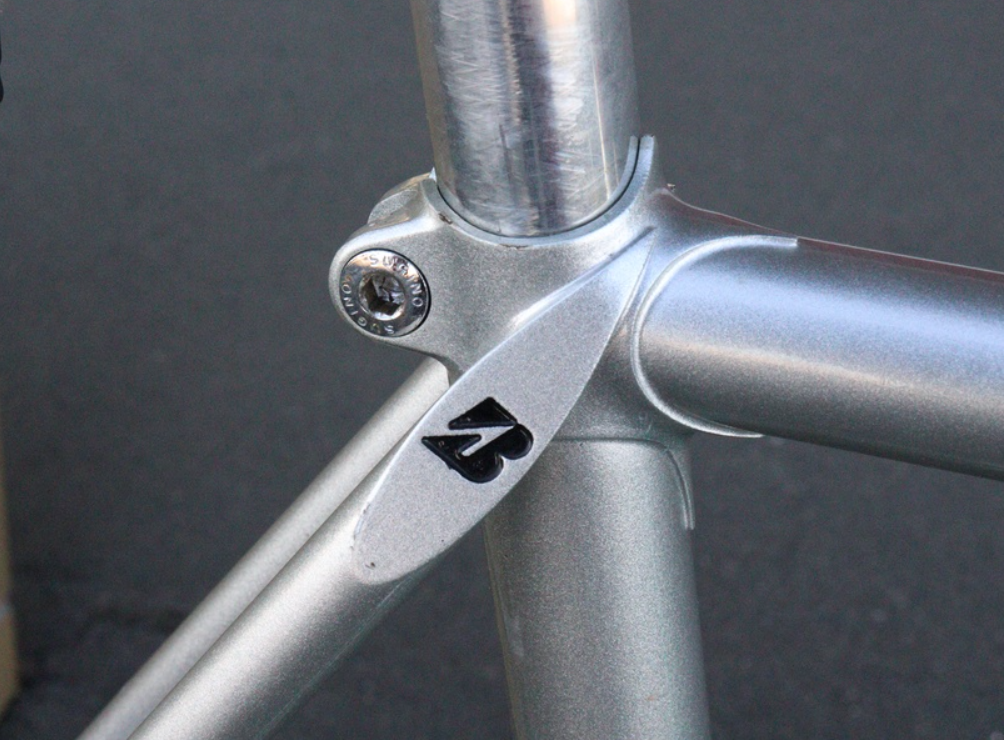
Samzon njs bicycle
SPECIAL THANKS TO THE PEDALROOM.COM FOR THE IMAGES CONTAINED IN THIS ARTICLE!

NJS Stamp Authentication and Professional Keirin Racing History

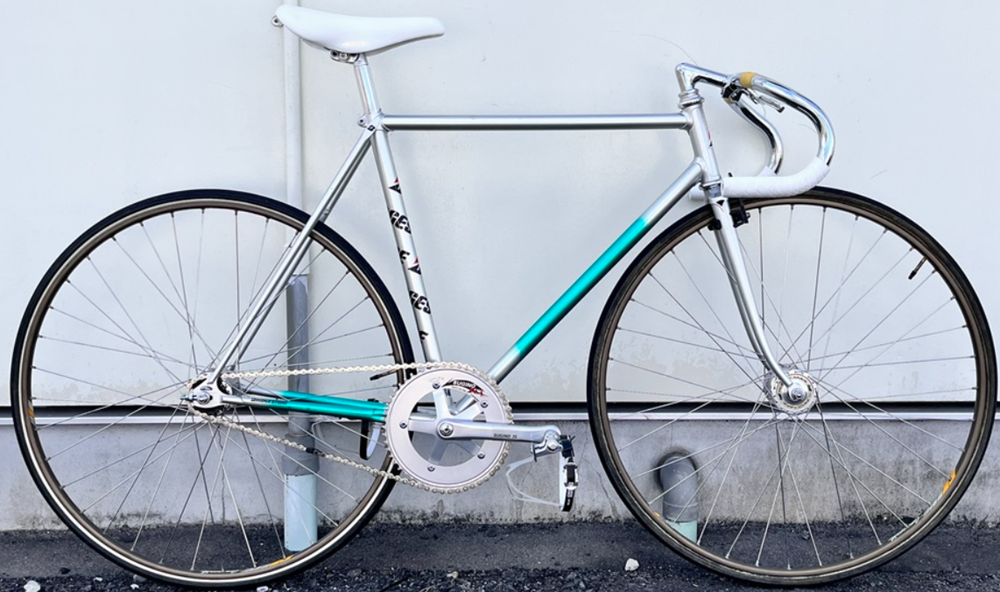
This weeks “Japanese Bicycle of the Week“. This NJS-Japanese Steel classic bicycle design from Japancertified Samson represents a pinnacle of Japanese track bike development, originating from the professional keirin racing circuit through former owner Kuwahara Daishi. The frame’s NJS stamp verifies its compliance with Japan’s strict keirin racing standards, documented before its export from the Japanese cycling industry to Brazil.

The Japanese Cycling Federation’s NJS certification system, implemented through JKA regulations in 1957, exemplifies Japanese cycling tradition through rigorous equipment control. This keirin bike emerged during the early 1990s, when Japanese framebuilders achieved peak refinement in track frame geometry and keirin racing specifications.

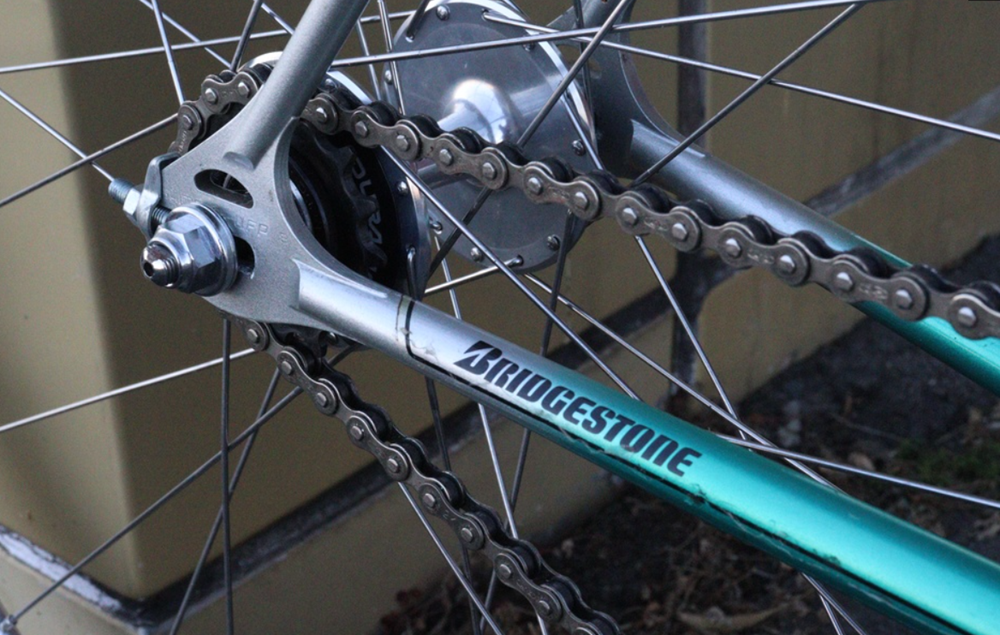
Samson njs hub

The racing provenance of this professional track bike is authenticated through the Japanese keirin racing documentation system. The NJS stamp verifies its use in the cycling betting sport, where velodrome racing demands equipment meet exacting competition grade specifications.

Track Racing Engineering and Competition Components

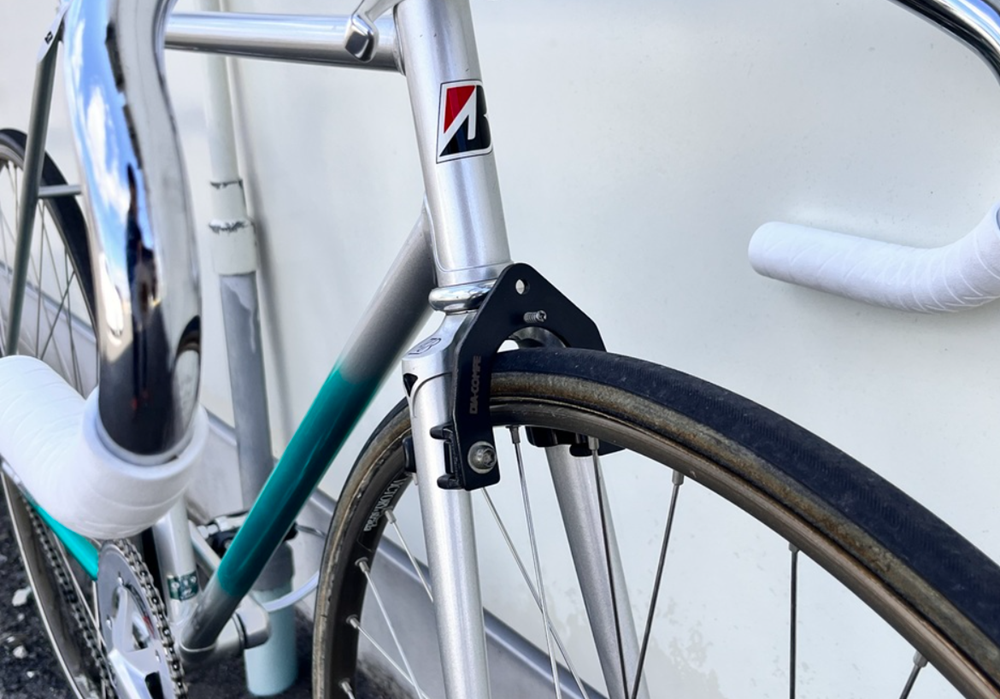
Samson njs headset and fork

Advanced NJS-Approved Frame Construction Methods

The NJS-approved track dropouts and race tubing of this Samson frame incorporate period-correct components, including aerodynamic fork construction paired with a precision Hatta headset. The sprint geometry adheres to track racing specs, featuring the classic fixed gear racing frame design common to Japanese keirin frame construction.

🔥 Upgrade Your Ride: RockBros Premium Cycling Accessories – Now 30% Off on Amazon! Shop Today →HERE

The high tensile steel frame utilizes competition certified tubing profiles meeting stringent NJS requirements. The fork’s racing pedigree is evident in its track racing geometry, optimized for professional keirin riders’ demanding sprint techniques. The classic racing bicycle design demonstrates the Japanese cycling heritage through its steel track frame construction, with every component meeting JKA certification standards.

Competition-Grade Drivetrain Specifications

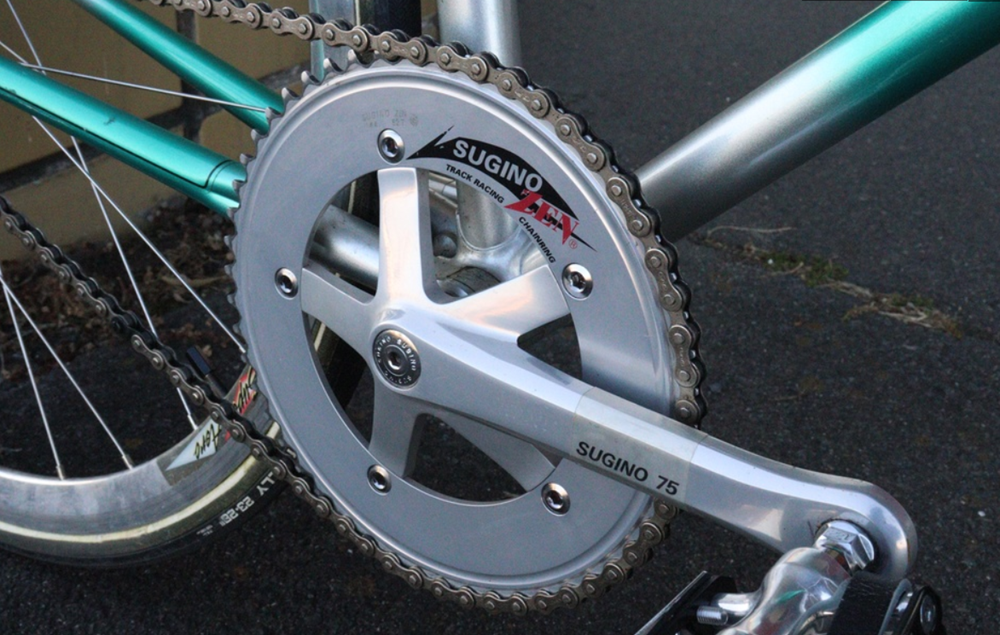
Samson njs drivetrain

NJS-Approved Track Crankset Integration

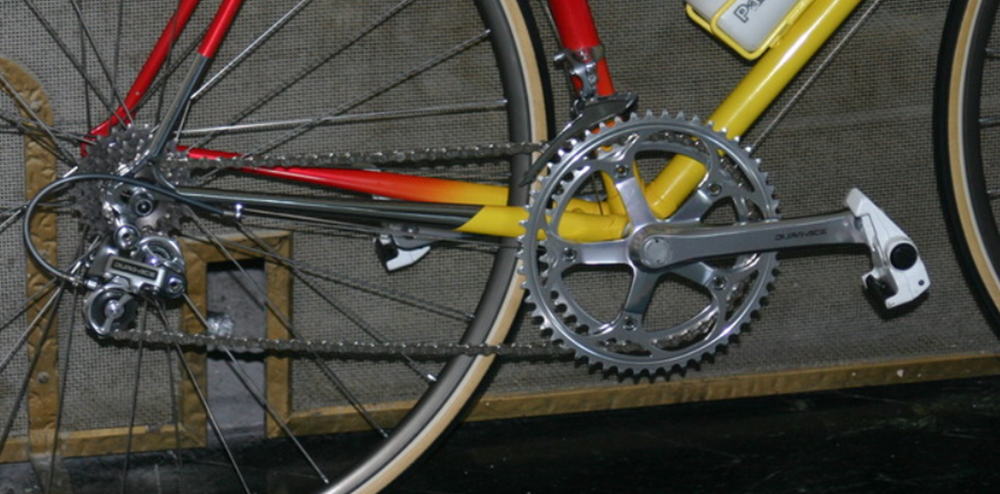
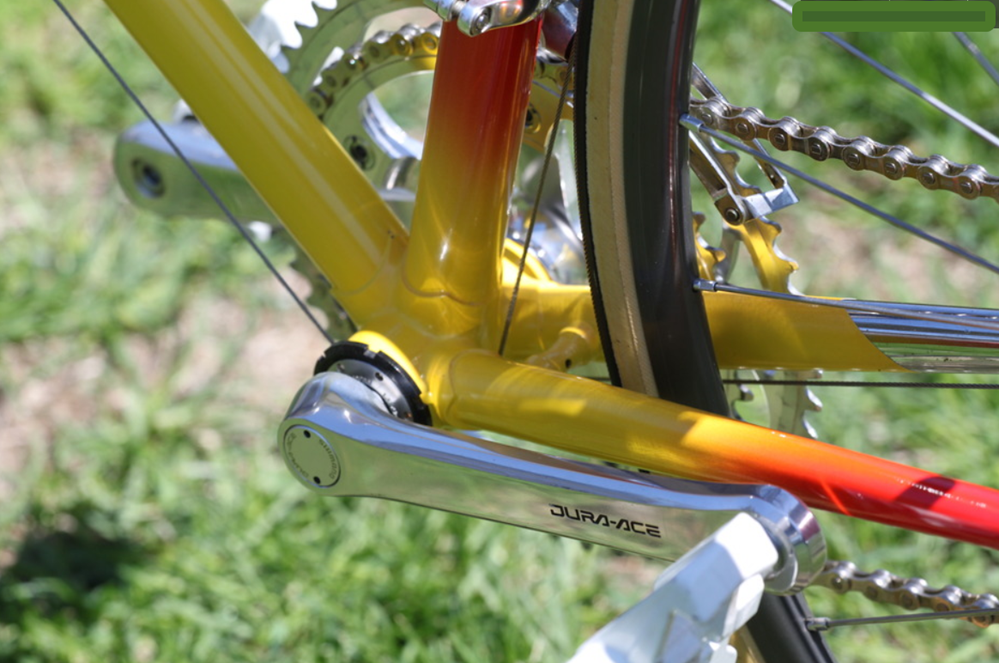
The drivetrain assembly meets comprehensive NJS certification requirements, featuring a track crankset configuration that includes the Dura Ace 7600 mounted to a competition-grade Hatta bottom bracket. The track chainring options showcase Japanese cycling industry engineering, offering either a Sugino Zen Track 49T or Dura Ace 50T, both paired with an NJS-approved fixed cog and racing chainline setup.

the njs cog

The Hatta bottom bracket demonstrates the exacting standards of NJS manufacturers, incorporating precision-machined cups meeting keirin racing specifications. The racing pedigree extends to the fixed gear racing chainline measurement of 42.5mm, achieved through JKA certification mandated spacing. The NJS-approved parts include an Izumi chain meeting the velodrome racing requirement for tensile strength, essential for professional track bike performance.

Professional Racing Contact Points

Samson njs handlebars

NJS-Verified Track Handlebars and Racing Components

Initially, the NJS-certified track handlebars follow classic racing ergonomics. Subsequently, Nitto NJPRO stems offer multiple positioning options. Meanwhile, these stems pair with competition-grade B125 or B201AA bars.

Furthermore, this keirin bike’s contact points showcase Japanese cycling culture. Additionally, the vintage track bike position demands precise control. Finally, a traditional racing saddle setup completes the cockpit design.

🌟 Elite Direto XR Smart Trainer – Train Like a Pro. Amazon Limited Time Offer →HERE

The track racing history influences every component choice, with NJS-approved parts including the steel lugs joining stem to professional track bike bars. The period correct components maintain Japanese keirin racing specifications, from the track handlebars’ exact dimensions to the racing saddle’s position requirements established through keirin school training protocols.

Track Racing Wheelset and Essential Equipment

NJS wheelset

NJS Competition-Certified Running Gear

First, the wheelset configuration reflects Japanese track bike tradition. Subsequently, NJS-verified track hubs connect to competition-specific rims. Meanwhile, the professional track bike specs include tubular tires. Furthermore, essential keirin racing accessories complete the build. Additionally, NJS-approved chain tensioners provide precise adjustment. Finally, protective equipment meets strict JKA certification standards.

Initially, the wheel building follows classic racing bicycle principles. Moreover, each track hub carries NJS stamp verification for its bearing assemblies. Subsequently, the Japanese cycling heritage emerges through the traditional spoke lacing pattern. Furthermore, this pattern meets strict velodrome racing requirements. Additionally, it highlights Japanese framebuilders’ expertise in fixed gear wheel dynamics. Therefore, all wheelset components maintain the rigorous competition standards required by NJS manufacturers.

🏆 GARMIN Edge 530 GPS – The #1 Rated Cycling Computer of 2024. Save $50 on AmazonHERE

If you enjoyedSelle Italia Model X Saddle – 10,000+ 5-Star Reviews. Free Amazon Shipping → learning about this week’s featured bicycle, don’t miss out on some cycling information you can use and enjoy! Visit our website at pacelinebikes.com Plus, check out our YouTube channel, Bicycle Restoration Man, for detailed restoration videos and showcases of our finished projects. Subscribe and join our community of bike enthusiasts!
We earn from qualified Amazon purchases with NO cost to you. ANY item that you need or were going to purchased anyway through any of our links, helps support this site. Thank you for your support!

Categories
Japanese Road Bikes

Cherubim Bike: The Triplecrown Japanese Excellence

The Cherubim Bike Legacy: From Tokyo’s Keirin Culture to Street Art

Cherubim bike

Featured as this week’s Japanese Bicycle of the Week, theJapanese Steel classic bicycle design from Japan Cherubim bike Triplecrown represents decades of craftsmanship. Initially, Hitoshi Konno founded the company in 1970s Tokyo, drawing inspiration from Japan’s competitive keirin racing scene. Subsequently, while working at C-Sprint workshop, Konno transformed Cherubim bikes into a distinguished name in custom steel frame manufacturing.

cherubim bike bottom bracket

Moreover, each Cherubim bike requires a precise silver brazing process at 750°C, which ensures cleaner joints and superior control versus brass brazing. Furthermore, the frame features distinctive minimalist lugwork and clean lines, purposefully contrasting traditional European designs.

PEARL IZUMI AmFIB Cycling Gloves: Transform frigid winter rides into cozy adventures with premium gel padding and split-finger warmth technology – Your hands deserve this upgrade. Shop Now Amazon

Finally, the frame undergoes multiple alignment checks using traditional Japanese tools, maintaining tolerances within 0.5mm. Consequently, the Triplecrown’s geometry (53cm seat tube, 52cm top tube) exemplifies these standards while offering practical features such as increased tire clearance and minimal toe overlap for urban riding.
cherubim bike frameset

Premium Drivetrain Components

At the heart of this Cherubim bike’s drivetrain sits the legendary Sugino 75 crankset, which is perfectly paired with a Phil Wood bottom bracket, renowned for its exceptional durability and smooth operation. Furthermore, the classic 49-tooth Sugino 75 chainring operates harmoniously with an EAI Deluxe 19-tooth cog, establishing a gear ratio of 2.58:1 (or 70.1 gear inches).

Subsequently, this ratio enables the Cherubim bike to achieve an optimal balance of acceleration and cruising speed in urban environments. Moreover, power transfer is optimized through the Izumi V Super Toughness chain, which is widely regarded as the gold standard in track bike chains due to its superior tensile strength and precision manufacturing.

cherubim bike rear cog

Additionally, the MKS Sylvan Stream Next pedals complete the drivetrain with their innovative sealed bearing design and replaceable pins for enhanced grip. To understand the gear calculations further, this Cherubim bike’s ratio translates to approximately 5.45 meters of distance traveled per crank revolution. In practical terms, when riding at a comfortable cadence of 90 RPM, the bike can maintain a speed of roughly 29.5 km/h (18.3 mph).
cherubim bike hub

Wheelset & Control Points

The Cherubim bike’s core features Dura-Ace 7600 NJS hubs with 32-hole drilling. These incorporate cup-and-cone bearings for optimal smoothness. High polished flanges and sealed units protect against weather. The hubs connect to Araya RC-540 rims via Hoshi NJS double-butted spokes. Drive side tension maintains 120-130 kgf, while non-drive side holds at 100-110 kgf.

DEFEET WOOLIE BOOLIE MERINO SOCKS From frozen commutes to frosty trails, these 6″ cuff merino wool cycling socks keep toes toasty to 20°F – Grab yours before winter hits! Amazon Link

Control begins with Nitto B259 Riser bars at 50cm width. A Nitto Pearl 8 NJS stem secures these bars. The setup offers 60mm rise with 12-degree sweep. The Chris King GripNut headset uses 27 precision bearings. Its two-step locking mechanism ensures zero play.

cherubim bike wheelset

The front axle spans 15mm, while rear spacing measures 110mm to NJS standards. Araya RC-540 rims feature 36mm depth and 19mm internal width. These specs allow tire pressures between 95-120 PSI. The Cherubim bike’s wheels maintain lateral trueness within 0.3mm. This precision ensures stable cornering at high speeds.

cherubim bike

Japanese Performance Accessories

The Cherubim bike’s cockpit centers on the Nitto Pearl 8 NJS stem, a piece that exemplifies Japanese craftsmanship. Forged from premium aluminum alloy, this 90mm stem maintains a classic 73-degree angle. Furthermore, its distinctive four-bolt faceplate design ensures secure bar clamping at 8Nm. The pearl finish, achieved through a specialized anodizing process, provides both aesthetic appeal and durability

cherubim bike seatpost

Comfort meets tradition as this Cherubim bike employs an Ergon SR Men saddle, featuring a pressure-relief channel and orthopedic foam with specific densities: 8 ILD in the rear, graduating to 14 ILD in the nose section. Additionally, the saddle mounts to a Nitto Jaguar NJS seatpost, precision-machined from 2014-T6 aluminum with a zero-offset design. The post’s distinctive single-bolt clamp mechanism delivers 4-5Nm of torque for secure saddle positioning.

cherubim bike headset

For practical urban use, the Cherubim bike incorporates several key accessories. A hand-hammered Spurcycle Raw Bell, tuned to 98 decibels, provides clear audio signaling. The Nitto Type R bottle cage, crafted from 0.8mm titanium wire, securely holds bottles while weighing only 29 grams. Finally, a traditional traffic charm from Nikko Toshogu Shrine, dating back to 1617, adds cultural authenticity and, according to tradition, protective properties to the build.

If you enjoyed learning about this week’s featured bicycle, don’t miss out on some cycling information you can use and enjoy! Visit our website at pacelinebikes.com Plus, check out our YouTube channel, Bicycle Restoration Man, for detailed restoration videos and showcases of our finished projects. Subscribe and join our community of bike enthusiasts!
We earn from qualified Amazon purchases with NO cost to you. ANY item that you need or were going to purchased anyway through any of our links, helps support this site. Thank you for your support!

Categories
Japanese Road Bikes

Shimano 600 AX: The Pioneering Aero Bike of the 1980s

Revolutionary Aerodynamic Design: Shimano’s 1981 Vision For The Shimano 600AX Bicycle

Shimano 600 AX Bicycle
SPECIAL THANKS TO THE PEDALROOM.COM FOR THE IMAGES CONTAINED IN THIS ARTICLE!

Launch Timing and Market Context

The Shimano 600 AX is this weeks “Japanese Bicycle of the Week”.  In January 1981, Japanese manufacturing innovation reached new heights when Shimano launched their groundbreaking Shimano 600 AX groupset.

shimano 600 ax aero frame set

A revolutionary piece of professional cycling equipment that emerged during a period when European cycling brands dominated the industry. Ultimately, this 1981 time trial bike represented a significant milestone in the cycling innovation timeline.

Initially, the vintage Shimano components targeted the growing time trial market, primarily because professional cycling history showed major competitions were increasingly emphasizing aerodynamic bicycle design. Subsequently, this pioneering bicycle design aligned perfectly with the growing focus on cycling performance enhancement in professional racing.

Shimano 600 advanced technology

Design Objectives

The primary goal of the classic aero bike focused on creating an integrated aerodynamic system through classic component integration, rather than just individual parts.

Consequently, Shimano’s bicycle aerodynamics development team engineered innovative features like internal cable routing, drag reduction technology, and streamlined brake calipers. Furthermore, this historic groupset design prioritized maintaining mechanical efficiency while achieving superior aerodynamic efficiency.

Restore your vintage racing bicycle! Park Tool SK-4 Home Mechanic Starter Kit – Complete maintenance set for classic bicycle restoration. Check price on Amazon

Target Market and Competition

The Shimano 600 AX groupset initially targeted professional time trial equipment users and serious competitive cycling equipment enthusiasts across Europe and Japan. This Japanese cycling innovation competed with established European cycling brands like Campagnolo Super Record and Zeus 2000.

Therefore, Shimano positioned their time trial innovation as a premium product that demonstrated significant advances in vintage bicycle technology, particularly in time trial events where riders competed individually against the clock.

shimano 600 bicycle headset

Shimano 600 AX: The Pioneering Aero Bike of the 1980s

Engineering Innovation: Frame and Components

In March 1981, the Shimano 600 AX frame featured Tange’s groundbreaking oval tubes: 56mm x 26mm down tube, 44mm x 24mm top tube, and 32mm x 24mm seat stays. Furthermore, the frame angles were set at 73.5° head tube and 73° seat tube for optimal aerodynamic performance. Additionally, the wheelbase measured 992mm on standard 57cm frames.

Shimano crankset

Aerodynamic Tubing Design

The Shimano 600 AX frame utilized flat-sided tubes that reduced drag coefficient by 20%. Moreover, wind tunnel testing showed the frame’s unique tube shapes cut air resistance significantly at speeds above 25mph. Consequently, this design improved performance in time trials by up to 40 seconds over a 40km course.

Shimano 600 tube integration

Frame Integration Methods

During production, Shimano developed special investment-cast lugs specifically for the 600 AX frame. Therefore, these lugs featured unique angles to accommodate the oval tubes while maintaining structural integrity. Furthermore, the frame included integrated mounting points for the specialized water bottle cage, which sat flush with the down tube.

Beautifully designed AX saddle

Bicycle Complete Package

Full Bicycle Specifications

The complete vintage racing bicycle weighed 21.5 pounds (9.75kg) in a 57cm size, making it a benchmark in 1980s bicycle design. Therefore, this classic aero bike’s stiffness-to-weight ratio exceeded contemporary steel frames used in classic road racing. Moreover, for classic bicycle restoration enthusiasts, the bike offered sizes from 52cm to 62cm in 2cm increments.

Shimano 600 AX aero brake levers

Component Integration

The Shimano 600 AX groupset showcased pioneering bicycle design through fully internal cable routing through the handlebars and frame, representing a significant advancement in competitive cycling equipment.

Meanwhile, this Japanese cycling innovation featured gear cables that ran along the top tube through specialized guides. Furthermore, the complete professional time trial equipment included aero brake levers that demonstrated superior classic component integration with the handlebar profile.

How to Restore Your Collector Bicycle – By William Love. Available on Amazon

Performance Metrics

During professional testing in 1982, this milestone in cycling technical evolution demonstrated a 7.5% reduction in overall drag compared to traditional road bikes, validating its drag reduction technology. Moreover, power meter data showed riders experienced significant cycling performance enhancement, needing 22 fewer watts to maintain 25mph.

Additionally, the bicycle aerodynamics development resulted in exceptional stability in crosswinds despite its aerodynamic efficiency, proving the success of this historic groupset design.

Shimano 600 AX groupset

Complete Shimano 600 AX Groupset

Performance Testing

During professional testing in 1982, this example of professional cycling equipment demonstrated a 7.5% reduction in overall drag compared to traditional road bikes. Moreover, power meter data showed riders needed 22 fewer watts to maintain 25mph. Additionally, the cycling performance enhancement was maintained with exceptional stability in crosswinds despite its aerodynamic profile.

The Shimano 600 AX Racing Heritage

Competition Success

Between 1981 and 1983, this pioneering bicycle design secured victories in 15 major European time trials. Subsequently, several national teams adopted the professional time trial equipment for international competition. Furthermore, these successes validated Shimano’s integrated aerodynamic approach and secured its place in professional cycling history.

shimano 600 aero hubs

Technical Evolution

Throughout its production run, the cycling technical evolution brought three major revisions to the Shimano 600 AX bicycle. Therefore, each update improved aerodynamic efficiency while maintaining compatibility with existing vintage Shimano components. Additionally, these improvements included lighter frame materials and refined tube shapes, setting new standards in bicycle frame technology.

If you enjoyed learning about this week’s featured bicycle, don’t miss out on some cycling information you can use and enjoy! Visit our website at pacelinebikes.com Plus, check out our YouTube channel, Bicycle Restoration Man, for detailed restoration videos and showcases of our finished projects. Subscribe and join our community of bike enthusiasts!
TOUCH UP PAINT

We earn from qualified Amazon purchases with NO cost to you. ANY item that you need or were going to purchased anyway through any of our links, helps support this site. Thank you for your support!

Categories
Japanese Road Bikes

’87 Koga Miyata: Touring Legend

’87 Koga Miyata

In the world of vintage bicycles, the 1987 Koga MiyataJapanese Steel classic bicycle design from Japan stands out. It’s a classic touring bike, made from a Dutch and Japanese collaboration. It’s this weeks “Japanese Bicycle of the Week” It has become a legend, loved by cycling fans everywhere.

Koga Miayta frame
SPECIAL THANKS TO THE PEDALROOM.COM FOR THE IMAGES CONTAINED IN THIS ARTICLE!

The 1987 Koga Miyata is known for its mix of skill and usefulness. It’s perfect for long trips, thanks to its Hardlite FM-2 frame and fork. These parts make the ride smooth, even on tough paths.

It also has the Shimano 600 groupset and classic accessories like the Brooks B17 saddle. This bike is a true classic, loved by those who value timeless beauty in cycling.

Koga Miyata saddlebags

Key Takeaways:

  • The 1987 Koga Miyata is a legendary touring bicycle, resulting from a collaboration between Dutch and Japanese designers.
  • It features a Hardlite FM-2 frame and fork, providing a smooth and comfortable ride.
  • The bike is equipped with the reliable Shimano 600 groupset and period-correct accessories like the Brooks B17 saddle.
  • The Koga Miyata offers a timeless appeal that resonates with cyclists who appreciate classic touring setups.
  • This vintage Japanese-Dutch collaboration has stood the test of time and continues to captivate cycling enthusiasts worldwide.
  • GETTING COLDER OUT: STAY WARM & DRY WITH GREAT DEALS ON FALL/WINTER CYCLING GEAR HERE!
    Koga Miayat touring

Introduction to the Koga Miyata Touring Bicycle

I have a deep passion for vintage touring bicycles and their rich history. Among these, Koga Miyata stands out as particularly special, primarily due to its unique Dutch-Japanese collaboration. Indeed, this partnership combined Dutch cycling expertise with Japanese engineering precision. Consequently, their 1987 model became a sensation, captivating cyclists worldwide. Furthermore, this bike’s blend of craftsmanship, durability, and classic aesthetics contributed to its enduring popularity among touring enthusiasts and collectors alike.

Brief History of Koga Miyata Brand

Miyata Cycle Co., Ltd. started in Japan in 1890. They were the first to use flash-butt welding in 1946. They also made motorcycles, like the Asahi AA, which sold 40,000 units from 1933 to 1939.

In 1959, Panasonic took a big share of Miyata. This helped Miyata grow in the US in the 1970s and 1980s. Their bikes were known for quality and reliability.

Year Milestone
1890 Miyata Cycle Co., Ltd. founded
1913 Produced first all-Japanese motorcycle named Asahi
1933 Introduced Asahi AA, first mass-produced Japanese motorcycle
1946 Became first Japanese manufacturer of flash-butt welded frame tubes
1959 Panasonic Corporation became Miyata’s largest shareholder

Overview of the 1987 Model Year

The 1987 model was Koga Miyata’s best work. It had a Hardlite FM-2 frame and Shimano 600 groupset. This made for a great ride, whether touring or just enjoying the scenery.

The 1987 Koga Miyata touring bicycle is a testament to the brand’s commitment to excellence and their ability to create a perfect blend of Dutch and Japanese cycling expertise.

Koga Miyata paid attention to every detail. They included accessories like the Brooks B17 saddle and Schwalbe Durano Plus tires. These choices made the bike perfect for adventures.

“Illuminate your ride and boost your safety with top-rated bike lights – click here to find your perfect match on Amazon!”

Hardlite FM-2 Frame and Fork

The Koga Miyata touring bicycle is famous for its top-notch frame and fork. They are made from Hardlite FM-2 Chrome Molybdenum steel tubes by Miyata Japan. This material and construction make the bike perform well and last long.

Unique features of the Hardlite FM-2 frame

The Hardlite FM-2 frame has special features that make it stand out:

  • Double-butted tubing: The tubes are thicker at the ends and thinner in the middle. This gives strength where needed and saves weight.
  • Lugless construction: The frame is TIG-welded, making it look clean and lighter.
  • Optimized geometry: The frame is designed for loaded touring. It offers a stable and comfy ride with heavy panniers.

Benefits of the frame material and construction

The Hardlite FM-2 Chrome Molybdenum steel in the Koga Miyata frame has many benefits for cyclists:

  1. Strength and durability: This steel is strong and light, perfect for long tours.
  2. Comfort: Steel frames soak up road bumps, giving a smooth ride.
  3. Repairability: Steel frames can be fixed by experts, making them a lasting choice.
Frame Material Key Benefits
Hardlite FM-2 Chrome Molybdenum steel High strength-to-weight ratio, comfort, repairability

The Hardlite FM-2 frame and its design make the Koga Miyata a top pick for touring. It offers great performance, comfort, and durability.

The Koga Miyata’s Hardlite FM-2 frame is the foundation of an incredible touring machine that will serve you well for countless miles of adventure.

Shimano 600 Groupset and Components

The 1987 Koga Miyata touring bicycle features the Shimano 600 groupset. This shows its quality and performance. It’s the last ‘tricolour’ version of the 6200 series, a precursor to the modern Ultegra groupset. The Shimano 600 components highlight the brand’s focus on precision and durability.

Koga Miyata handlebars

Overview of the Shimano 600 groupset

The Shimano 600 groupset on the 1987 Koga Miyata has indexed gears in a 2×7 setup. Some models have a 2×8 setup. The crankset is a Shimano 600ax with 170mm crank arms and a 52/42 tooth chainring. This provides a wide range of gears for different riding conditions.

The freewheel on the hubs is set at 13-19. This offers a smooth and efficient pedaling experience. Despite its age, the Shimano 600 groupset is still sought after by vintage bicycle enthusiasts. Replacement parts, like UG cogs, can be found on eBay.co.uk and velobase.com. However, finding the right wheels or hubs can be tricky due to the frame width and OLN distance.

Friction shifting system and its advantages

The Shimano 600 groupset’s friction shifting system is a standout feature. It offers a simple, reliable, and low-maintenance shifting experience. This system allows riders to fine-tune their gear selection, ensuring smooth transitions between gears even under load.

Koga Miyata saddle bag

The friction shifters are paired with a wide-range gearing setup. This includes a 52/42 chainring configuration and a 13-27 gear ratio. This combination makes it easy to tackle various terrains. The YBN Classic chain, with its hard-plated finish, ensures efficient power transfer and durability, enhancing the performance of the Shimano 600 groupset.

Component Specification
Crankset Shimano 600ax, 170mm, 52/42T
Freewheel 13-19T
Chain YBN Classic, hard-plated finish
Derailleurs Shimano 600
Shifters Shimano 600, friction

For those using the Shimano 600 groupset for commuting, it’s important to keep the components well-maintained. Additionally, finding compatible replacements when needed is also crucial. With proper care, the Shimano 600 groupset on the 1987 Koga Miyata can provide a reliable and enjoyable ride for years. Ultimately, it’s a high-quality, vintage Shimano component set worth cherishing.

Classic Touring Accessories

The Koga Miyata touring bicycle comes with classic accessories that perfectly complement its design. Notably, it features the famous Brooks B17 leather saddle, known for its comfort and lasting quality. Moreover, as you ride, the saddle gradually shapes to fit you, making long rides increasingly comfortable.

The bike also has Schwalbe Durano Plus tires for a smooth ride. These tires are tough and last long, perfect for touring. The Sakae components add to the bike’s strength and reliability.

The pedals on the Koga Miyata stand out, with MKS pedals and Christophe toe straps. This setup helps you pedal more efficiently, reducing tiredness. The bike also has an AXA dynamo lighting system for safety at night or in the dark.

FAQ

What makes the 1987 Koga Miyata a legendary touring bicycle?

The 1987 Koga Miyata stands out as a legendary touring bike. Indeed, it’s a result of Dutch and Japanese designers working together. Consequently, it has a Hardlite FM-2 frame and fork, Shimano 600 groupset, and classic accessories like the Brooks B17 saddle and Schwalbe Durano Plus tires.

What are the benefits of the Hardlite FM-2 frame and fork?

The Hardlite FM-2 frame and fork are special. They’re made to last on long rides and offer a comfy ride. Their design helps with stability and handling, perfect for carrying lots of gear.

What kind of gearing does the 1987 Koga Miyata have?

The 1987 Koga Miyata has a Shimano 600 groupset. It comes with a 52/42 chainring configuration and a 13/27 gear ratio.  Notably, this gearing helps riders handle different terrains easily. The friction shifting system makes shifting simple and reliable.

What classic touring accessories come with the Koga Miyata?

The Koga Miyata comes with classic accessories. It has a Brooks B17 leather saddle, Schwalbe Durano Plus tires, Sakae handlebars and stem, MKS pedals with Christophe toe straps, and an AXA dynamo lighting system for light in dark places.

What wheel size does the 1987 Koga Miyata use?

The 1987 Koga Miyata uses 622/28 wheel size with clincher tires. This size, also known as 700c, is great for touring. It balances comfort, speed, and durability well.

If you enjoyed learning about this week’s featured bicycle, don’t miss out on some cycling information you can use and enjoy! Visit our website at pacelinebikes.com Plus, check out our YouTube channel, Bicycle Restoration Man, for detailed restoration videos and showcases of our finished projects. Subscribe and join our community of bike enthusiasts!
We earn from qualified Amazon purchases with NO cost to you. ANY item that you need or were going to purchased anyway through any of our links, helps support this site. Thank you for your support!