
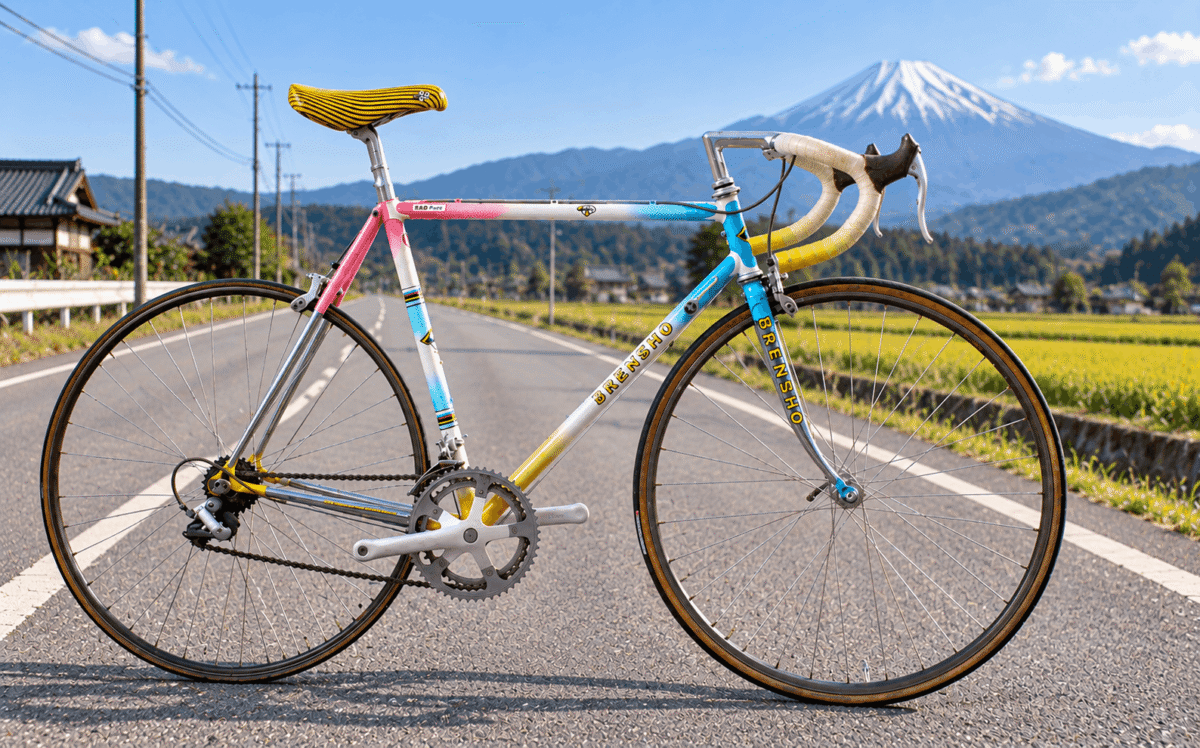
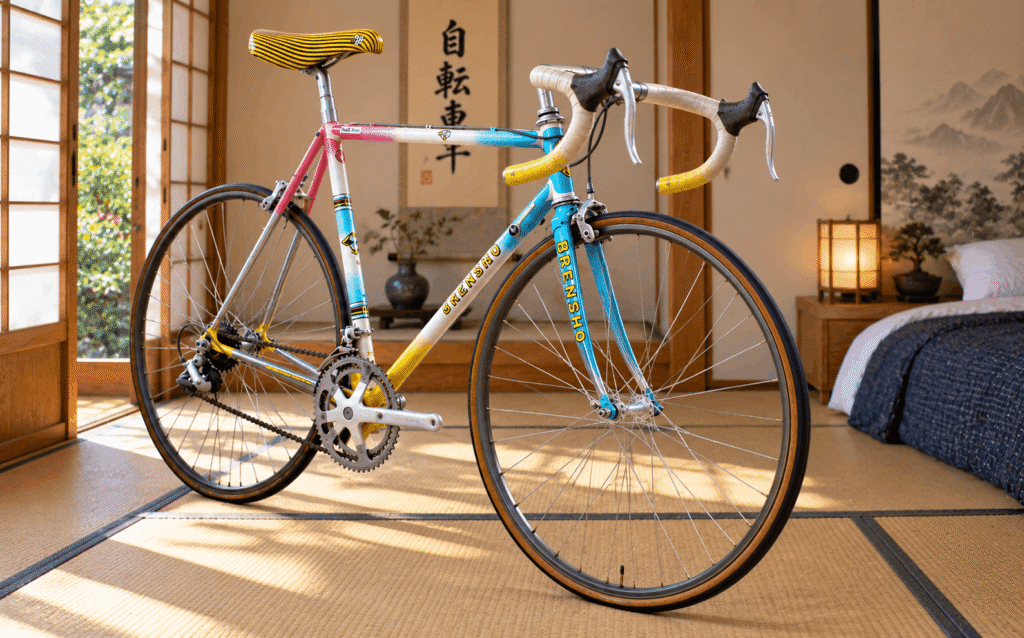
| Quick Answer: The 3Rensho Katana was one of the top models to come out of Yoshi Konno’s Chiba workshop, and this example is an all-original exhibition bike built around Shimano’s Sante group. The serial number stamped on the bottom bracket does not encode a build year, so dating relies on the components — the prototype-style Sante cranks point to roughly 1987. Katana frames received 3Rensho’s cast Super Ends dropouts, a detail reserved for the premium models and a fast way to separate a real Katana from a lesser frame. An untouched example like this one is worth preserving, not restoring. |
By James Hickman, former USA Cycling Expert-level coach and Masters-category racer
SPECIAL THANKS TO 3RENSHO A PHOTO BLOG FOR SOME OF THE INFORMATION CONTAINED IN THIS ARTICLE.
This week’s “Japanese Bicycle of the Week” is a 3Rensho Katana, and it is the kind of bike that stops the conversation in a shop. I have stripped and rebuilt a lot of Japanese steel over the years, and my first instinct with almost any old frame is to take it apart. Not this one. It sat untouched for years, picked up the dust and the dull film that comes with long storage, and came through with its paint, decals and original parts intact. Every mark on it is part of its history now.
Who Built the Katana
3Rensho was the work of Yoshi Konno, who opened the CYCLONE shop in Chiba around 1974, a year after helping his brother Hitoshi establish Cherubim in Tokyo. The name “San Rensho” refers to a keirin rider taking heats, semi-final and final on three straight days — a rare enough feat that it made a good name for a frame. Konno taught himself the craft by unbrazing Cinelli frames that had come into Japan around the era of the 1964 Tokyo Olympics, then went on to design his own lugs, bottom bracket shells, fork crowns and dropouts.
His building career ended in 1995 after a catastrophic crash that left him paralyzed and killed five people. The shop closed shortly after. That is the blunt reason these frames behave the way they do in the market: the supply is fixed, and nothing new is ever going to be added to it. If a genuine 3Rensho turns up in your size at a price you can stand, buy it.
| Shop tip: A CYCPLUS G1 wireless GPS bike computer straps on with rubber — no magnets, no sensors, nothing clamped to vintage paint. As an Amazon Associate I earn from qualifying purchases, at no cost to you. |
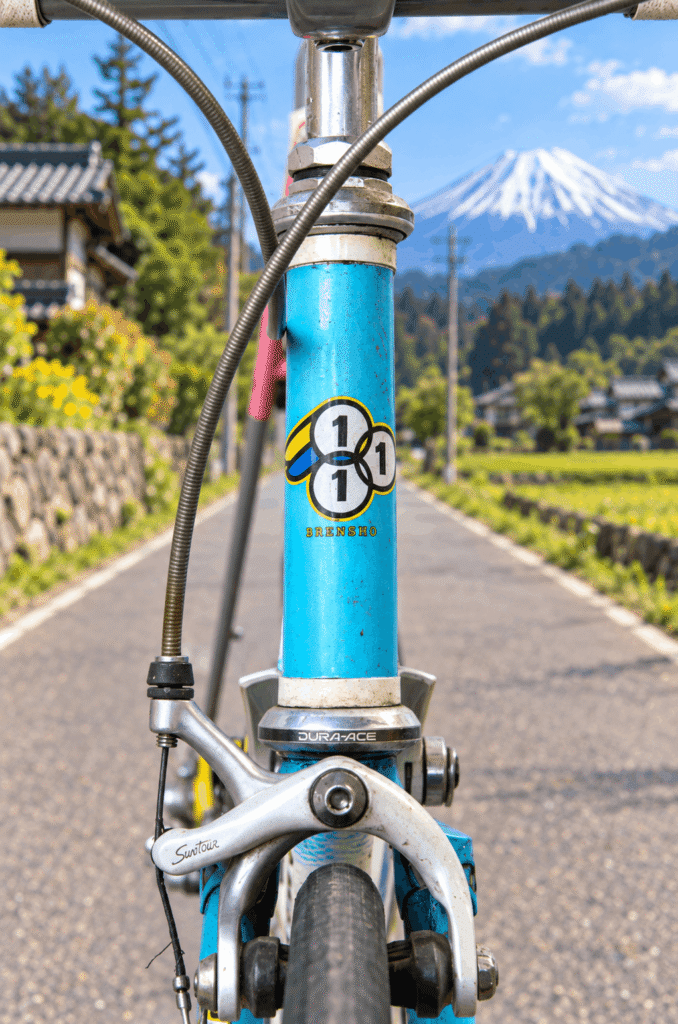
What Actually Makes It a Katana
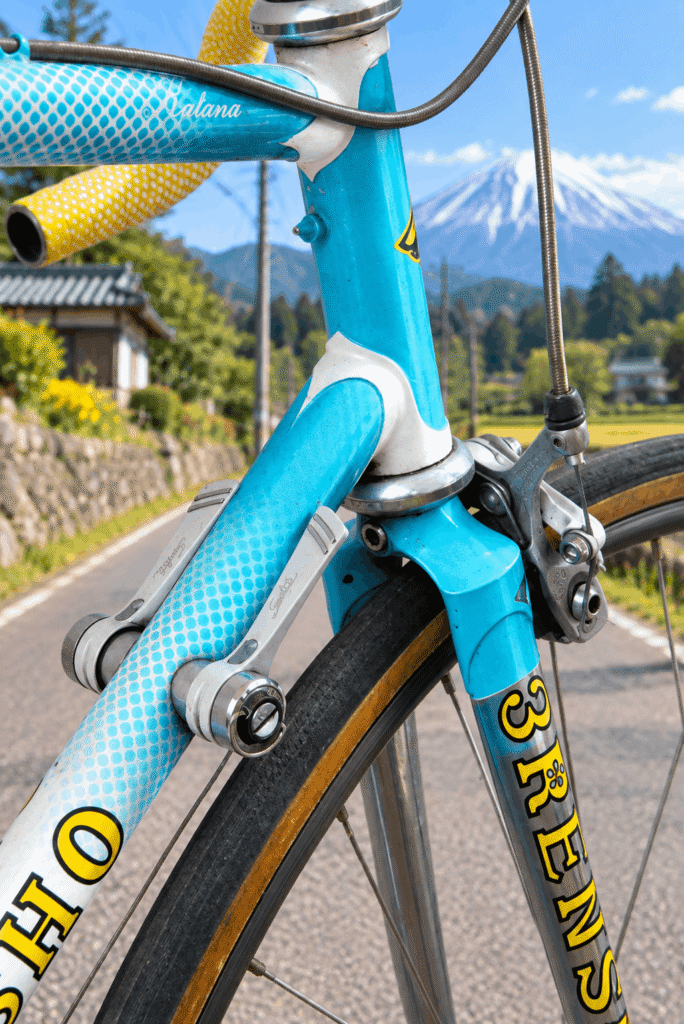
The Katana sat near the top of the 3Rensho range, and the frame details show it. The clearest tell is the dropouts. 3Rensho’s cast Super Ends were fitted to the premium models — the Katana and the later NJS track frames — and were not used on the Super Record Export road frames imported to the United States. If a seller tells you otherwise, they are quoting the wrong catalog page. Look for the cast, shaped ends rather than the stamped Shimano or Tange ends you find on the mid-range bikes.
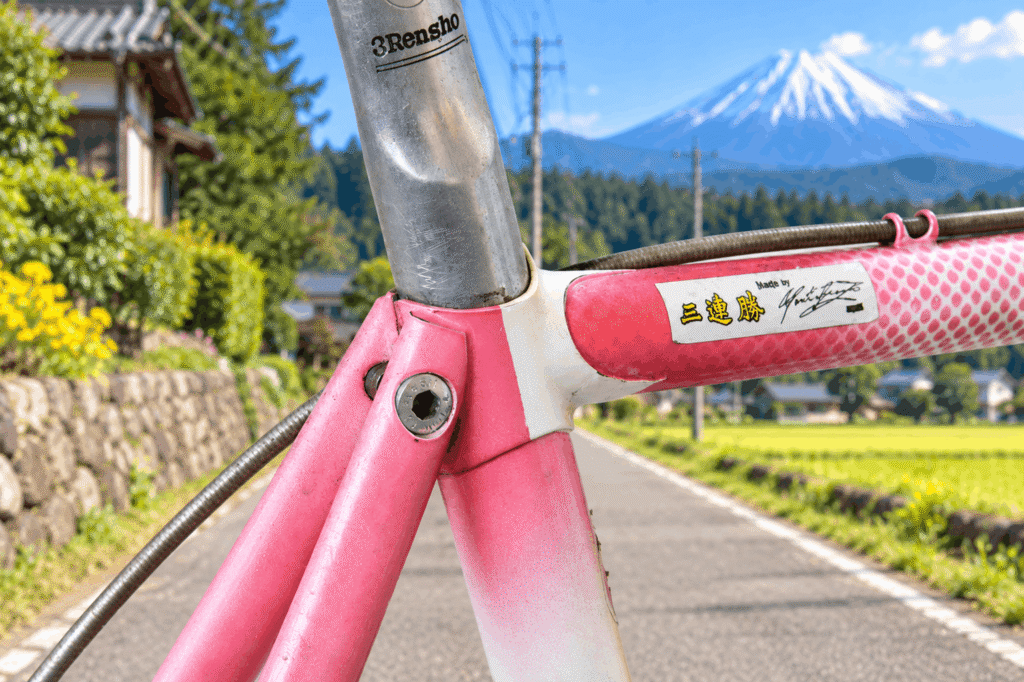
Beyond the dropouts, look at the lug work and the pantographing. Konno cut his own lugs, and on the higher models the filing is noticeably cleaner and the shorelines crisper. Panto graphed stems, seat posts and chainrings were shop-level details, not production items, and they are always the first things to disappear when a bike gets parted out or “upgraded.” Their presence on this bike is a large part of what makes it worth documenting.
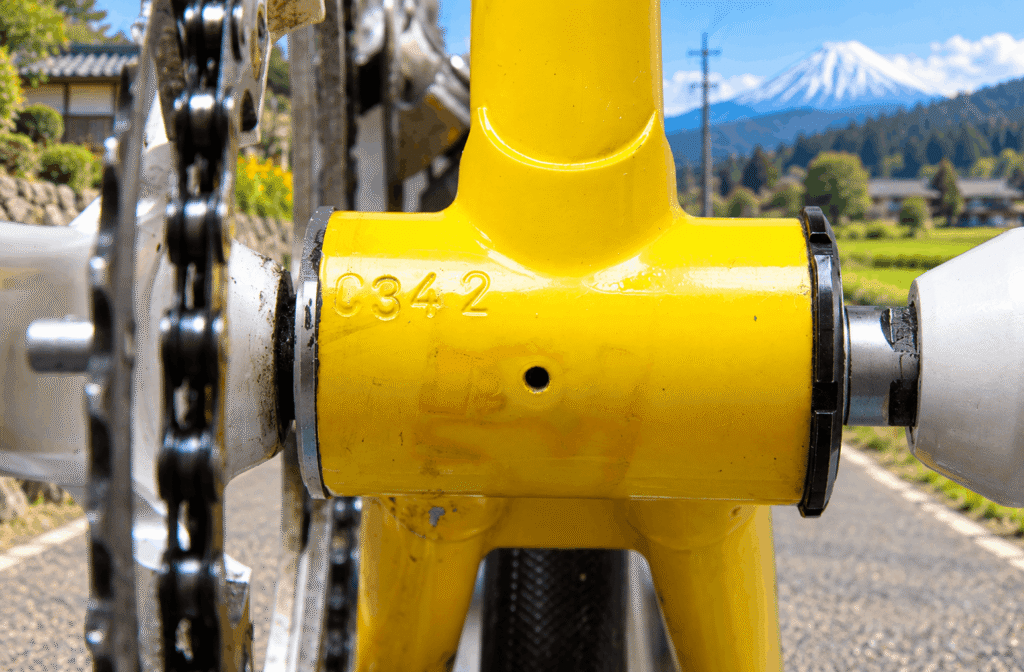
Dating It: The Serial Number Won’t Help
The number stamped into the bottom bracket shell does not decode to a year. 3Rensho never ran a published, sequential system the way the large Japanese factories did, and the shop built in small batches with plenty of one-off work mixed in. Anyone offering you a confident year from the serial alone is guessing.
What you date instead is the build. The components on this bike put it in the mid-to-late 1980s, and the Sante group narrows it further. Sante reached the market in 1986, and the cranks on this bike show characteristics closer to prototype pieces than production parts, which suggests it was assembled around 1987. That fits the story that came with it: this was a commissioned bike built for an exhibition, not a customer order meant for the road.
| Shop tip: A GOEHNER’S Upgrade 2.0 repair stand gets the frame to eye level, which is where dropouts, lugs and decals are actually readable. As an Amazon Associate I earn from qualifying purchases, at no cost to you. |
Shimano Sante: The 1986 Group Built to Be Looked At
Sante is the unusual part of this build. Shimano’s stated goal with it was aesthetic: a group designed to appeal to riders who cared how a bike looked, rather than one aimed squarely at professional racers. That was a real departure at a time when everything above 105 was justified by race performance. The finish, the shaping and the overall presentation were the selling points.
It did not last long in the catalog, which is exactly why it turns up so rarely today and why collectors chase it now. The cranks on this bike are in remarkable condition, with none of the pitting or crank-arm wear you normally see on 40-year-old aluminum. Pairing a design-led group with a Katana frame makes sense for an exhibition build — the whole bike was assembled to be seen.
Why This One Stays Original
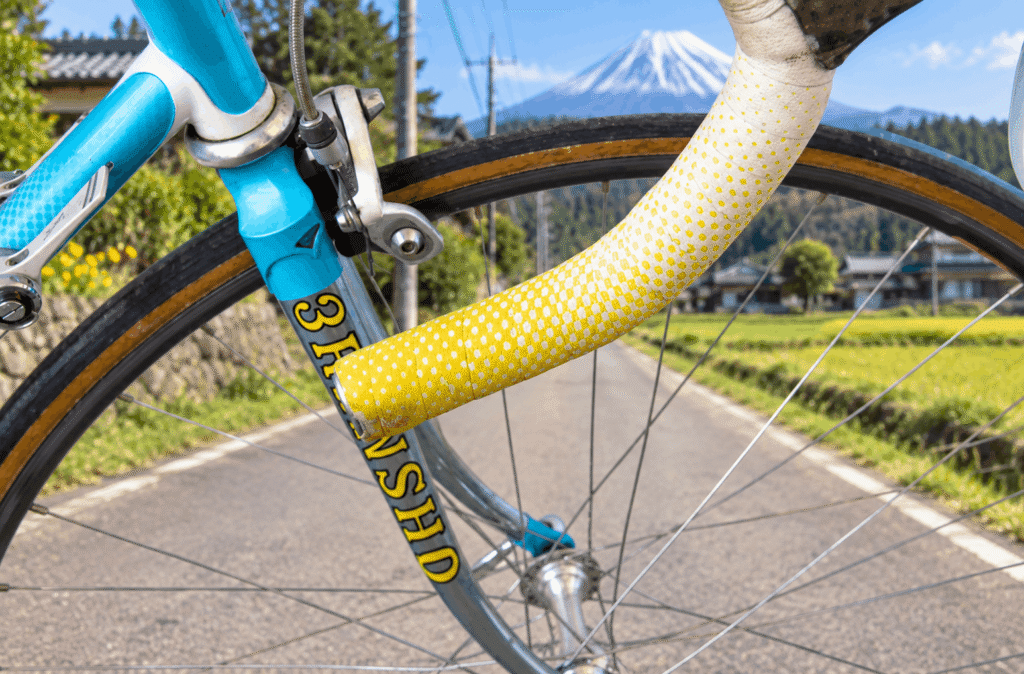
I restore bikes for a living, and I will still say it: repainting this frame would destroy most of its value. Original 3Rensho paint and decals cannot be convincingly reproduced, and the collector market has moved firmly toward preservation. If you own something like this, keep the work narrow. Clean it, but do not polish through the decals. Service the bearings, replace cables and chain if you intend to ride it. Store it indoors, away from sunlight, with the tires off the ground. Photograph the serial number and every decal now, while they are still legible. Everything else can wait — and most of it should.
| Short on training time? The free Time Crunch App builds a focused, high-return week around the hours you actually have — no guesswork, no junk miles. |
Frequently Asked Questions About the 3Rensho Katana
What year is a 3Rensho Katana?
There is no way to date one from the serial number, because 3Rensho did not use a decodable sequence. Dating comes from the components and frame details. A Katana fitted with Shimano Sante is 1986 or later, and this example likely dates to around 1987.
How do I tell a Katana from other 3Rensho models?
Start at the dropouts. The Katana received 3Rensho’s cast Super Ends, which the Super Record Export road frames sold in the U.S. did not get. Cleaner lug filing and pantographed components are supporting evidence.
What is Shimano Sante?
A short-lived Shimano group introduced in 1986 and designed around appearance rather than pure race performance. It was aimed at a broader range of riders than the pro-level groups, stayed in the catalog only briefly, and is collected today largely for its looks.
Is a 3Rensho Katana a good investment?
Supply is permanently fixed, since the shop closed in the 1990s and no new frames will be built. Original, unrestored examples with their pantographed parts intact are the configuration collectors pay for. Repainted or parted-out bikes are worth considerably less.
Should I restore an original 3Rensho?
No, if the paint and decals are intact. Preservation retains far more value than a repaint. Limit the work to cleaning, bearing service and consumables.
Can I still ride a bike like this?
Mechanically, yes — the bearings, cables and chain are all serviceable. But period tubulars of this age are display items, not riding tires, and every mile adds wear to irreplaceable components. Most owners keep bikes at this level off the road.
James Hickman is a former USA Cycling Expert-level coach who has worked with cyclists at every level, from beginners to competitive racers. He served as a coach for the Leukemia & Lymphoma Society’s Team In Training program, helping riders prepare for and complete century events. A Masters-category racer himself, he competed and earned podium finishes in Southern California events and holds a Platinum finish at El Tour de Tucson, completing the 100+ miles in under five hours.
Related Reading
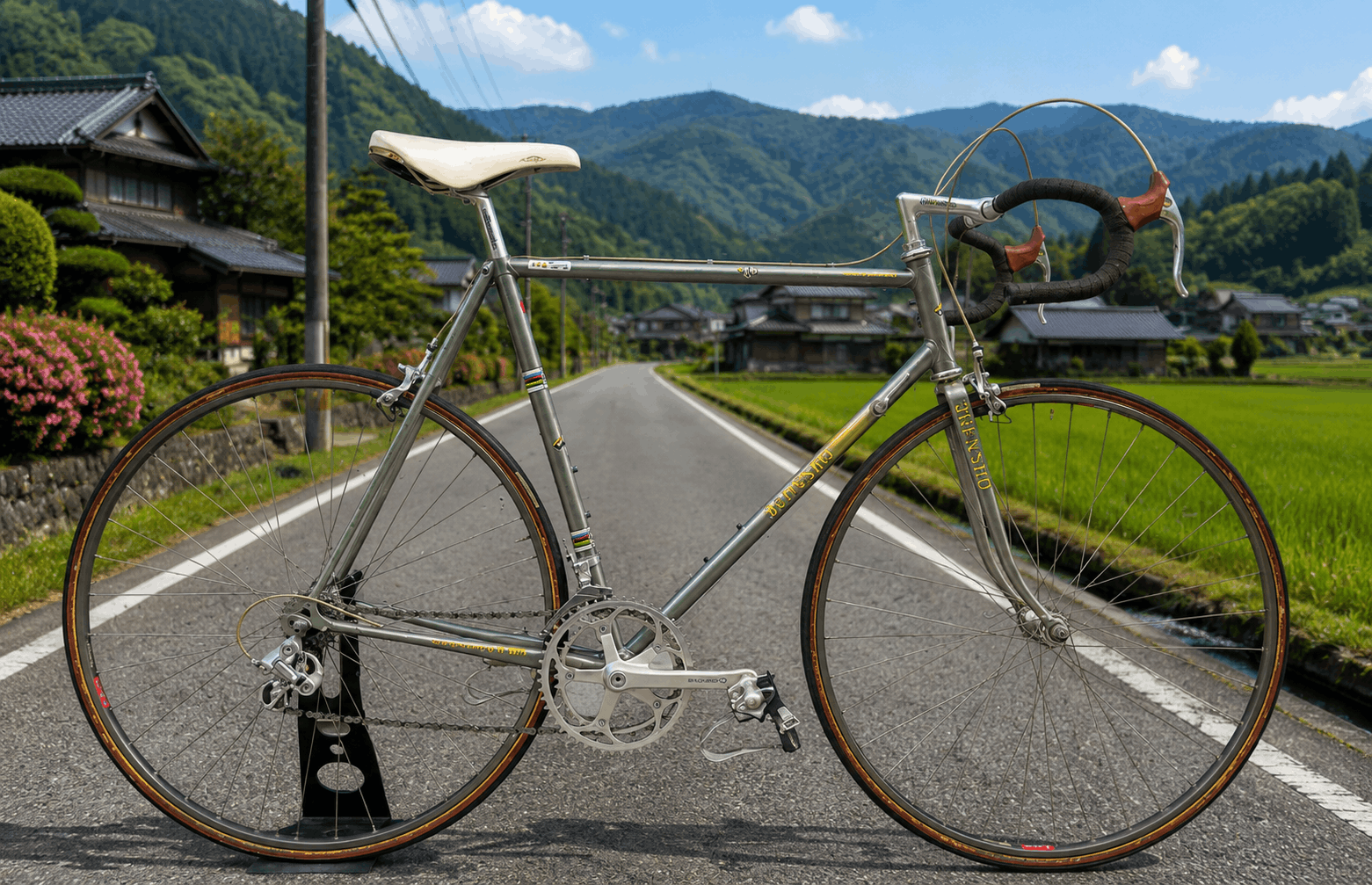
Bike of the Week 3Rensho Super Record Export Aerodynamics: Konno’s 1980s Original |

Bike of the Week |
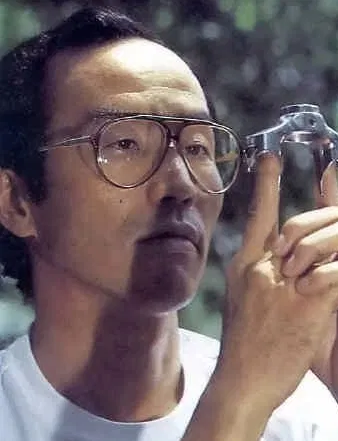
Brand Profile |
Sponsored · Competitive Cyclist
We are an Amazon affiliate and earn from qualified Amazon purchases at no cost to you. This applies to ANY product you purchase through our links. We are also affiliates for Competitive Cyclist and JensonUSA, which lets us bring you competitive pricing and products.