 Classic Japanese Bicycles
Contents
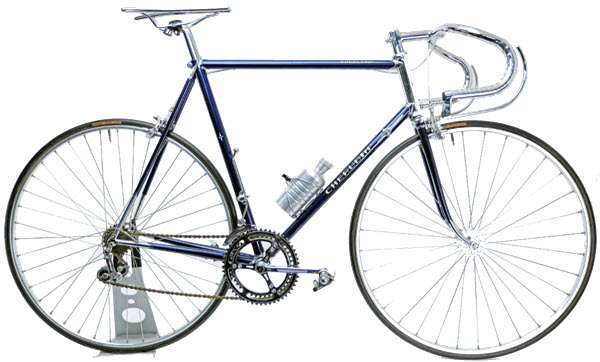
This weeks “Japanese Bicycle of the Week” is a Steel Master Cherubim. Of course, we have show cased this brand before but when running across this one, we couldn’t pass it up. Enjoy the following pictures of this magnificent Konno-san build.
The saga of Cherubim bicycles unfolds in the vibrant metropolis of Tokyo, Japan. Here, in 1965, Hitoshi Konno laid the foundation for the brand. With a passion for creating bicycles that would transcend conventional standards, he established Cherubim in a small workshop. Konno’s meticulous attention to detail and his unwavering commitment to perfection quickly earned recognition. Consequently, these bicycles soon became synonymous with exceptional quality. His son Shin Ichi took over and continued the artistry and quality.
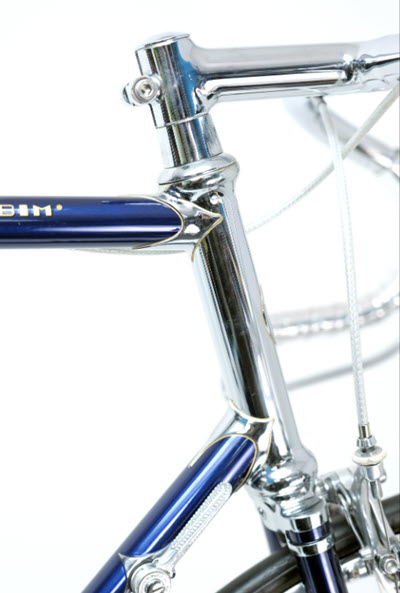
As was customary with all of Konno’s creations, this bicycle showcased his unwavering commitment to quality. Additionally, it also exemplifies the artistry and imagination that had become a hallmark of his work. For example, notice the chrome lug work. These lugs are not only exquisitely sculpted but also outlined with pinstriping, adding another layer of craftsmanship.
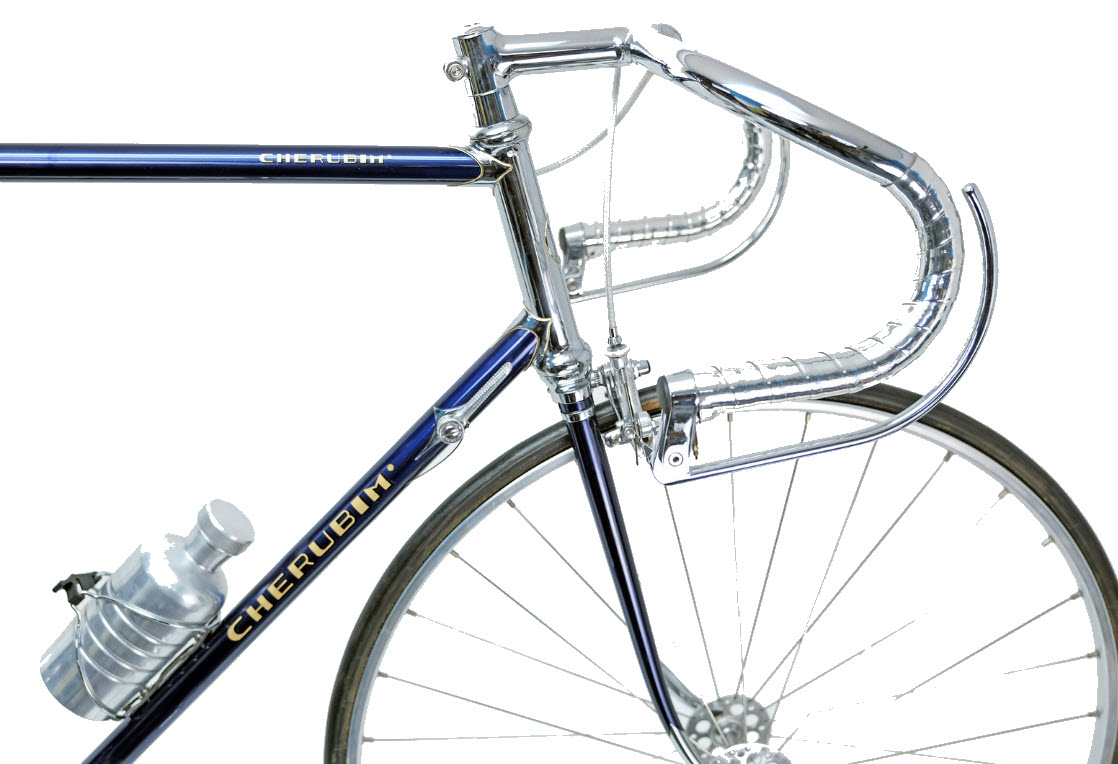
Of course, we’re not sure if he designed those brake levers but it is definitely something he would have come up with! By the same token, we like the use of the clear bar wrap showing off the beautiful chrome handlebars.
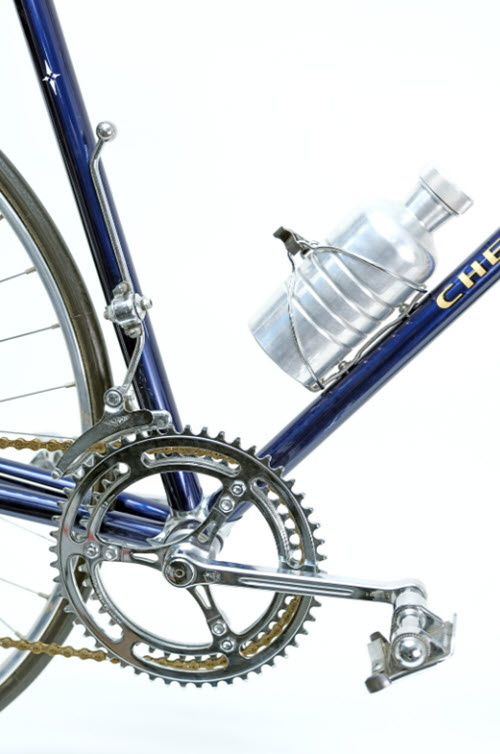
And, speaking of levers, we like the addition of the Simplex suicide shifter on the seat tube. For those of you too young to remember, this is how you had to shift the chain back in the day. Not seen on this bike but back then, there were also one or two levers on the right rear seat stay. You had to reach back while you were riding and move one of those around to shift the rear chain. Fortunately, there were only 3 cogs back then.
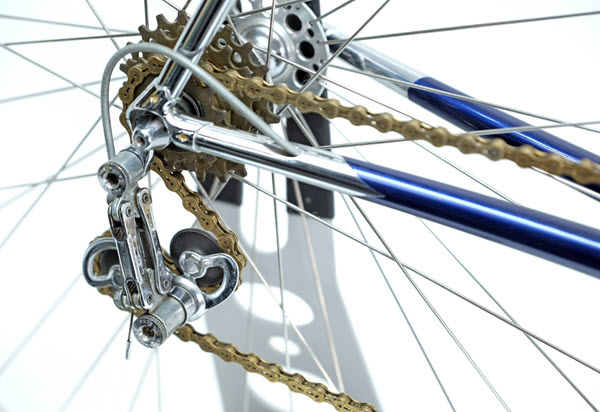
Furthermore, take a look at the internal cable routing on this Cherubim. Not only is the rear brake cable internally routed through the top tube but the rear shifting cable is routed throught the downtube. It then exits the chainstay and attaches to a vintage Campagnolo derailleur.
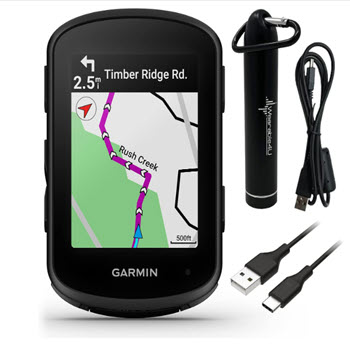
CLICK ON ITEM FOR MORE INFORMATION
 |
 |
 |
 |
We link items through our Amazon Affiliate Links. What are Amazon affiliate links? It’s a way for you to help your favorite creators! It doesn’t cost you anything to use our links and we will get a small % of the sale. You can actually go to another item you were going to buy anyway and tell us thanks by using our link. It’s a win win! We give info and our time, you buy what you need. Thank you for your support!
Contents
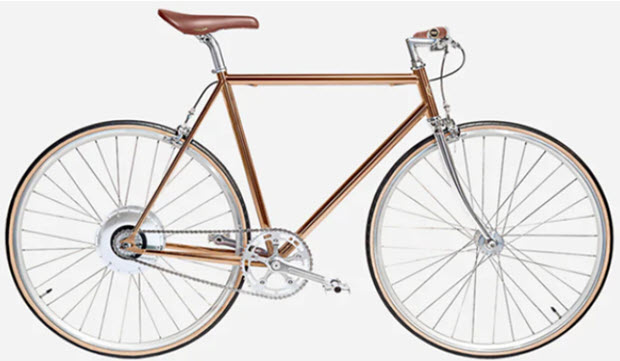
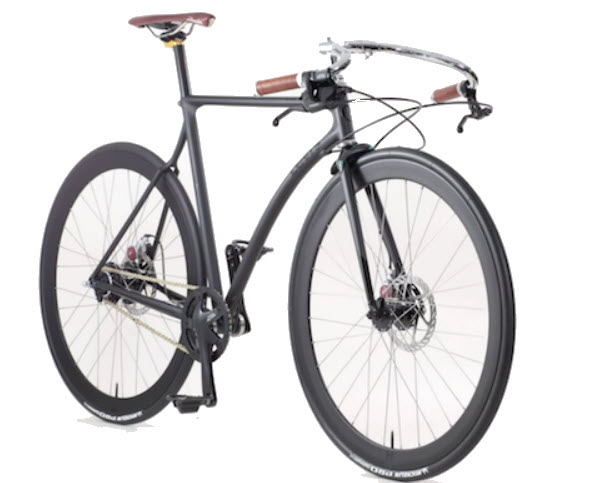
This weeks “Japanese Bicycle of the Week” is the E-JITENSHA Tokyo ebike. An exquisite blend of elegance and simplicity in the world of electrically assisted bicycles. Crafted with meticulous attention to detail, this lightweight wonder seamlessly integrates its motor and battery within the hub of the rear wheel. With a VAE 250W motor this ebike capable of propelling you up to 25 km/h, boasting 40 Nm of power, and powered by a 173Wh battery, this bike embodies both grace and performance.

Recharging the E-JITENSHA is a breeze, requiring only 3 hours for a complete charge. What sets it apart is its hybrid nature – it ingeniously harnesses regenerative power during deceleration, ensuring a replenished battery for extended journeys. Whether you desire the assistance of its electric prowess or wish to conquer the road unaided, this is the ebike to have.
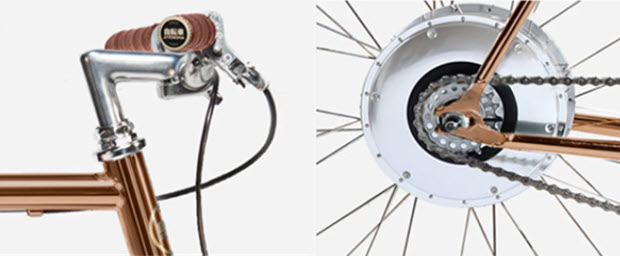
Personalization knows no bounds with the E-JITENSHA. Each bike is meticulously assembled upon request in the heart of France, ensuring a tailor-made experience. Remarkably weighing in at just 13.4kg, including the battery, this marvel stands as one of the most lightweight e-bikes available. Equally important, it effortlessly fits into confined spaces for easy mounting, loading, and storage.
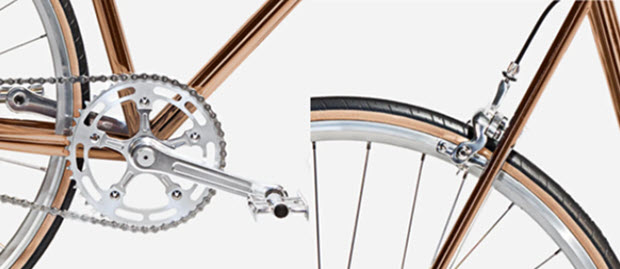
With a motor that delivers up to 40 Nm of power, the E-JITENSHA prioritizes you, allowing you to ascend 8 to 10% gradients effortlessly at speeds of 18-20 km/h. Furthermore, on steeper inclines, a firm pedal press activates the sensors, unleashing the required power to conquer any challenge.
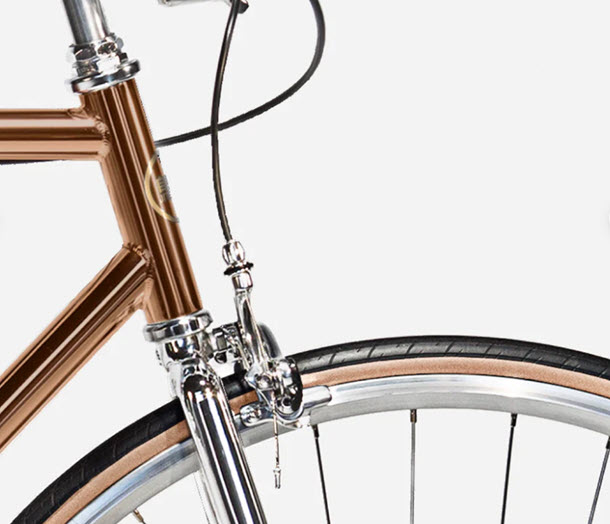
Recharge options are versatile. Coupled with both traditional outlets for a swift 3-hour full charge and a regenerative system that thrives on downhill momentum. As a matter of fact, the eco-friendly system also doubles as a subtle engine brake, enhancing battery life by a significant 10-20%.
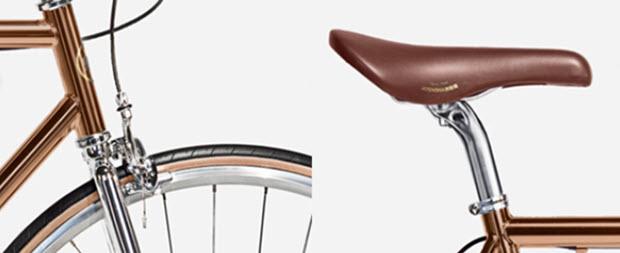
Crafted in our Annecy workshop, each JITENSHA emerges from the hands of skilled mechanics who meticulously assemble and scrutinize every detail. Additionally, their commitment extends beyond the workshop. Just like a traditional bicycle, maintaining this ebike is effortless. For example, it requires minimal upkeep beyond charging and periodic cleaning. Enjoy the union of technology and craftsmanship with the E-JITENSHA, a testament to cycling liberation.
CLICK ON ITEM FOR MORE INFORMATION

We link items through our Amazon Affiliate Links. What are Amazon affiliate links? It’s a way for you to help your favorite creators! It doesn’t cost you anything to use our links and we will get a small % of the sale. You can actually go to another item you were going to buy anyway and tell us thanks by using our link. It’s a win win! We give info and our time, you buy what you need. Thank you for your support!
Contents
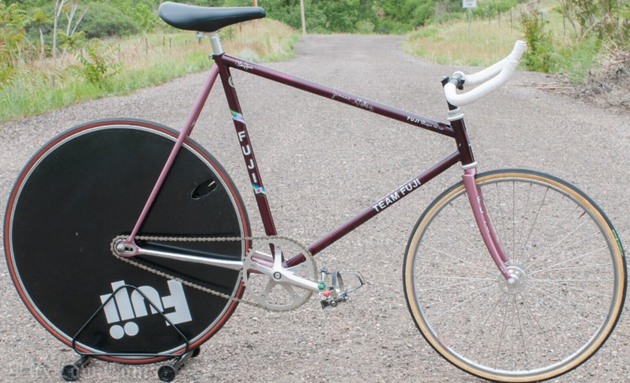
This weeks “Japanese Bicycle of the Week” is a vintage Fuji bike track team pursuit track ridden by Jeanne Golay. As a matter of fact, Jeanne is in the Bicycle Hall of Fame with with many cycling wins to her name. In Fact, she won 3 National Road Racing Championships as well as, a gold and 2 bronze medals at the World Championships.
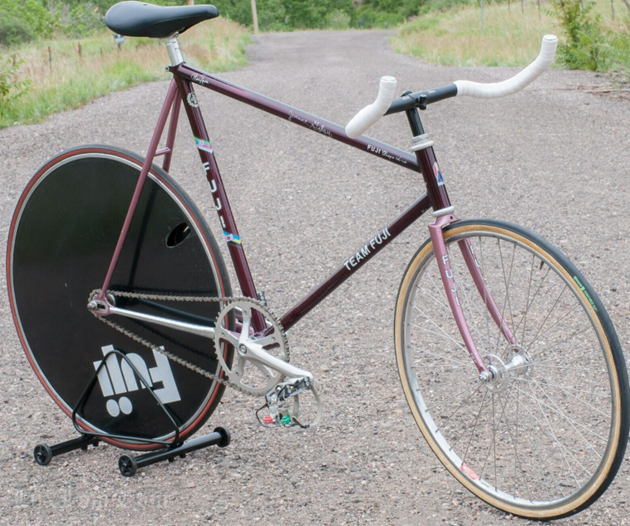 The Fuji company was founded in 1899 in Japan by Okazaki Kyūjirō. Subsequently, in 1900, it was established under the trade name Nichibei Shōkai (literally ‘Japanese-American Trading Company’). At first, it was importing and distributing US-products, but later it began bicycle production in Japan.
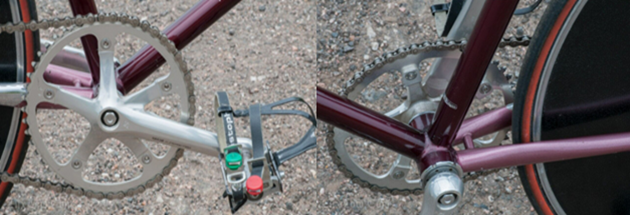
Fuji became Japan’s most popular bicycle. In the 1930s, the company established the first national stage race between Osaka and Tokyo and sponsored the winning team. Today, this race remains a premier race in Asia. The first Asian games were held in New Delhi in 1951. In fact, Shoichiro Sugihara, riding a Fuji, won the first race.
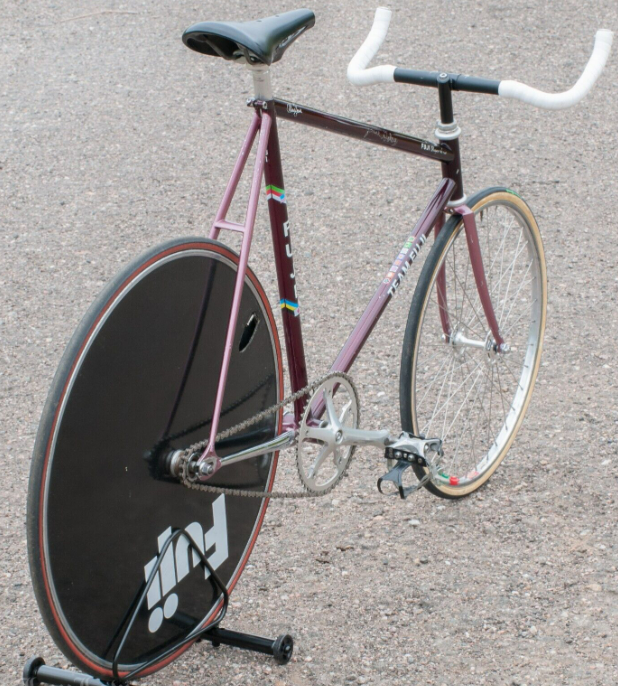
This particular Bike is a Mark Gorski Series Team Fuji Track Bike. The seat tube measures 56.5cm Center to Center or 58cm Center to Top. The top tube mesures 63.5cm center to center. Moreover, the bike was built up with Suntour Pro parts which were top of the line components at the time. It also comes with a Hed 700c disc rear wheel and some Suntour Superbe track pedals.
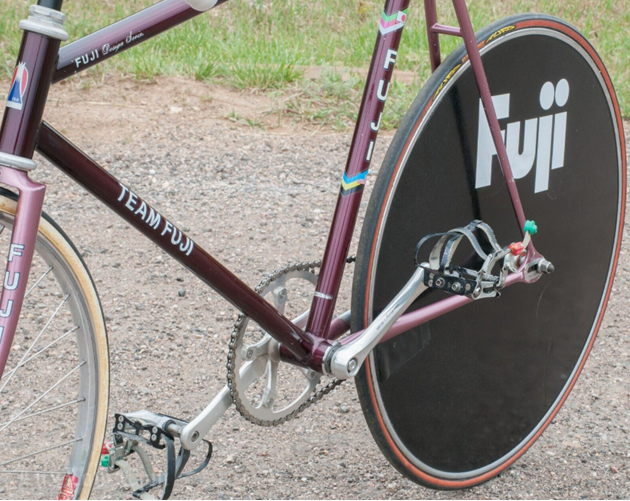 Steering is provided by Profile handlebars that turn the Zeus 600A 24 X 1 1/8 front wheel. And of course, the whole bike rides on tubular tires. All things considered, the bike is in very good condition for it’s age and history and is currently for sale on eBay. Here’s a copy of the link: CLICK HERE
|
|
|
 |
We link items through our Amazon Affiliate Links. What are Amazon affiliate links? It’s a way for you to help your favorite creators! It doesn’t cost you anything to use our links and we will get a small % of the sale. You can actually go to another item you were going to buy anyway and tell us thanks by using our link. It’s a win win! We give info and our time, you buy what you need. Thank you for your support!