Categories
Japanese Road Bikes

Vintage Nishiki Tri-A Bicycle: Timeless Elegance

vintage nishiki tri-a road bike
SPECIAL THANKS TO VELO BAROQUE FOR THE IMAGES CONTAINED IN THIS ARTICLE

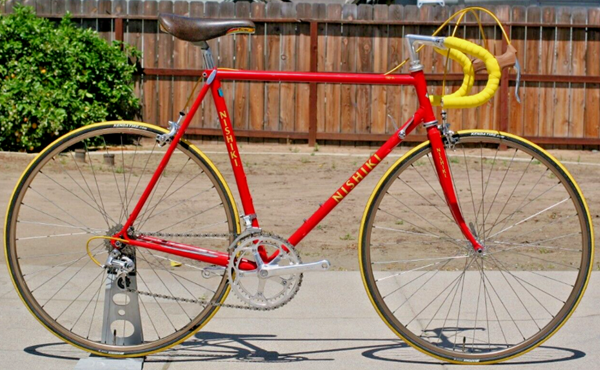
This weeks “Japanese Bicycle of the Week” is vintage Nishiki Tri-Japanese Steel classic bicycle design from JapanA. Nishiki’s origins trace back to West Coast Cycle, established by Leo Cohen Sr. and RosaBelle Cohen, who were former partners at Wheel Goods Corporation in Minneapolis. Transitioning to Los Angeles in 1946, they acquired an established retail bicycle outlet named Atlas Cycle.
Courtesy of Velo Baroque

Eventually, they rebranded the company as Playrite Bicycle Supply Co. Subsequently, in the late 1950s, the Cohens ventured into bicycle distribution, parts, and accessories. Venturing into the different aspects of the bicycle industry, led them to create the West Coast Cycle Supply Company. This expansion signaled their commitment to the burgeoning cycling market, laying the groundwork for the future success of these vintage Nishiki bicycles.
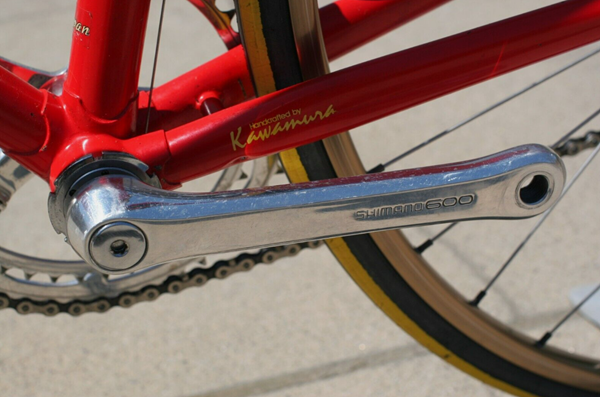
vintage nishiki bicycle
Courtesy of Velo Baroque

Howie Cohen, who took control of the company from his parents, initially placed an order for 570 bikes with Kawamura. He marketed these bikes under the American Eagle brand. This marked the inception of their successful venture, with tens of thousands of American Eagle bicycles sold by WCC.

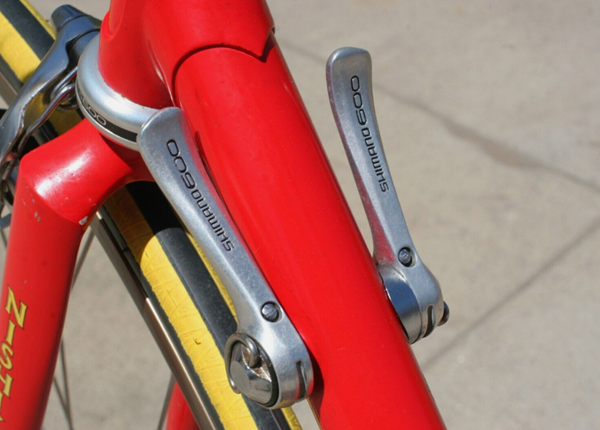
NOTICE THE INTERNAL CABLE ROUTING (ABOVE RIGHT) Courtesy of Velo Baroque

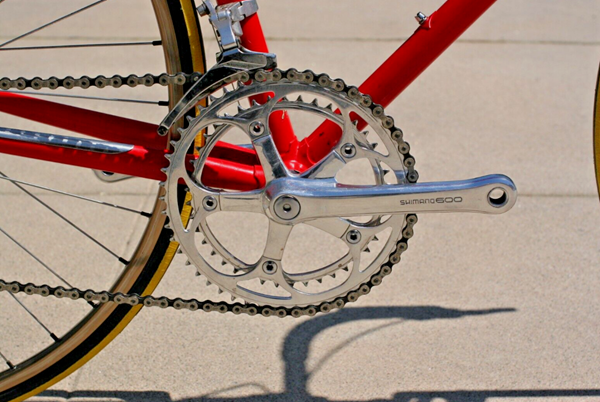
This weeks bike is in unrestored condition. It was originally specced out with Shimano’s 600 groupset. It appears that the group set was kept intact. The 600 components were the forerunner of the Ultegra groupset. Likewise, the Araya 700c bronze wheels were original as well.
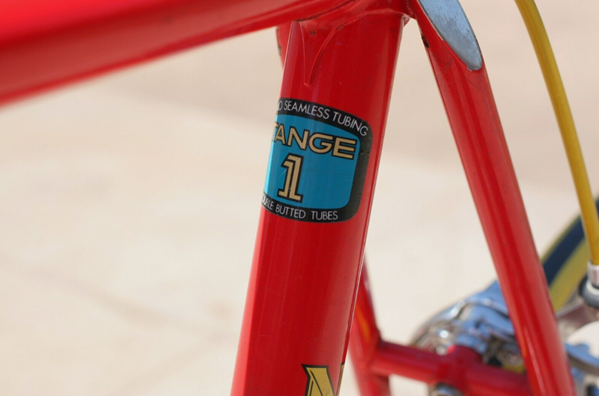
vintage nishiki tri-a made with Tange tubing
Courtesy of Velo Baroque

The paint is in pretty good condition with only a few chips here and there. The frame was made from Tange 1 tubing. Tange was hugh in Japan and most of the bikes of this time were made with this tubing.

MANY VINTAGE NISHIKI BICYCLE USED TANGE TUBING

Tange embarked on its journey in 1920 as Tange Iron Works, established by Yosujirou Tange, initially specializing in the production of bicycle forks. Over the years, the company expanded its operations and product offerings.
Courtesy of Velo Baroque

Their original tube was branded as Champion and was assigned numbers according to the weight. Champion 1 was the lightest and every following number, 2,3,4 was heavier. They eventually called in Tange 1, Tange 2 and so forth.
Courtesy of Velo Baroque

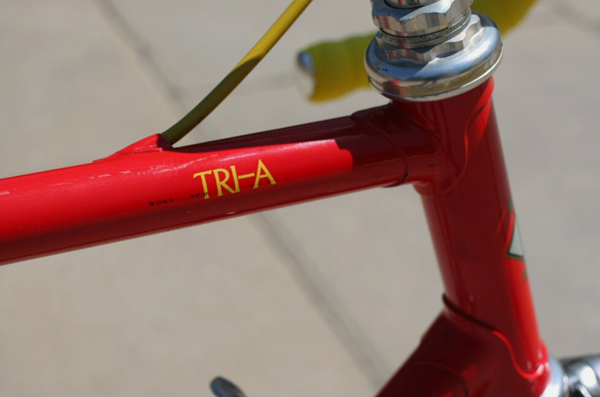
The Nishiki Tri-A competed with the Centurion Ironman models. Consequently, these two models competed with one another from the late 1980s and early 1990s. While they share similarities in their target demographic and intended use, there are notable differences between the two.
Courtesy of Velo Baroque

In terms of design, both bikes feature aerodynamic frames optimized for speed and efficiency. However, the Nishiki Tri-A tends to have a more aggressive and race-oriented geometry, prioritizing performance over comfort.

heart rate monitors bike bag

We earn from qualified Amazon purchases with NO cost to you. ANY item that you need or were going to purchased anyway through any of our links, helps support this site. Thank you for your support!
Categories
Japanese Road Bikes

Bridgestone X0-1 Bicycle: A Legacy of Innovation

bridgestone
SPECIAL THANKS TO THE THERADAVIST.COM FOR THE IMAGES CONTAINED IN THIS ARTICLE

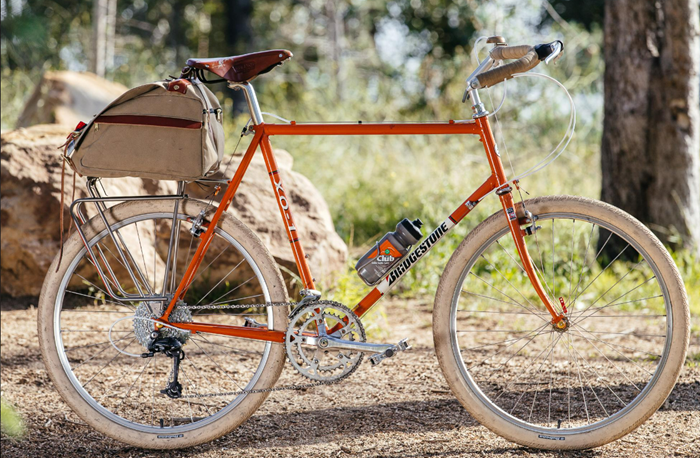
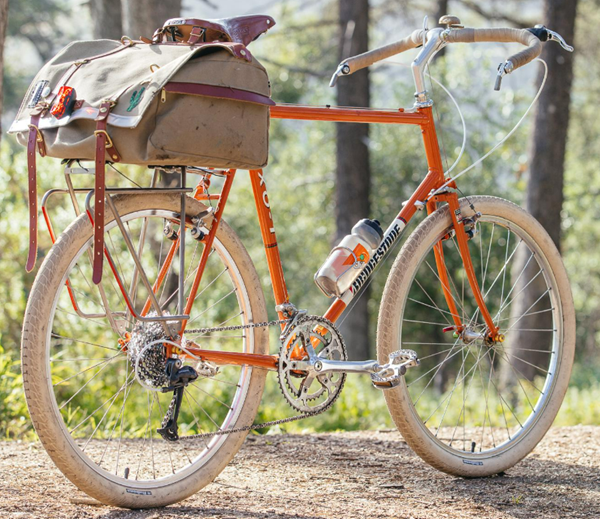
This weeks “Japanese Bicycle of the Week” is the Bridgestone X0- Renowned for its innovative bicycle designs, the X0-1 left an indelible mark on the cycling world with its diverse lineup tailored for the US market. Amidst this array of options, one particular model stood out as a testament to Grant Petersen’s unique vision of bicycle design: the XO-1. Even nearly three decades after Bridgestone ceased its operations in the US, the XO-1 continues to command a fervent following, earning its title as the quintessential “Cult Bike.”

PROVIDED BY THERADAVIST.COM

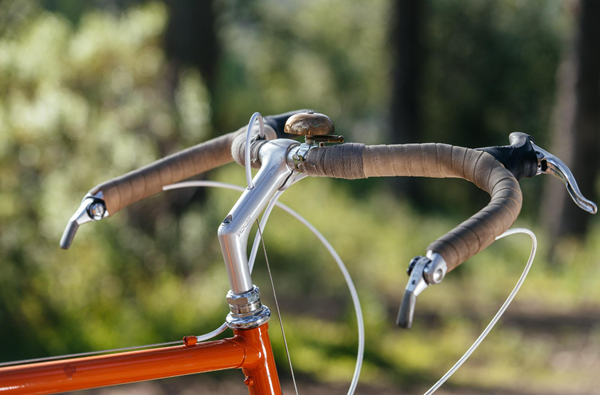
However, the pièce de résistance, and perhaps the mostJapanese Steel classic bicycle design from Japan polarizing aspect of the XO-1, was its distinctive, controversial mustache handlebar crafted by Nitto. Another Grant Peterson diversion from the norm.

bridgestone
PROVIDED BY THERADAVIST.COM

MUSTACHE HANDLEBARS INSPIRED BY JAPANESE CULTURE

Inspired by Japanese bike culture, where schools often prohibited drop bars, the mustache bar of the XO-1 combined elements of flat and drop bars. It offered a sporty yet controlled ride suitable for adult American hands. Despite its innovative design, it exuded a retro charm that divided opinion. The Bridgestone enthusiasts embracing its novelty while the cycling press remained skeptical.

PROVIDED BY THERADAVIST.COM

BRIDGESTONE X0-1: CRITICS NOT TOTALLY IMPRESSED

The critics, notably in Bicycling Magazine’s April 1992 review, focused on the handlebars, labeling them cool but impractical. Obviously, this overshadowing the bike’s other merits. The XO-1’s classification as a hybrid further puzzled reviewers and retailers. It’s unique design defied categorization, embodying a versatility that allowed owners to shape its identity according to their preferences. Of course, this is what Mr. Peterson intended all along.

bridgestone
PROVIDED BY THERADAVIST.COM

Debuting in 1992, the XO-1 epitomized versatility, aiming to be the quintessential “do anything” bike capable of effortlessly transitioning between road and trail terrains. Most of all, it embodied the essence of a hybrid bike.  It definitely sidestepped the conventional label.  Sporting a road bike frame and geometry coupled with 26″ wheels.  Furthermore, the XO-1 boasted slick road tires while accommodating mountain bike tires of up to 1.6″ width.

PROVIDED BY THERADAVIST.COM

Consequently, Grant Peterson left Bridgestone and started Rivendell Bicycle Works. Rivendell is renowned for crafting timeless bicycles that prioritize comfort, durability, and versatility over high-tech gadgetry. With a commitment to traditional craftsmanship and a philosophy rooted in the joy of cycling.

PROVIDED BY THERADAVIST.COM

Three decades since its inception, the XO-1 continues to occupy a revered status in the cycling community.  Revered for its timeless design and unwavering reliability.  Equally important, Its enduring legacy serves as a testament to Bridgestone’s pioneering spirit and Petersen’s visionary approach to bicycle craftsmanship.

CHECK PRICING 5 STAR RATING


tubeless tire sealant
TIRE SEALANT

We earn from qualified Amazon purchases with NO cost to you. ANY item that you need or were going to purchased anyway through any of our links, helps support this site. Thank you for your support!
Categories
pursuit bike

3Rensho XR-7000 Lo-Pro Pursuit Bike

pursuit bike
SPECIAL THANKS TO DJCATNAP.COM FOR THE IMAGES AND INFORMATION CONTAINED IN THIS ARTICLE!

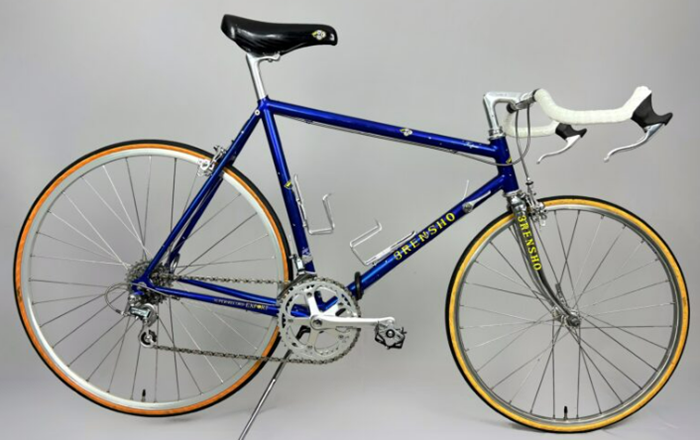
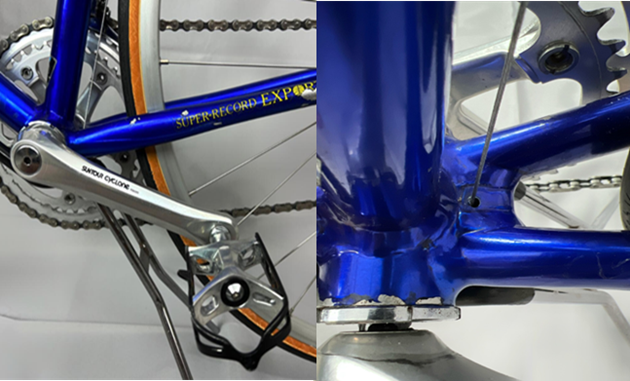
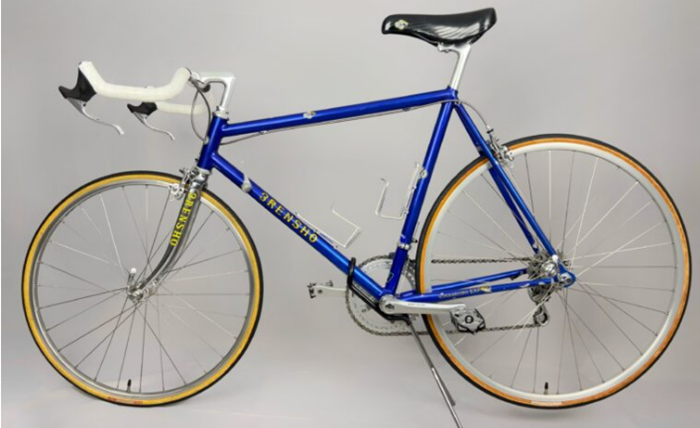
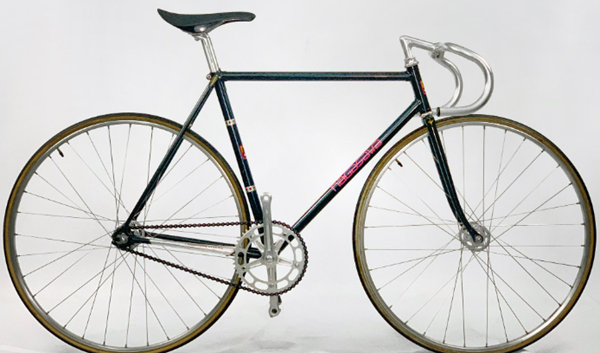
This weeks “Japanese Bicycle of the Week” is a 3Rensho XR-7000 Lo-Pro Pursuit Bike. These bikes were more commonly known as “Funny Bikes” because of the extreme tube angles. It took the owner 3 years to complete the build. However, the years it took paid off since it turned out fantastic. It was purchased from Japan as just a frameset and the owner soon found out it was built under license by Yamakuni.

Interesting to note, Yamakuni was one of the pioneering Japanese companies to mass-produce welded aluminum frames. They introduced notable models like the 1986 Centurion Facet and potentially others such as the Miyata Omnium, Diamondback Arrival, and the Kuwahara Maragay MTB. Additionally, Yamakuni produced bikes under their own brand, including the “Yamakuni Wolf” and “Country Bird” MTBs, along with a road bike, which bore resemblance to the Facet yet remained unnamed.

Dependable Suntour Cyclone 7000 Groupset on this Pursuit Bike

Following the re-chroming of the fork, the main triangle remained untouched. Subsequently, a scarcely-used Georgina Terry Despatch from 1988 was acquired. It was disassembled to save the 6-speed Suntour Cyclone 7000 groupset and the 24″ front / 700c rear wheelset. It’s worth noting, that while the 3Rensho catalog displayed it with a Shimano 600 group, it was also offered as a frameset. Notably, Cyclone ranked as Suntour’s second-best group, akin to how 600 stood a step below Dura Ace.

pursuit bike

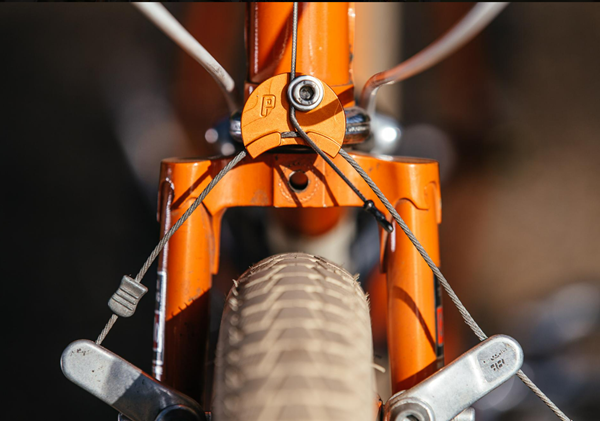
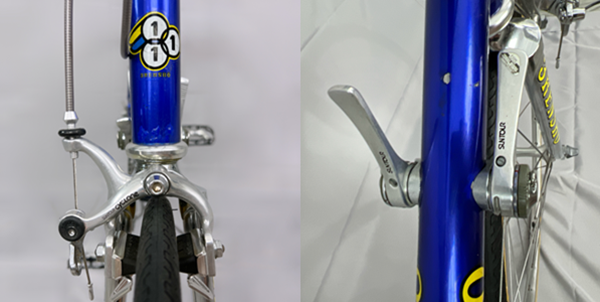
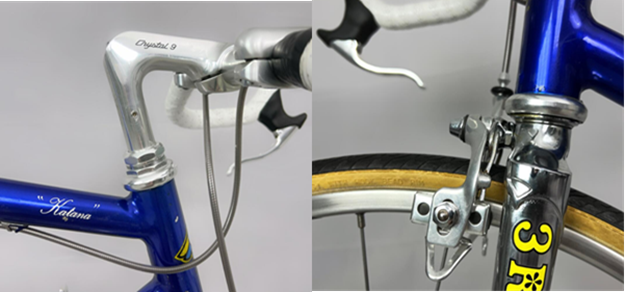
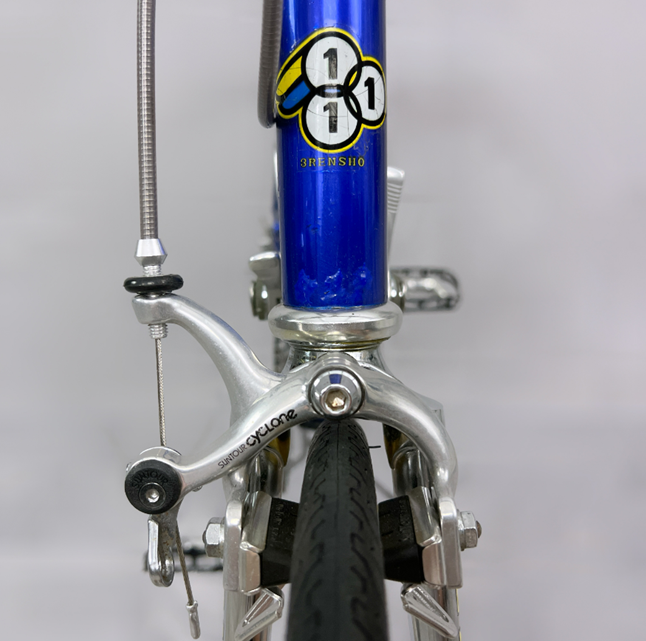
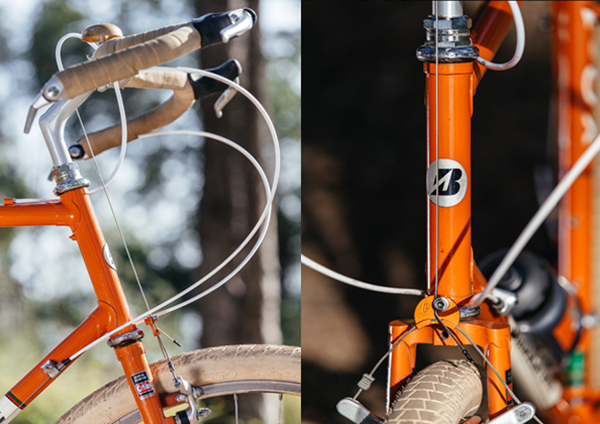
Since the rear rim was cracked, the owner replaced it with a new Araya RC-540. The NITTO brand was used for the stem (S65 Crystal Fellow), the handlebars (RB-021 bullhorn) and the seat post (S66). Another nice feature is how the brake cables were installed to run inside the handlebars. The craftmanship is demonstrated by the ornate fork crown (upper right image).

First thing to remember, this pursuit bike and time trial bikes are made to go fast. The extreme angles on this bicycle were made to position the rider as low as possible for an aero dynamic advantage. For this reason, and for the fact that the arms are brought closer together, the bike has a very twitchy feel to it.

pursuit bike

However, it was noted by the owner that once you are settled, you feel “locked in”. He road the bike in some Brooklyn traffic which he noted that he would never do again! The 3Rensho is made to go straight and fast. For an example, better to ride in open roads with wide turns.

tubeless tire sealant

We earn from qualified Amazon purchases with NO cost to you. ANY item that you need or were going to purchased anyway through any of our links, helps support this site. Thank you for your support!
Categories
Classic Japanese Bicycles

The Ulitmate NJS Bike: Nagasawa Special Track Bike

SPECIAL THANKS TO DJCATNAP.COM FOR THE IMAGES CONTAINED IN THIS ARTICLE!

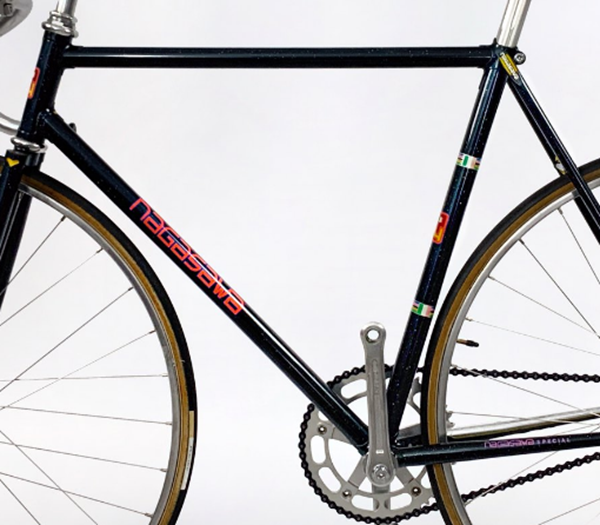
This weeks “Japanese Bicycle of the Week” is the NJS bike mostJapanese Steel classic bicycle design from Japan respected among Japanese Kierin bicycles, a 1985 Nagasawa track bike. In fact, it occupies the pinnacle position among Japanese Kierin bicycles.  Moreover, this fact is acknowledged globally.

These bicycles are celebrated for their impeccably designed and executed frames, each one meticulously handcrafted by the master builder, Yoshiaki Nagasawa. Moreover, the reputation of Nagasawa bikes extends far beyond the borders of Japan.  As a result, this symbolizes the zenith of craftsmanship and cycling heritage.

njs bike

The history of the Nagasawa Special NJS Track Bike is deeply intertwined with the illustrious legacy of its creator and the esteemed Nihon Jitensha Shinkokai (NJS) certification. We have had another Nagasawa bicycle as bike of the week before. However, when this one showed up we had to celebrate this one as well.  Nagasawa-san was born in 1948 and eventually embarked on his illustrious journey into the realm of bicycle frame building.

Yoshiaki Nurtures His NJS Bike Building Skills In Italy

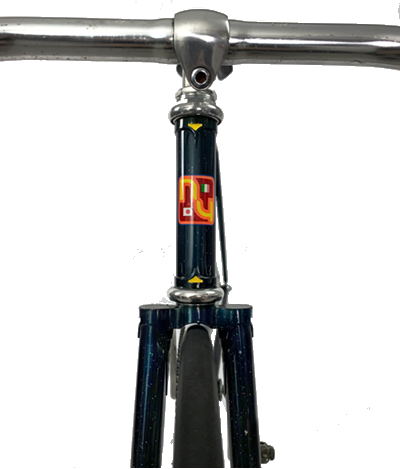
Initially, Nagasawa nurtured his skills in Italy, studying under the legendary frame builder, Ugo De Rosa during the 1970s. Subsequently, upon returning to Japan.  With this training, he brought with him an extensive wealth of knowledge and a distinct European influence.  Consequently, this would significantly redefine the craftsmanship of Japanese track bicycles. By the late 1970s, Nagasawa established his own workshop. Therefore, the Nagasrawa Special track bike was born, destined to become a legendary figure in Keirin racing.

njs bike

KEIRIN: A POPULAR TRACK RACING IN JAPAN

Keirin, a form of track racing that is immensely popular in Japan, necessitates bicycles that adhere to strict standards for quality and performance. This requirement led to the establishment of the NJS certification system. Nagasawa’s bikes quickly became synonymous with this high standard. The NJS stamp on a Nagasawa frame signifies adherence to these stringent criteria. These criteria include encompassing dimensions, materials, and construction methods, thus ensuring they are fit for professional racing.

THE NAGASAWA NJS BIKE POPULAR ON THE KEIRIN CIRCUIT

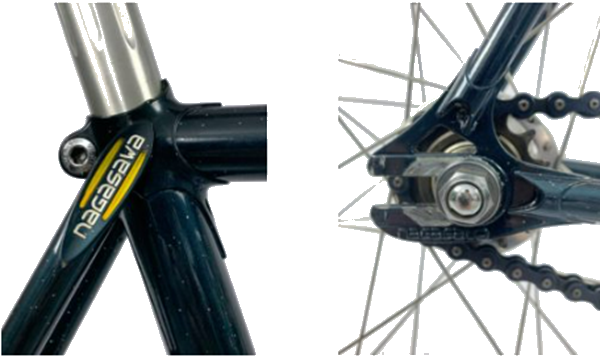
Throughout the 1980s and 1990s, Nagasawa Special bikes gained prominence on the Keirin circuit.  Moreover they were admired for their meticulous construction, responsiveness, and speed. Each frame is handcrafted with exceptional precision, showcasing Nagasawa’s mastery of steel frame construction. The signature characteristics of a Nagasawa NJS bike include a tight rear triangle and steep angles.  Additionally they had a distinctive lugged steel frame, often finished with elaborate paintwork and chrome detailing.

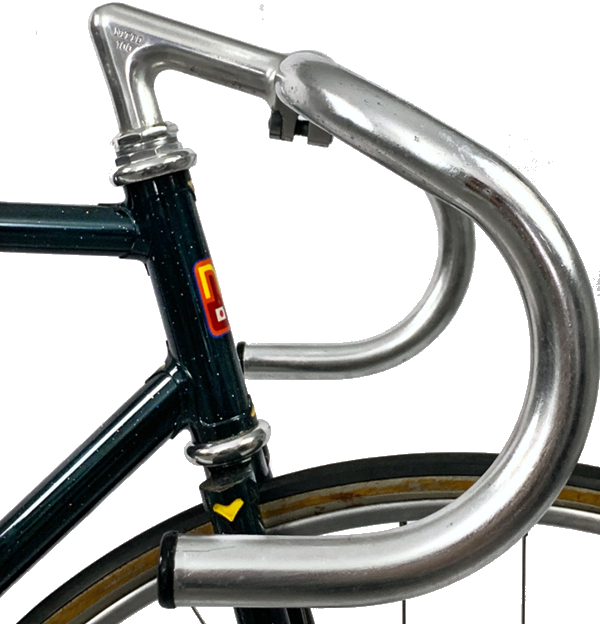
The components detailed in the photos reflect a careful selection that honors the heritage of the Nagasawa track bike, dating from the mid-1980s. This curated list combines classic Japanese craftsmanship with a touch of Italian design, showcasing the following key elements:

NJS-Stamped Headset: Hatta Swan
Stem: Nitto 100mm Jaguar
Chain: D.I.D.
Saddle: Kashimax
Era of Frame: Mid-1980s, with a build that blends elements from the 70s and 80s.
Italian Influence: Fiamme red label tubular rims and 3TTT Competizione track handlebars.
53cm seat tube
54cm top tube

As of today, Yoshiaki Nagasawa’s commitment to excellence continues to resonate profoundly in the world of track cycling. The Nagasawa Special NJS Bike remains a symbol of perfection in bicycle frame building, representing a harmonious blend of artistry, tradition, and racing heritage that is unparalleled in the cycling world.

LEARN MORE___________________LEARN MORE

We earn from qualified Amazon purchases with NO cost to you.  In fact, ANY item that you need or were going to purchased anyway through the above links, helps support this site. Thank you for your support!