
Contents
- 1 Toyo Frames Lugwork Craftsmanship
- 1.1 The Philosophy Behind Toyo Frames
- 1.2 Lugwork and Brass Lining Technique
- 1.3 Component Selection and NJS Standards
- 1.4 Clear Coat Finish and Surface Preparation
- 1.5 Melbourne Collaboration and Global Appeal
- 1.6 Fixed-Gear Track Geometry and Street Performance
- 1.7 Preserving Traditional Framebuilding Methods
- 1.8 Frequently Asked Questions
- 1.9 Recommended Products for Track and Fixed-Gear Builds
Toyo Frames Lugwork Craftsmanship

By James J | Former USA Cycling Expert Coach
When Yoshiaki Ishigaki established Toyo Frames, he brought more than frame building expertise to the cycling world—he introduced a philosophy that challenges modern manufacturing priorities. On the Toyo website, Ishigaki poses fundamental questions about quality versus quantity and how craftsman-built bicycles might improve social quality through conscious consumption. His frames don’t simply transport riders; they demonstrate what meticulous attention to detail produces when builder reputation depends on every brazed joint.
The Philosophy Behind Toyo Frames
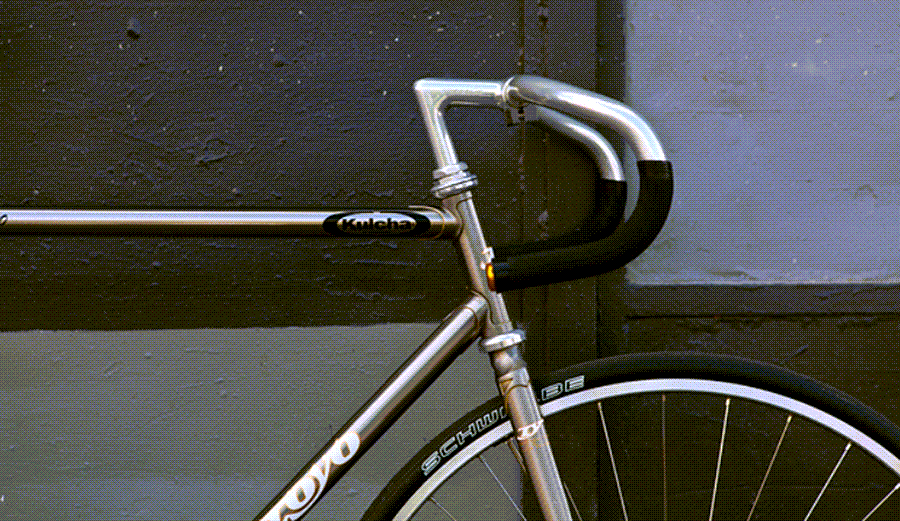
Yoshiaki Ishigaki’s approach to building Toyo frames emphasizes the connection between object quality and user experience. Rather than maximizing production volume, Toyo prioritizes construction standards that ensure each frame meets exacting specifications. This philosophy aligns with traditional Japanese craftsmanship values where maker accountability creates inherent quality control.
The decision to finish Toyo frames with clear coat rather than paint reveals confidence in construction execution. Paint conceals imperfect brazing, uneven filing, and rushed work. It also can conceal common shortcuts in mass production. Clear coating exposes every detail, making each lug line, tube junction, and surface finish visible to scrutiny. This transparency demonstrates Ishigaki’s commitment to work that withstands close inspection.
For aspiring builders interested in similar transparency, investing in precision filing tools and brass brazing supplies forms the foundation for developing visible craftsmanship skills that clear-coated frames demand.
Lugwork and Brass Lining Technique
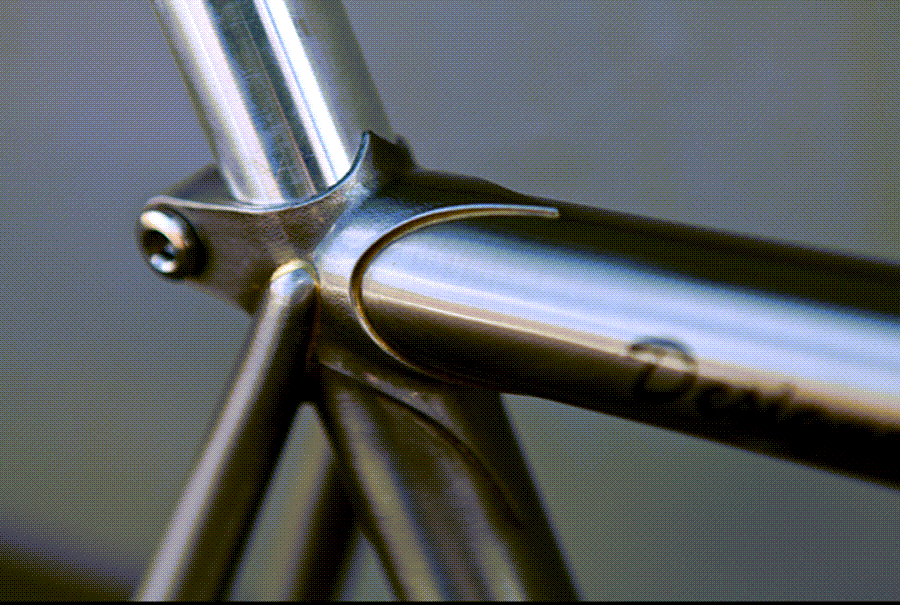
The Toyo frame showcases exceptional lug preparation and brass lining execution. Each lug receives careful attention during brazing, with brass flowing perfectly along joint edges to create uniform, smooth fillets. This brass lining serves both functional and aesthetic purposes—it strengthens tube-to-lug connections while creating the distinctive golden accent lines that define high-quality lugged construction.
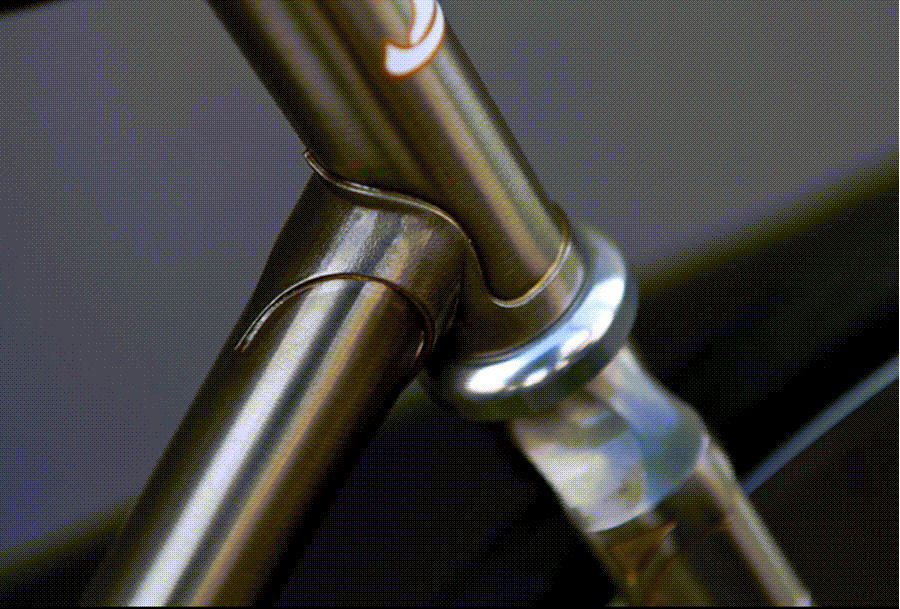
Achieving perfect brass lines requires temperature control, flux application timing, and steady torch manipulation. The Toyo builders demonstrate mastery of these variables, producing consistent results across multiple lugs. No gaps, drips, or irregularities mar the golden lines that trace each connection point. This level of execution typically requires years of practice and countless frames to develop the muscle memory and visual judgment necessary for flawless results.
Modern builders pursuing similar standards benefit from temperature-indicating brazing paste and quality brass rod selection that provides consistent flow characteristics during the learning process.
Component Selection and NJS Standards
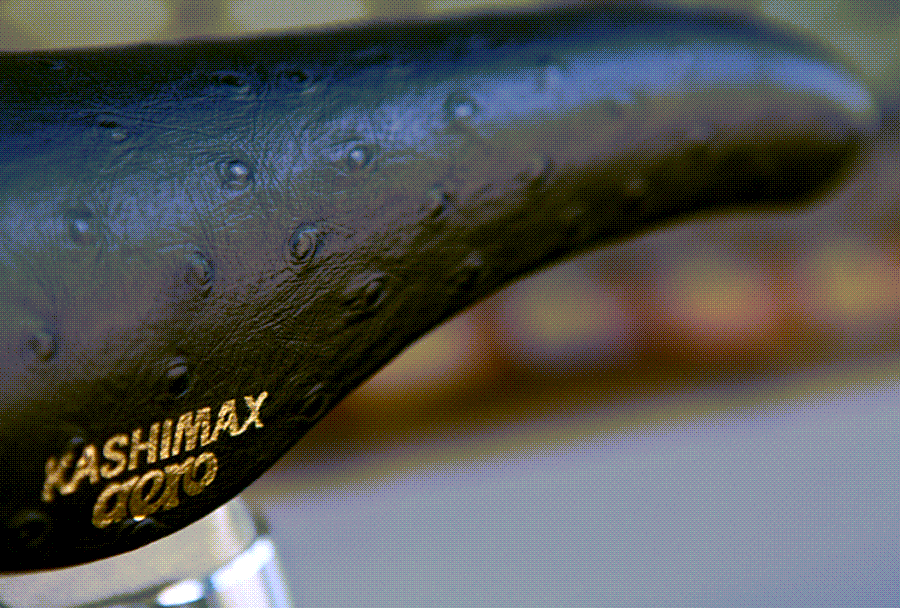
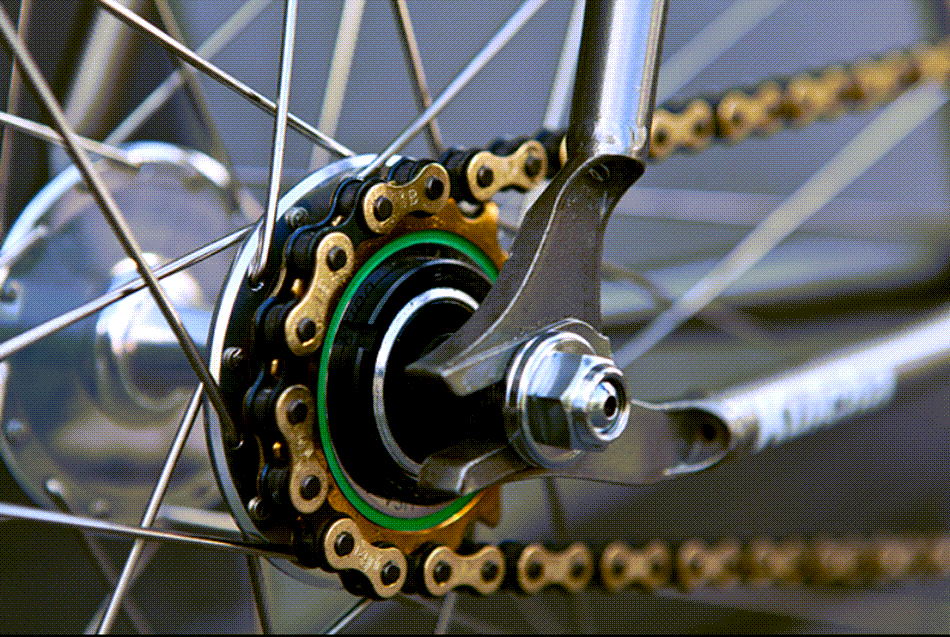
While not every component on this Toyo build carries NJS (Nippon Jitensha Shinkokai) approval, the selection reflects deep understanding of track cycling requirements and Japanese manufacturing excellence. Dura-Ace components form the drivetrain foundation, delivering the precision and durability demanded by velodrome racing. The Kashimax saddle provides the firm platform track riders prefer for maximum power transfer.
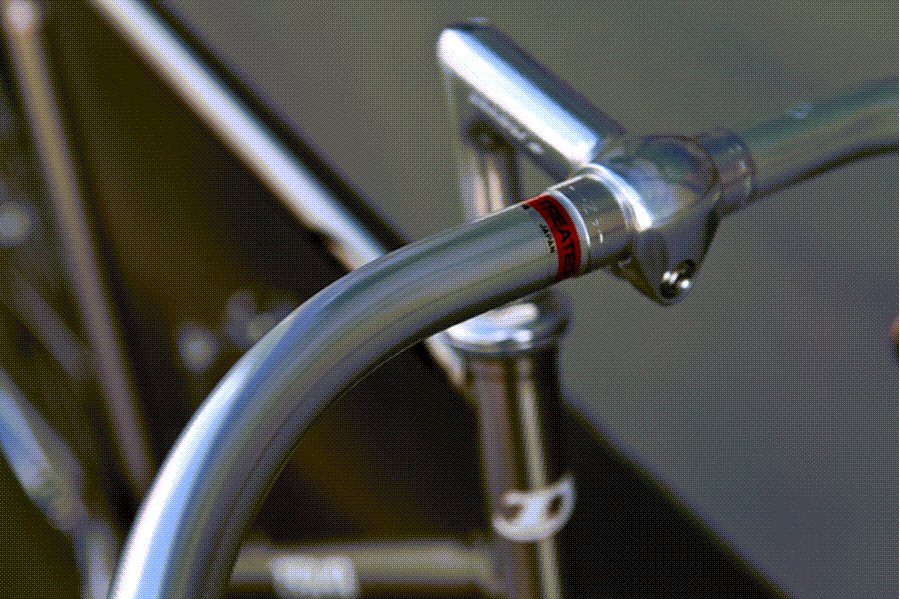
Nitto components handle cockpit duties, maintaining the Japanese manufacturing theme while ensuring reliable performance. These parts represent decades of refinement through professional keirin racing—Japan’s uniquely intense form of track cycling that drives component development to extreme standards.
The single splash of color comes from the Euro-Asia Imports Gold Medal Pro cog, a strategic accent that breaks the monotone aesthetic while serving as the critical final drive component. For riders building similar fixed-gear track bikes, sourcing NJS-certified components and premium track cogs ensures parts meet the rigorous standards developed through Japanese keirin competition.
Clear Coat Finish and Surface Preparation
The clear coat finish on Toyo frames demands impeccable surface preparation before application. Steel tubing arrives with mill scale, minor surface irregularities, and potential contamination that must be removed completely. The Toyo builders progress through multiple stages of surface refinement—from initial cleaning through progressive sanding grits—until the steel achieves mirror-smooth consistency.
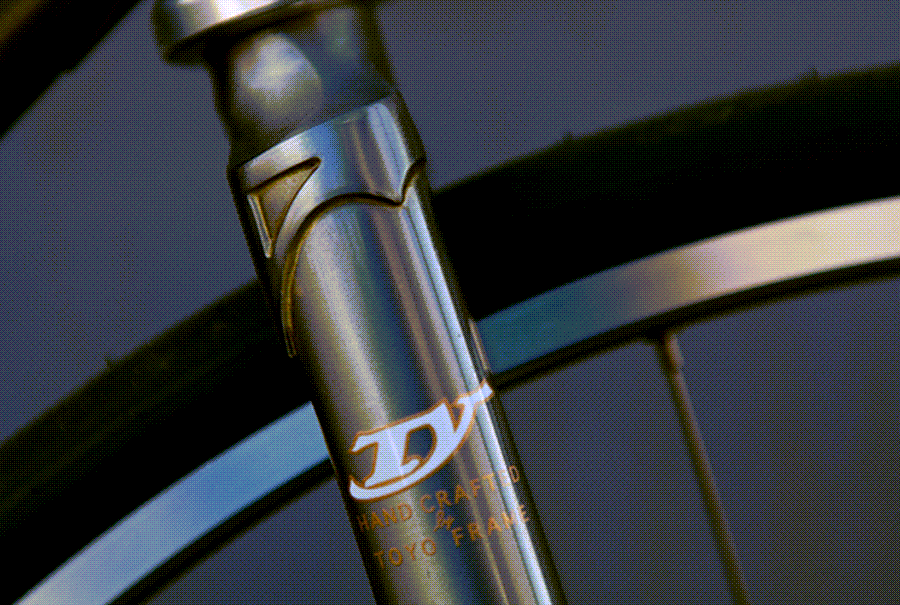
Only after this extensive preparation can clear coat application begin. Unlike paint, which builds thickness that can hide minor imperfections, clear coat adds minimal material while magnifying surface condition. Any remaining scratches, dents, or inconsistencies become permanently visible. The flawless appearance of this Toyo frame confirms the builder’s commitment to preparation work that receives no shortcuts.
The brass lug lining gains additional visual impact under clear coat, creating the distinctive contrast between steel gray and golden brass that defines high-end lugged construction. Builders interested in achieving similar results should invest in progressive sanding disc sets and automotive-grade clear coat systems designed for metal finishing applications.
Melbourne Collaboration and Global Appeal
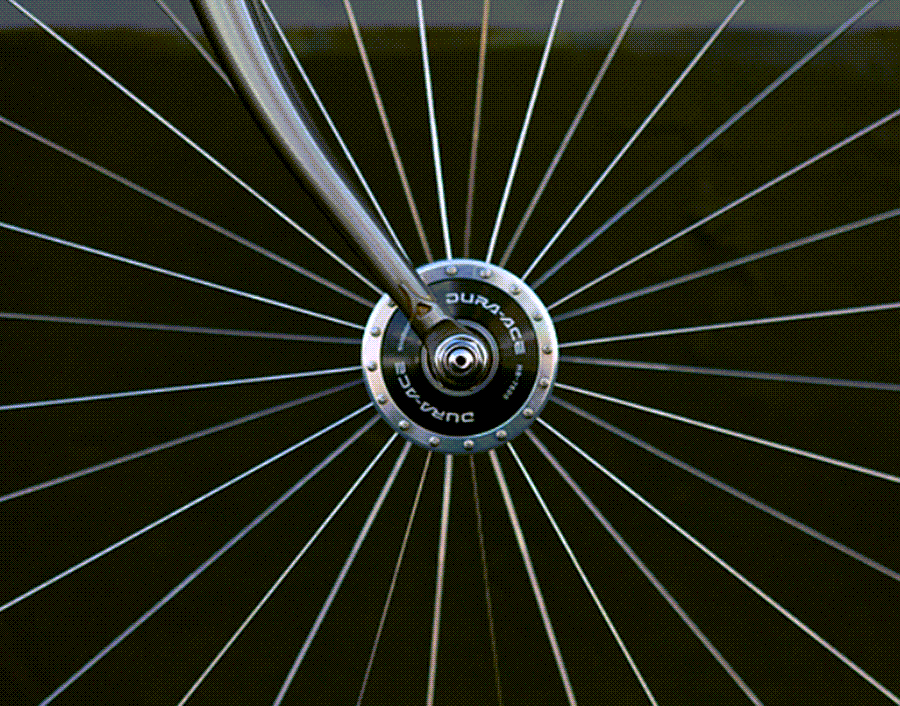
This particular Toyo frame resulted from collaboration between Melbourne local Matty and Sasha at Pony Bikes, demonstrating how Japanese frame building excellence reaches global cycling communities. The specification choices reflect Melbourne’s riding conditions—rough urban streets that demand durability alongside the clean aesthetic valued by fixed-gear enthusiasts.
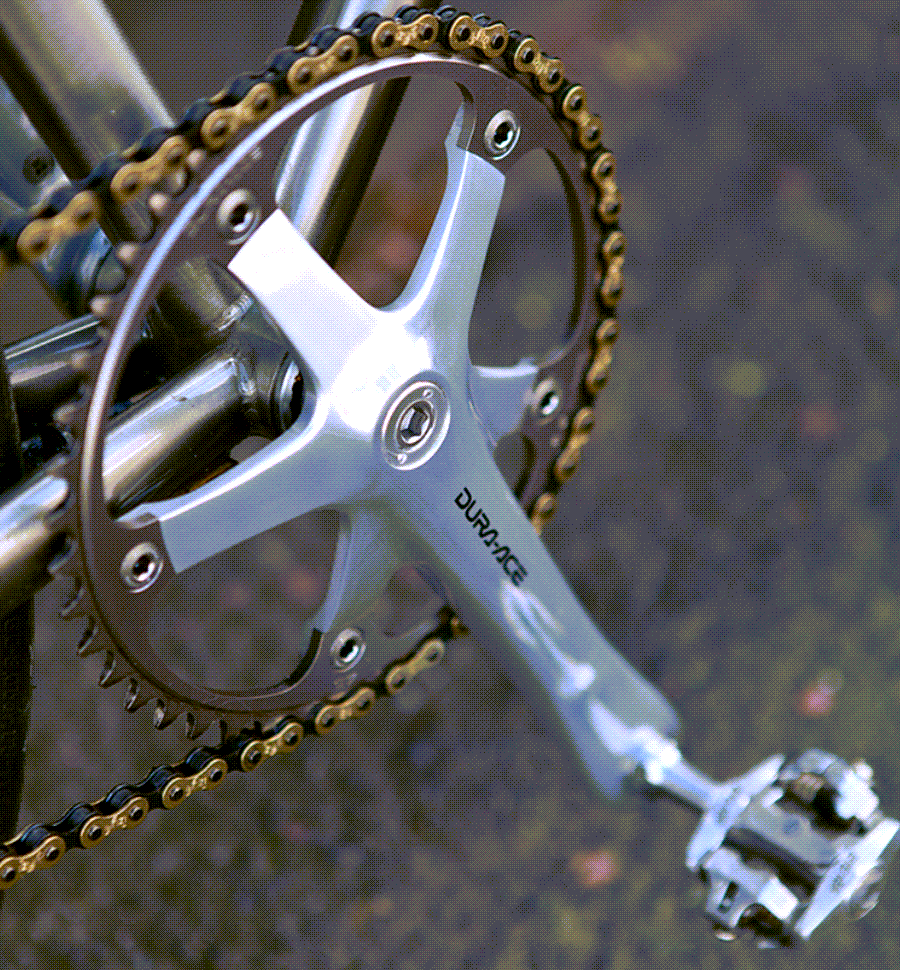
The partnership between Australian riders and Japanese builders illustrates the international respect Toyo frames command within cycling culture. Riders worldwide recognize the value of Ishigaki’s craftsmanship. For this reason, customers are willing to wait for custom builds and pay premium prices. They also realize these frames represent traditional construction methods executed to contemporary standards.
For cyclists seeking similar quality builds, connecting with experienced bike shops that maintain relationships with Japanese frame builders provides access to expertise beyond simple component assembly. Shops like Pony Bikes understand how to specify Toyo frames for local conditions while respecting the builder’s construction philosophy.
Fixed-Gear Track Geometry and Street Performance
Track frame geometry translates effectively to urban fixed-gear applications when properly specified. The Toyo frame likely features steeper angles and shorter wheelbase compared to road geometries, providing the responsive handling track riders demand. These characteristics create nimble street performance ideal for navigating dense city traffic and executing quick direction changes.
The stiff bottom bracket area and aggressive position suit riders who prioritize efficiency over comfort during shorter urban rides. Track geometry assumes smooth velodrome surfaces. So, adapting Toyo frames for street use requires thoughtful tire selection and potentially modified handlebar choices. Riders building similar street-track conversions benefit from quality track tire selections and ergonomic handlebar options that balance performance with real-world usability.
Preserving Traditional Framebuilding Methods
Toyo Frames represents continuity with framebuilding traditions that predate modern manufacturing efficiency.
Carbon fiber monocoque construction and hydroformed aluminum dominate contemporary production. Yet builders like Yoshiaki Ishigaki maintain lugged steel techniques that require extensive manual labor and specialized skills.
This preservation of traditional methods serves purposes beyond nostalgia. Lugged construction allows frame customization impossible with other techniques. This enables builders to precisely tune ride characteristics. They accomplish this through tube selection, lug reinforcement patterns, and brazing material choices. The resulting frames offer performance characteristics and aesthetic qualities that mass production cannot replicate.
The Toyo philosophy suggests that choosing well-made objects over average alternatives contributes to broader quality improvement across society. Whether this idealistic view holds merit remains debatable, but the tangible excellence visible in every Toyo frame certainly demonstrates what dedication to craft produces when quality supersedes quantity as the primary goal.
Frequently Asked Questions
What makes Toyo Frames unique among Japanese frame builders?
Toyo Frames, founded by Yoshiaki Ishigaki, emphasizes clear-coated finishes that showcase perfect brass lug lining and impeccable surface preparation. The builder’s philosophy connects quality craftsmanship with broader social improvement through conscious consumption of well-made objects.
Why do Toyo frames use clear coat instead of paint?
Clear coating reveals every detail of frame construction, including lug work, brazing quality, and surface finish. This transparency demonstrates builder confidence and allows riders to verify craftsmanship quality. It also highlights the distinctive brass lug lining that defines premium lugged construction.
What is NJS certification and why does it matter?
NJS (Nippon Jitensha Shinkokai) certification indicates components meet the strict standards required for Japanese keirin racing. These parts undergo rigorous testing for durability and performance, making them highly sought after by track cyclists worldwide even for non-competitive applications.
Can Toyo track frames work for street riding?
Yes, Toyo track frames adapt well to urban fixed-gear use. The steep geometry and responsive handling suit city riding. Riders should select appropriate tires for rough pavement and may prefer different handlebar configurations compared to velodrome racing setups.
How long does it take to receive a custom Toyo frame?
Wait times for Toyo frames vary based on current order volume and builder schedule. This typically ranges from several months to over a year. The extensive hand work required for perfect lug preparation, brazing, and finishing cannot be rushed without compromising the quality standards that define Toyo’s reputation.
Recommended Products for Track and Fixed-Gear Builds
James Hickman is a former USA Cycling Expert coach, Leukemia & Lymphoma Society’s Team N Training coach and Masters category racer with podium finishes in So Cal events.