Categories
Japanese Road Bikes

Toyo Frames: Japanese Lugwork Craftsmanship and Track Bicycle Excellence

Toyo Frames Lugwork Craftsmanship

Toyo
SPECIAL THANKS TO THE SPOKEN.COM FOR THE IMAGES CONTAINED IN THIS ARTICLE!

Quick Answer: Toyo Frames, founded by Yoshiaki Ishigaki, represents premium Japanese track frame construction featuring clear-coated finishes that reveal perfect brass lug lining. This fixed-gear build combines Dura-Ace components, Kashimax saddle, Nitto parts, and an EAI Gold Medal Pro cog in a functional yet elegant package.

By James J | Former USA Cycling Expert Coach

When Yoshiaki Ishigaki established Toyo Frames, heJapanese Steel classic bicycle design from Japan brought more than frame building expertise to the cycling world—he introduced a philosophy that challenges modern manufacturing priorities. On the Toyo website, Ishigaki poses fundamental questions about quality versus quantity and how craftsman-built bicycles might improve social quality through conscious consumption. His frames don’t simply transport riders; they demonstrate what meticulous attention to detail produces when builder reputation depends on every brazed joint.
The Philosophy Behind Toyo Frames
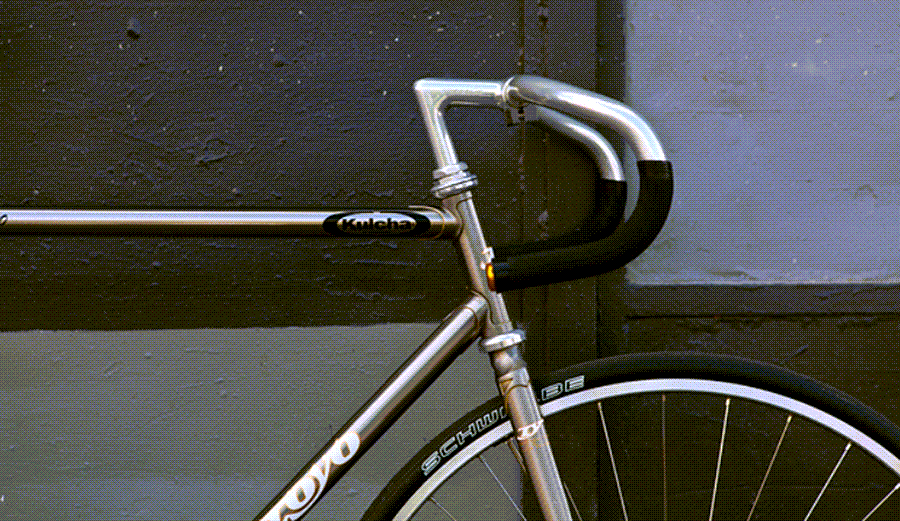
Toyo frames

Yoshiaki Ishigaki’s approach to building Toyo frames emphasizes the connection between object quality and user experience. Rather than maximizing production volume, Toyo prioritizes construction standards that ensure each frame meets exacting specifications. This philosophy aligns with traditional Japanese craftsmanship values where maker accountability creates inherent quality control.
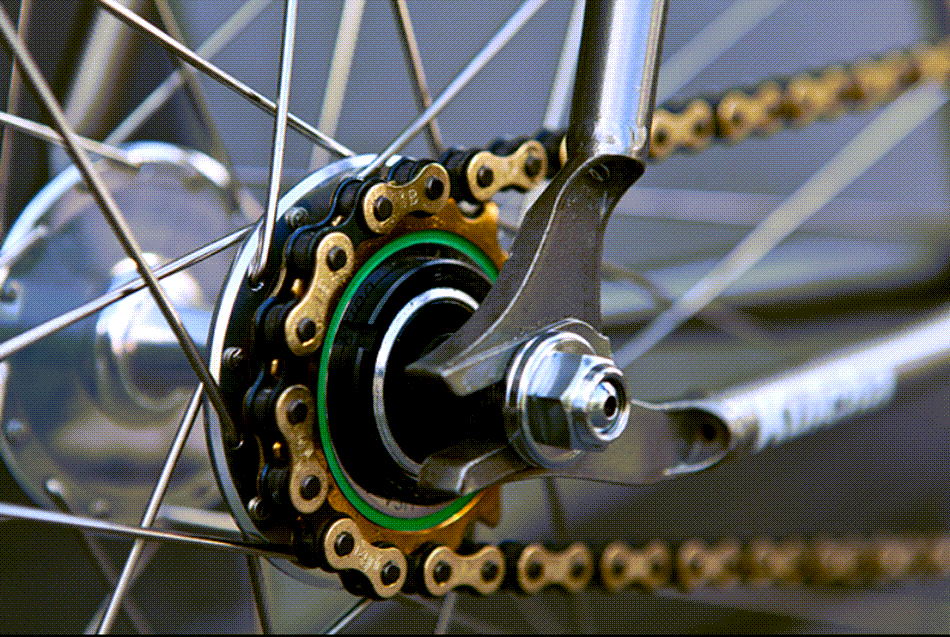
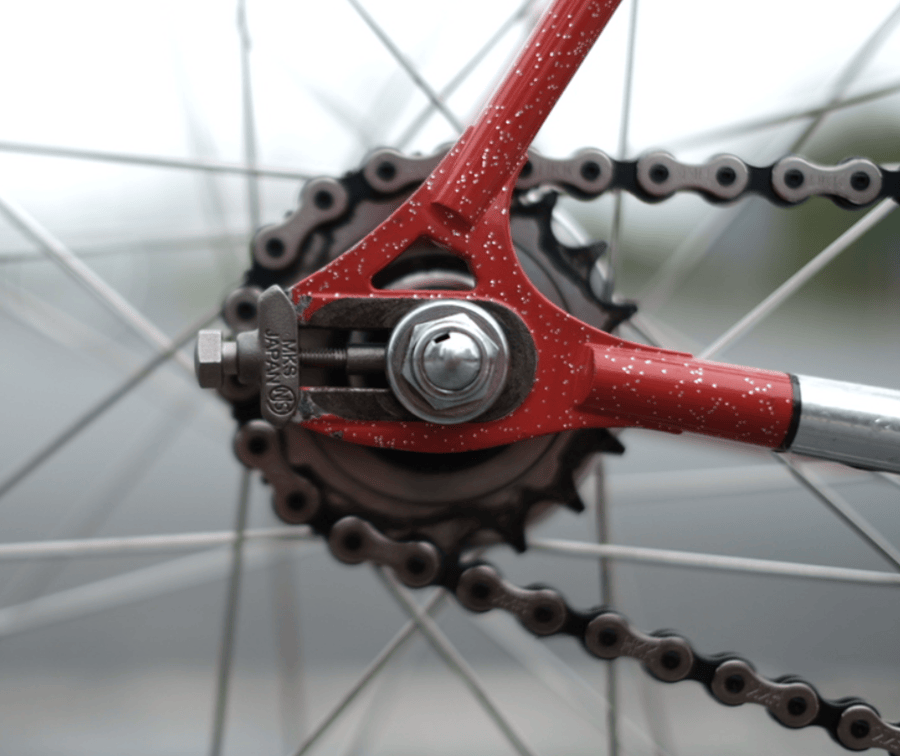
Toyo cog

The decision to finish Toyo frames with clear coat rather than paint reveals confidence in construction execution. Paint conceals imperfect brazing, uneven filing, and rushed work. It also can conceal common shortcuts in mass production. Clear coating exposes every detail, making each lug line, tube junction, and surface finish visible to scrutiny. This transparency demonstrates Ishigaki’s commitment to work that withstands close inspection.

For aspiring builders interested in similar transparency, investing in precision filing tools and brass brazing supplies forms the foundation for developing visible craftsmanship skills that clear-coated frames demand.

Lugwork and Brass Lining Technique
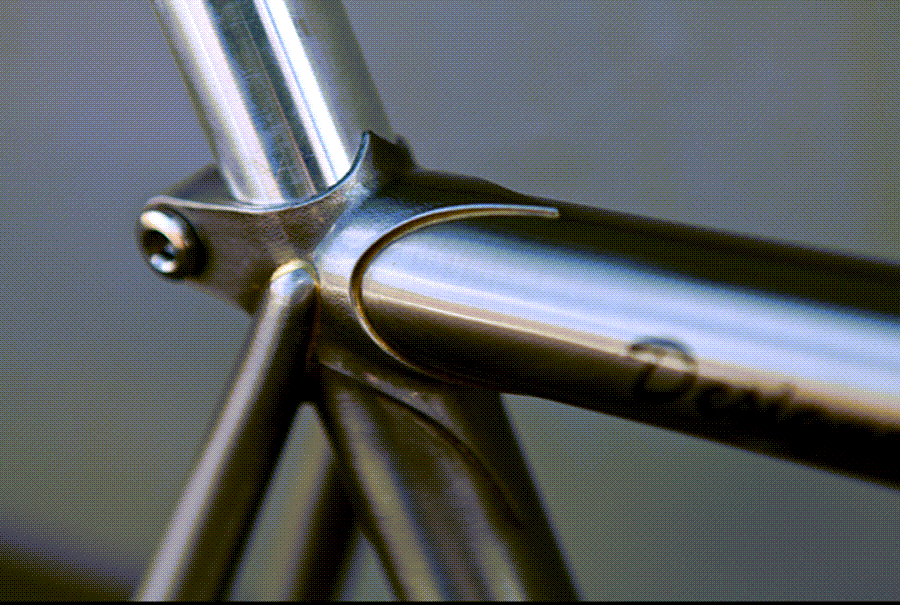
Toyo lug work

The Toyo frame showcases exceptional lug preparation and brass lining execution. Each lug receives careful attention during brazing, with brass flowing perfectly along joint edges to create uniform, smooth fillets. This brass lining serves both functional and aesthetic purposes—it strengthens tube-to-lug connections while creating the distinctive golden accent lines that define high-quality lugged construction.
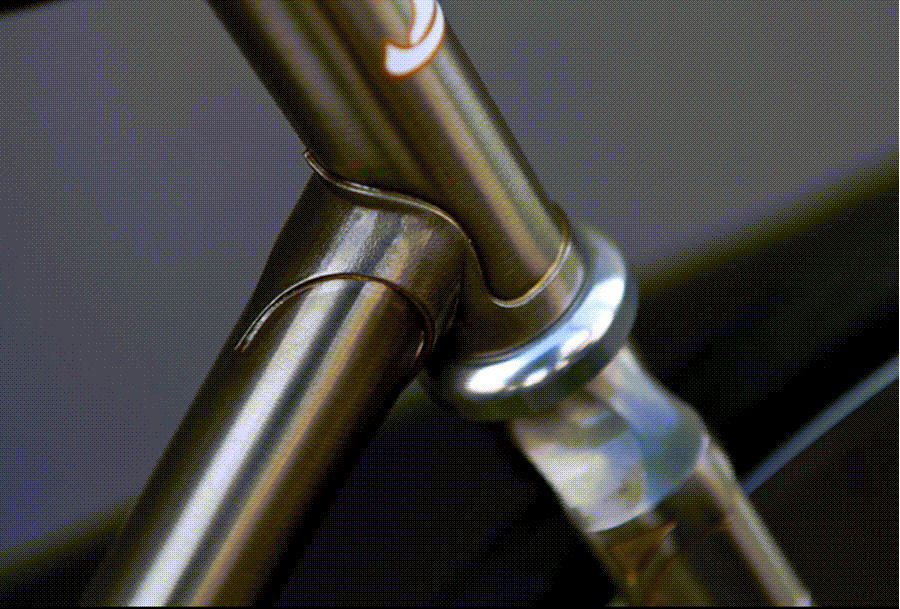
Toyo headset down tube lug

Achieving perfect brass lines requires temperature control, flux application timing, and steady torch manipulation. The Toyo builders demonstrate mastery of these variables, producing consistent results across multiple lugs. No gaps, drips, or irregularities mar the golden lines that trace each connection point. This level of execution typically requires years of practice and countless frames to develop the muscle memory and visual judgment necessary for flawless results.

Modern builders pursuing similar standards benefit from temperature-indicating brazing paste and quality brass rod selection that provides consistent flow characteristics during the learning process.

Component Selection and NJS Standards
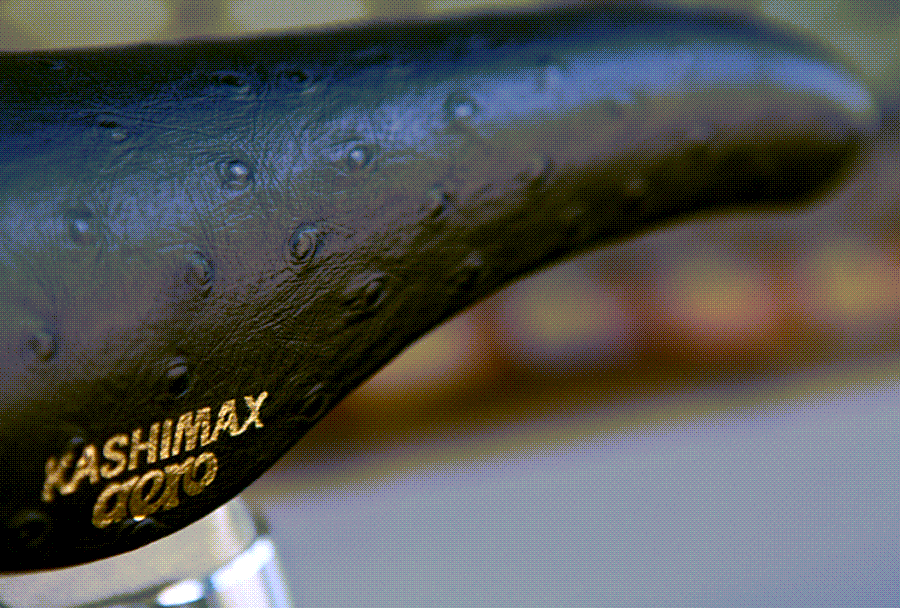
Toyo saddle

While not every component on this Toyo build carries NJS (Nippon Jitensha Shinkokai) approval, the selection reflects deep understanding of track cycling requirements and Japanese manufacturing excellence. Dura-Ace components form the drivetrain foundation, delivering the precision and durability demanded by velodrome racing. The Kashimax saddle provides the firm platform track riders prefer for maximum power transfer.
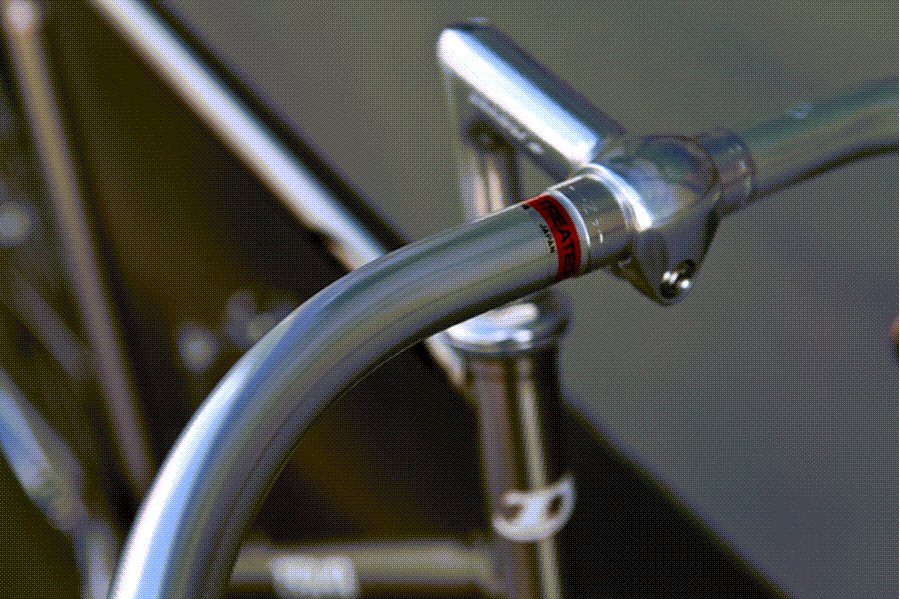
Toyo stem

Nitto components handle cockpit duties, maintaining the Japanese manufacturing theme while ensuring reliable performance. These parts represent decades of refinement through professional keirin racing—Japan’s uniquely intense form of track cycling that drives component development to extreme standards.

The single splash of color comes from the Euro-Asia Imports Gold Medal Pro cog, a strategic accent that breaks the monotone aesthetic while serving as the critical final drive component. For riders building similar fixed-gear track bikes, sourcing NJS-certified components and premium track cogs ensures parts meet the rigorous standards developed through Japanese keirin competition.

Clear Coat Finish and Surface Preparation

The clear coat finish on Toyo frames demands impeccable surface preparation before application. Steel tubing arrives with mill scale, minor surface irregularities, and potential contamination that must be removed completely. The Toyo builders progress through multiple stages of surface refinement—from initial cleaning through progressive sanding grits—until the steel achieves mirror-smooth consistency.
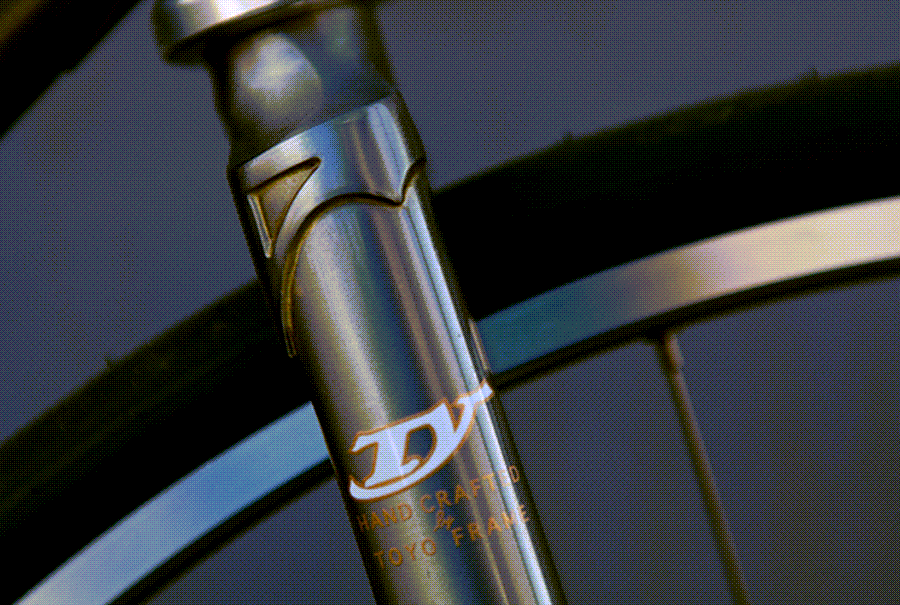
Toyo fork

Only after this extensive preparation can clear coat application begin. Unlike paint, which builds thickness that can hide minor imperfections, clear coat adds minimal material while magnifying surface condition. Any remaining scratches, dents, or inconsistencies become permanently visible. The flawless appearance of this Toyo frame confirms the builder’s commitment to preparation work that receives no shortcuts.

The brass lug lining gains additional visual impact under clear coat, creating the distinctive contrast between steel gray and golden brass that defines high-end lugged construction. Builders interested in achieving similar results should invest in progressive sanding disc sets and automotive-grade clear coat systems designed for metal finishing applications.

Melbourne Collaboration and Global Appeal
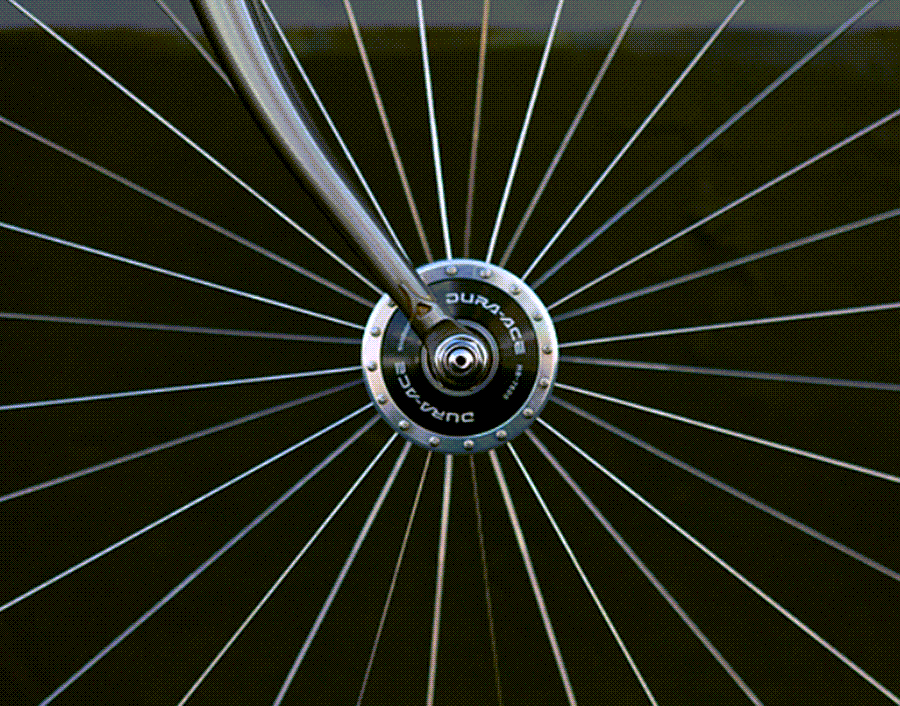
Toyo Hub

This particular Toyo frame resulted from collaboration between Melbourne local Matty and Sasha at Pony Bikes, demonstrating how Japanese frame building excellence reaches global cycling communities. The specification choices reflect Melbourne’s riding conditions—rough urban streets that demand durability alongside the clean aesthetic valued by fixed-gear enthusiasts.
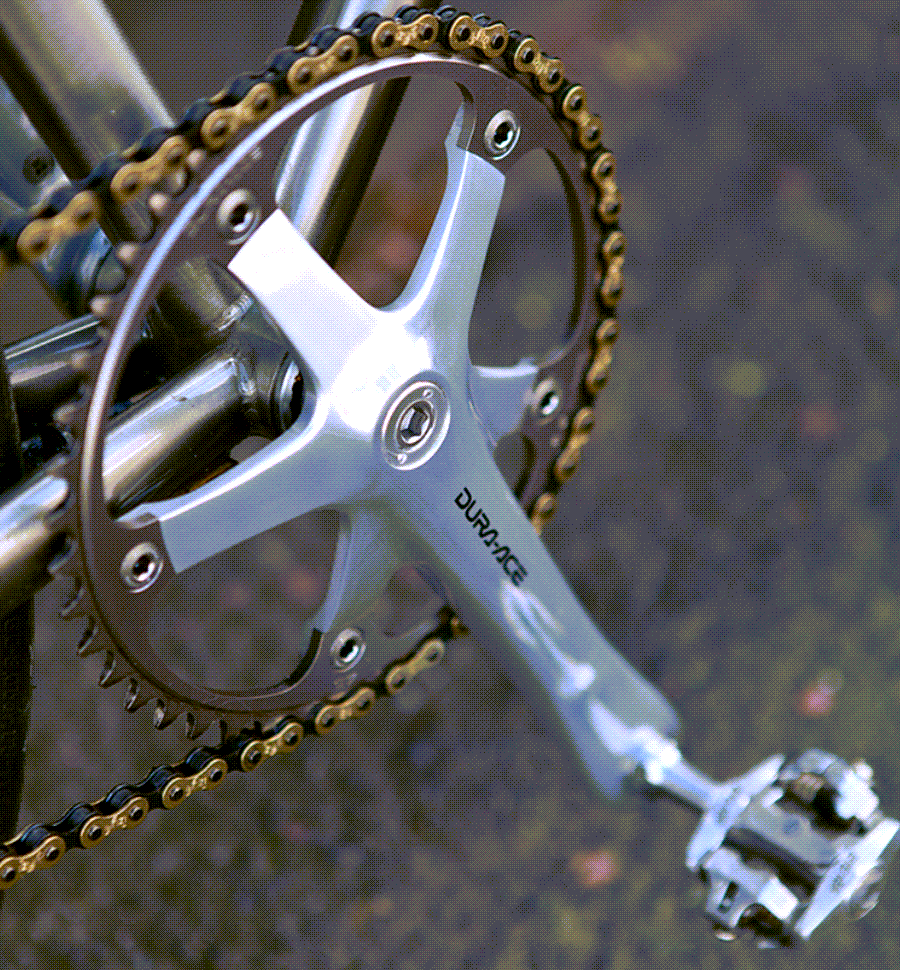
Toyo Crankset

The partnership between Australian riders and Japanese builders illustrates the international respect Toyo frames command within cycling culture. Riders worldwide recognize the value of Ishigaki’s craftsmanship. For this reason, customers are willing to wait for custom builds and pay premium prices. They also realize these frames  represent traditional construction methods executed to contemporary standards.

For cyclists seeking similar quality builds, connecting with experienced bike shops that maintain relationships with Japanese frame builders provides access to expertise beyond simple component assembly. Shops like Pony Bikes understand how to specify Toyo frames for local conditions while respecting the builder’s construction philosophy.

Fixed-Gear Track Geometry and Street Performance

Track frame geometry translates effectively to urban fixed-gear applications when properly specified. The Toyo frame likely features steeper angles and shorter wheelbase compared to road geometries, providing the responsive handling track riders demand. These characteristics create nimble street performance ideal for navigating dense city traffic and executing quick direction changes.

The stiff bottom bracket area and aggressive position suit riders who prioritize efficiency over comfort during shorter urban rides. Track geometry assumes smooth velodrome surfaces. So, adapting Toyo frames for street use requires thoughtful tire selection and potentially modified handlebar choices. Riders building similar street-track conversions benefit from quality track tire selections and ergonomic handlebar options that balance performance with real-world usability.

Preserving Traditional Framebuilding Methods

Toyo Frames represents continuity with framebuilding traditions that predate modern manufacturing efficiency.
Carbon fiber monocoque construction and hydroformed aluminum dominate contemporary production. Yet builders like Yoshiaki Ishigaki maintain lugged steel techniques that require extensive manual labor and specialized skills.

This preservation of traditional methods serves purposes beyond nostalgia. Lugged construction allows frame customization impossible with other techniques. This enables builders to precisely tune ride characteristics. They accomplish this through tube selection, lug reinforcement patterns, and brazing material choices. The resulting frames offer performance characteristics and aesthetic qualities that mass production cannot replicate.

The Toyo philosophy suggests that choosing well-made objects over average alternatives contributes to broader quality improvement across society. Whether this idealistic view holds merit remains debatable, but the tangible excellence visible in every Toyo frame certainly demonstrates what dedication to craft produces when quality supersedes quantity as the primary goal.

Frequently Asked Questions

What makes Toyo Frames unique among Japanese frame builders?

Toyo Frames, founded by Yoshiaki Ishigaki, emphasizes clear-coated finishes that showcase perfect brass lug lining and impeccable surface preparation. The builder’s philosophy connects quality craftsmanship with broader social improvement through conscious consumption of well-made objects.

Why do Toyo frames use clear coat instead of paint?

Clear coating reveals every detail of frame construction, including lug work, brazing quality, and surface finish. This transparency demonstrates builder confidence and allows riders to verify craftsmanship quality. It also highlights the distinctive brass lug lining that defines premium lugged construction.

What is NJS certification and why does it matter?

NJS (Nippon Jitensha Shinkokai) certification indicates components meet the strict standards required for Japanese keirin racing. These parts undergo rigorous testing for durability and performance, making them highly sought after by track cyclists worldwide even for non-competitive applications.

Can Toyo track frames work for street riding?

Yes, Toyo track frames adapt well to urban fixed-gear use. The steep geometry and responsive handling suit city riding. Riders should select appropriate tires for rough pavement and may prefer different handlebar configurations compared to velodrome racing setups.

How long does it take to receive a custom Toyo frame?

Wait times for Toyo frames vary based on current order volume and builder schedule. This typically ranges from several months to over a year. The extensive hand work required for perfect lug preparation, brazing, and finishing cannot be rushed without compromising the quality standards that define Toyo’s reputation.
We are an Amazon affiliate and earn from qualified Amazon purchases with no cost to you. This is for ANY product that you purchase through our links.
Categories
Japanese Road Bikes

Fixed Gear Bike: Complete Guide to Components & Building Kalavinka Super Exhibition

Fixed Gear Bike: Complete Guide to Components, Building, and Performance

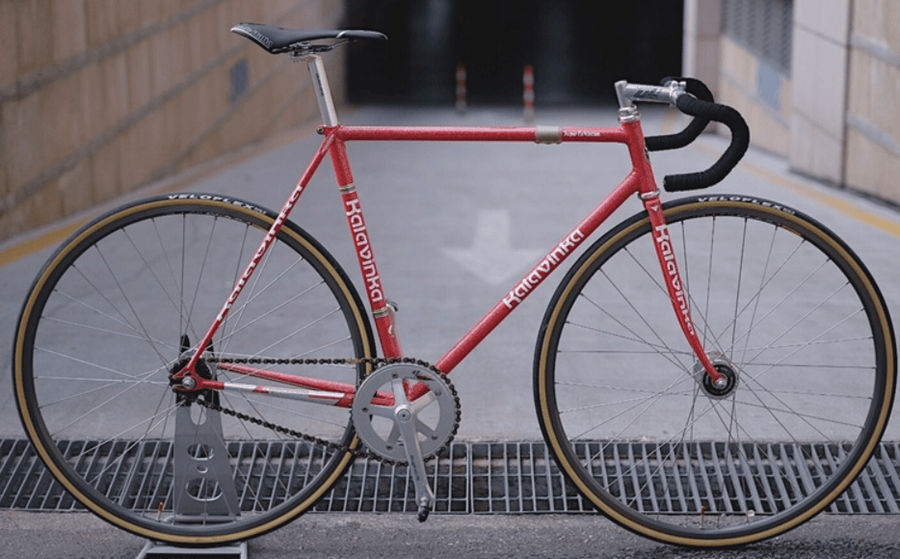
fixed gear bike Kalavinka
SPECIAL THANKS TO THE PEDALROOM.COM FOR THE IMAGES CONTAINED IN THIS ARTICLE!

Quick Answer: What is a Fixed Gear Bike?

A fixed gear bike (or “fixie”) is a bicycle with a drivetrainJapanese Steel classic bicycle design from Japan that has no freewheel mechanism. The rear cog is threaded or bolted directly to the hub, meaning the pedals rotate whenever the rear wheel turns. Fixed gear bikes originated from track racing and keirin velodromes in Japan, where they’re still mandatory equipment for professional competition. Modern riders choose fixed gear bikes for their simplicity, direct power transfer, mechanical efficiency, and enhanced bike handling skills.


The Fixed Gear Bike Advantage: Why Riders Choose Direct Drive

fixed gear bike direct drive

Fixed gear bikes eliminate derailleurs, shifters, and freewheel mechanisms. This simplification creates performance advantages that competitive cyclists and urban riders value.

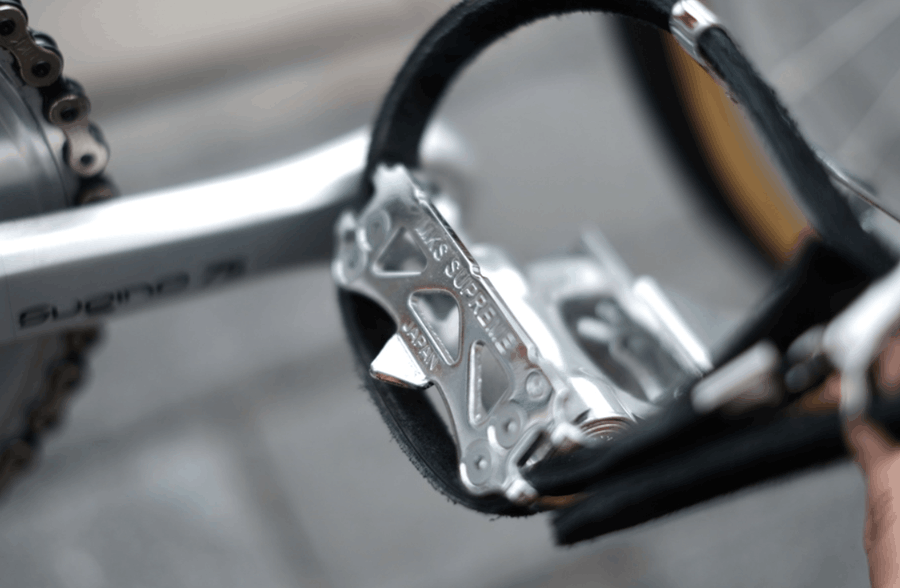
fixed gear bike pedals

The direct connection between pedals and rear wheel improves power transfer efficiency. A fixed gear bike delivers every watt directly to forward motion, an advantage track racers have relied on for over a century.

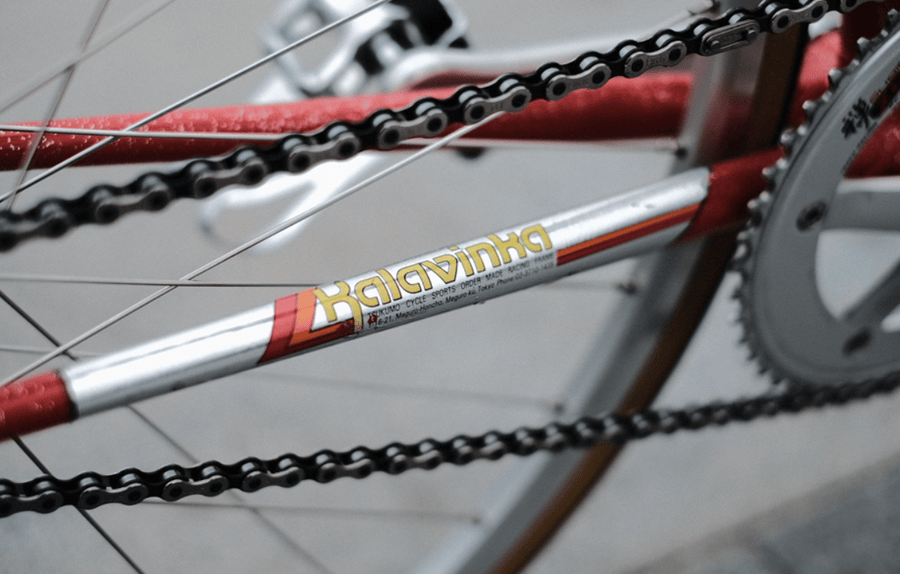
Fixed gear bikes also develop superior bike handling skills. Constant pedal rotation creates smoother cadence, better cornering, and enhanced balance. Japanese keirin racing produces some of the world’s finest examples, like the Kalavinka Super Exhibition built by master craftsman Akio Tanabe in Tokyo.

Essential Components: Building a High-Performance Fixed Gear Bike

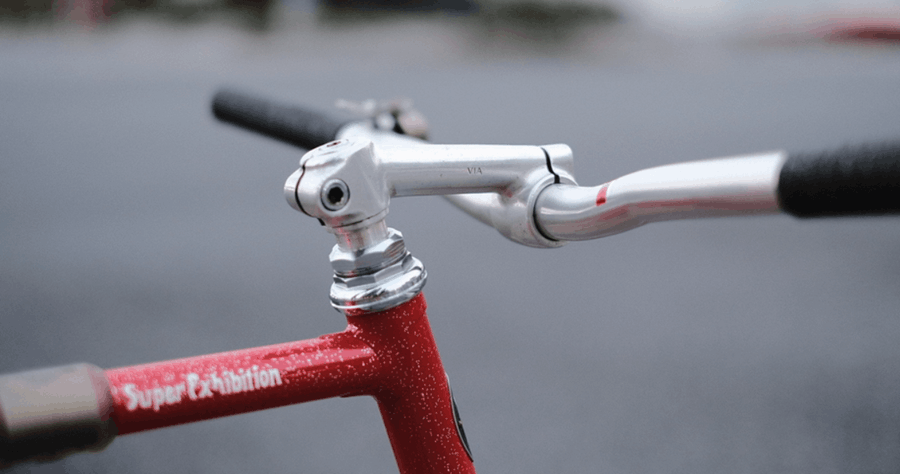
fixed gear bike stem

The Frame: Geometry and Material Selection

Quality fixed gear bike frames feature steep seat tube angles (74-75 degrees), short wheelbases, and elevated bottom brackets for pedal clearance on banked velodromes.

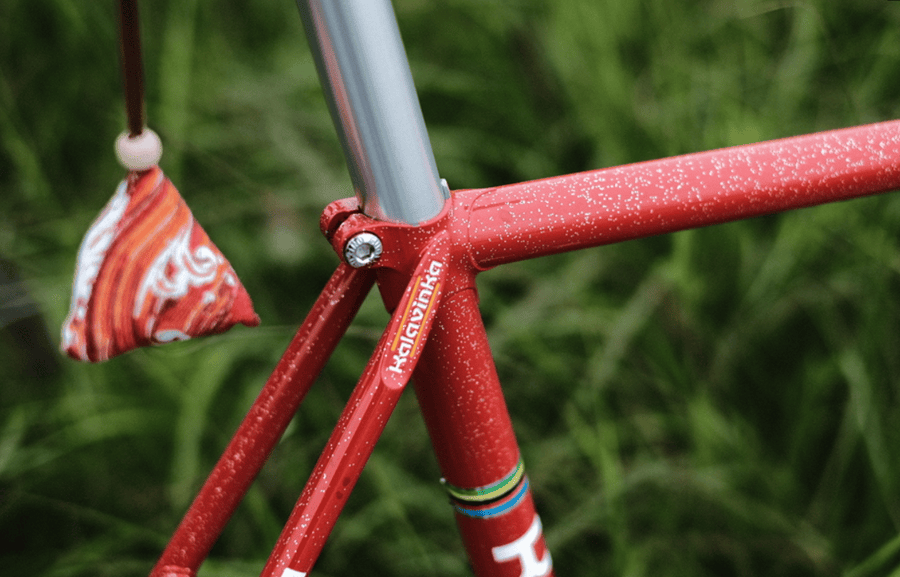
fixed gear bike omamori
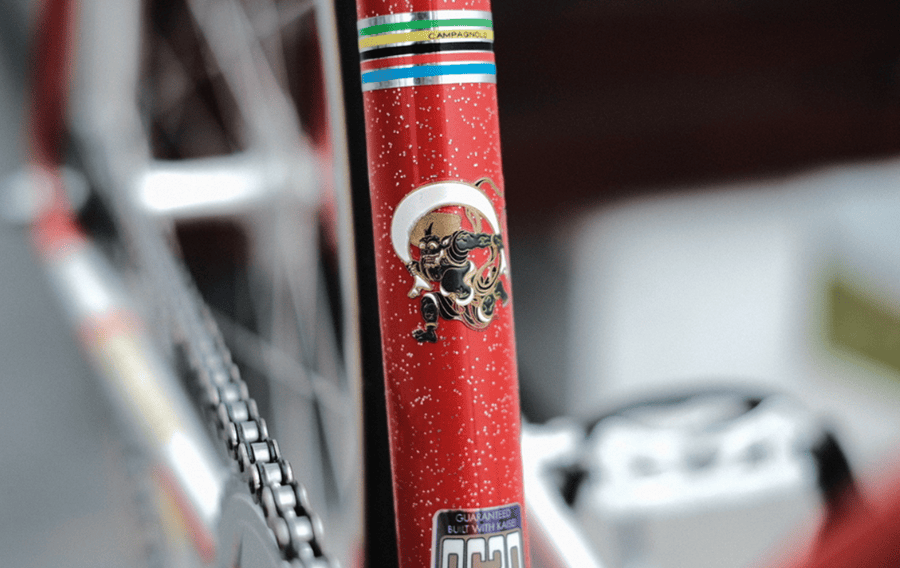
A omamori: Good luck amulet

Steel remains the preferred material. Tange, Columbus, and Kaisei tubing provide stiffness for power transfer while maintaining street-riding compliance. The Kalavinka Super Exhibition uses premium Columbus tubing, combining European prestige with Japanese craftsmanship.

Proper sizing matters—most riders size down 1-2cm from their road bike for the aggressive track position.

Drivetrain Configuration: Gear Ratios and Component Selection

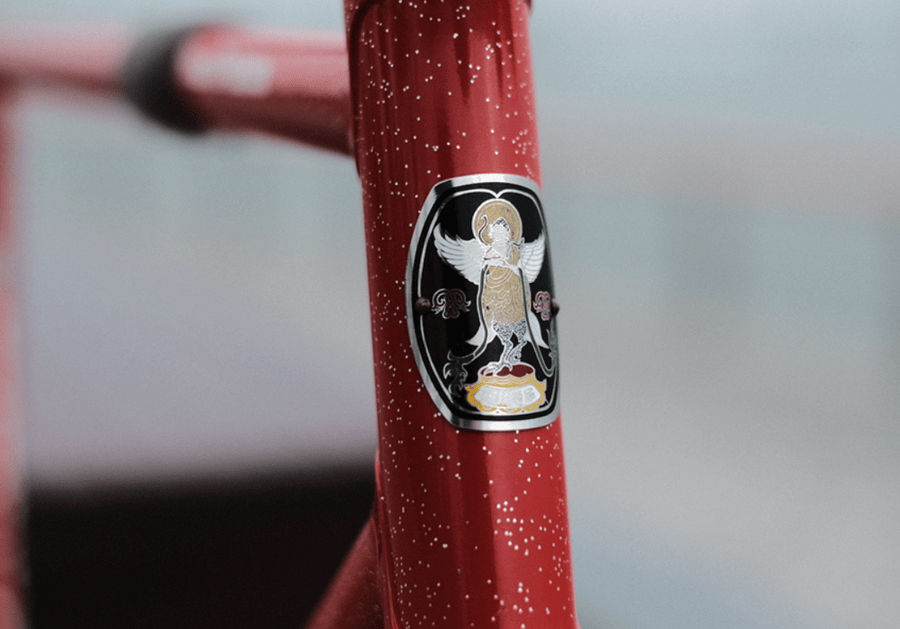
fixed gear bike headset

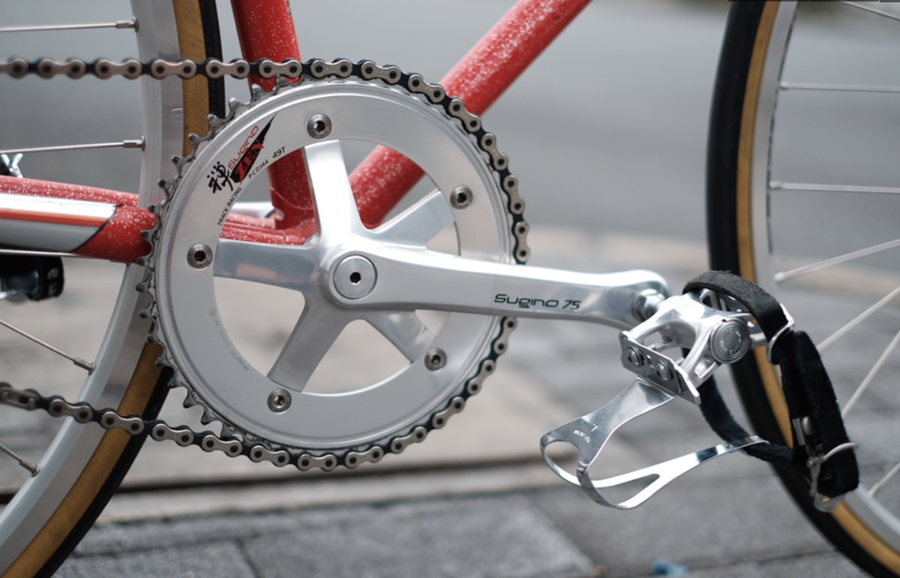
Gear ratio selection balances acceleration against top speed. For street riding, ratios between 2.6-2.8 work well. The Kalavinka build runs 49×18 (2.72 ratio), providing quick acceleration with reasonable urban speeds. Track racers often push ratios above 3.0.

fixed gear bike gear ratios

The Sugino 75 NJS crankset represents the gold standard, featuring cold-forged aluminum and proven track performance. Crank arms typically range 165-170mm, with shorter arms preferred for high-cadence work.

fixed gear bike high performance components

Chain tension requires precise adjustment. Most frames include horizontal dropouts allowing rear wheel positioning to eliminate slack without tensioners.

Wheelset Architecture: Hubs, Rims, and Tire Selection

fixed gear bike hub

Fixed gear bike wheels withstand constant pedal pressure that freewheel systems never experience. Track hubs feature threaded interfaces for fixed cogs, with flip-flop options available. Quality choices include Shimano Dura-Ace, Phil Wood, and White Industries hubs.

fixed gear bike seat tube

The Mavic Open Pro rim offers excellent strength-to-weight ratio. Spoke count typically ranges from 28-36 holes, with 32-spoke builds providing optimal compromise.

Tire width affects ride quality significantly. Track riders use 23-25mm for speed, while street riders prefer 25-28mm for puncture protection and comfort.

Cockpit Setup: Handlebars, Stem, and Contact Points

fixed gear bike handlebars

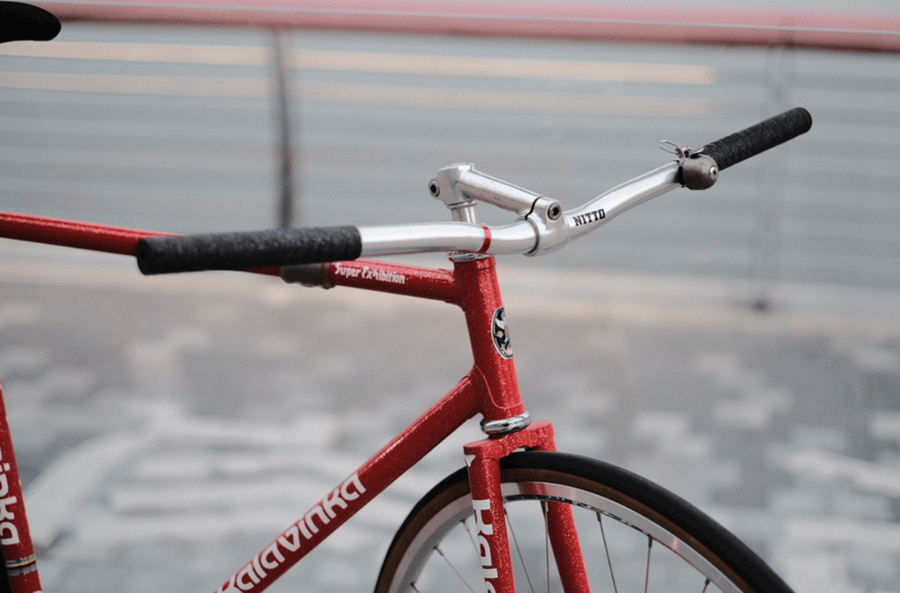
Handlebar choice varies by riding style. Drop bars like the Nitto B123AA provide multiple hand positions, while riser bars suit urban riders prioritizing visibility.

Stem length affects handling—shorter stems (80-100mm) create quick steering for track and city riding. Saddle position typically runs slightly forward compared to road bikes, compensating for steeper seat tube angles.

Fixed Gear Bike Maintenance and Safety

fixed gear bike right side

Maintaining a fixed gear bike proves simpler than geared bicycles. Without derailleurs, mechanical issues decrease substantially.

Check chain tension regularly—it should have roughly 1/2 inch total vertical movement. Over-tightened chains accelerate bearing wear.

Brake setup remains controversial, but street riding demands at least one functional brake for safety and legal compliance. Front brakes provide maximum stopping power.

Skid stopping wears rear tires rapidly. Riders using leg braking can consume tires in weeks. Use harder rubber compounds to extend lifespan.


FAQ: Fixed Gear Bike Questions Answered

What is the best gear ratio for a fixed gear bike?

Start with 2.6-2.7 ratios (46×17 or 48×18) for easier starting and stopping. Experienced riders often run 2.8-3.0 for more speed. Track racers use ratios approaching 3.5.

Can you ride a fixed gear bike uphill?

Yes, though it requires different technique. Choose appropriate gear ratios for your terrain—lower ratios (2.3-2.5) make climbing easier but sacrifice top speed. Standing climbs work well due to direct power transfer.

Do fixed gear bikes need brakes?

For street riding, yes—at least one brake is required for safety and legal compliance. Track racing mandates brakeless bikes, but public roads require stopping power beyond leg resistance.

How do you stop on a fixed gear bike?

Apply backward pressure on pedals to slow the rear wheel while using your hand brake for controlled stopping. Practice this technique before riding in traffic.

Why are fixed gear bikes popular?

Their simplicity, low maintenance, direct feel, and skill-building characteristics appeal to performance riders and urban cyclists. Minimal design reduces weight and theft risk while track racing heritage adds credibility.


Recommended Cycling Products

Top-rated products based on social media and Reddit recommendations:

Garmin Edge 540 – Best value GPS cycling computer with detailed metrics and navigation. Consistently recommended on r/cycling.

Continental GP 5000 S TR Tires – Benchmark performance tires praised across cycling communities for grip, speed, and puncture protection.

Fizik Antares R3 Saddle – Highly rated for comfort on aggressive riding positions. Popular choice among performance cyclists.

Park Tool Home Mechanic Toolkit – Reddit’s top recommendation for home maintenance.

We are an Amazon and Competitive Cyclist affiliate and earn from qualified purchases with no cost to you. This is for ANY product that you purchase through our links.

Categories
Japanese bicycles

Sim Works Doppo: The Japanese Touring Bike Named After a Poet

Doppo Tourer
SPECIAL THANKS TO THERADAVIST.COM FOR THE IMAGES CONTAINED IN THIS ARTICLE!

The Sim Works Doppo is a handcrafted steel touring bicycle made in Japan by framebuilder Shin Hattori. Named after renowned naturalist writer Doppo Kunikida, this versatile all-terrain bike combines traditional Japanese craftsmanship with modern touring functionality for cyclists who explore independently.

The Literary Heritage Behind the Name

Doppo saddle bags

Doppo Kunikida (1871-1908) was a pioneering JapaneseJapanese Steel classic bicycle design from Japan writer who founded the naturalist movement in Japanese literature. His pen name “Doppo” translates to “walking alone” or “going alone independently”—a fitting inspiration for a touring bicycle designed for self-reliant adventure.

Kunikida’s works, including “Musashino” and “Spring Birds,” expressed deep appreciation for nature and solitary exploration. His Wordsworthian awareness of the natural world influenced generations of Japanese writers and now inspires Sim Works’ bicycle design philosophy.

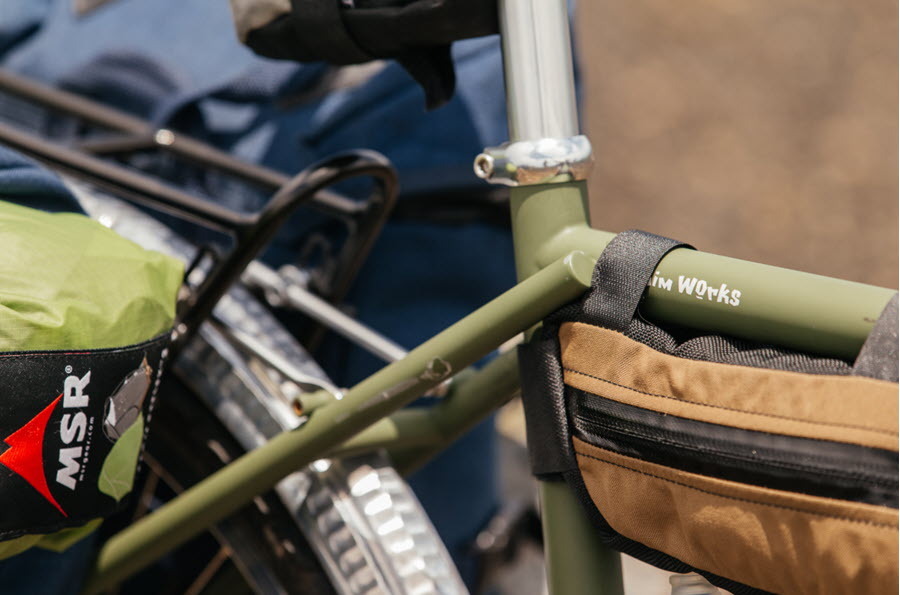
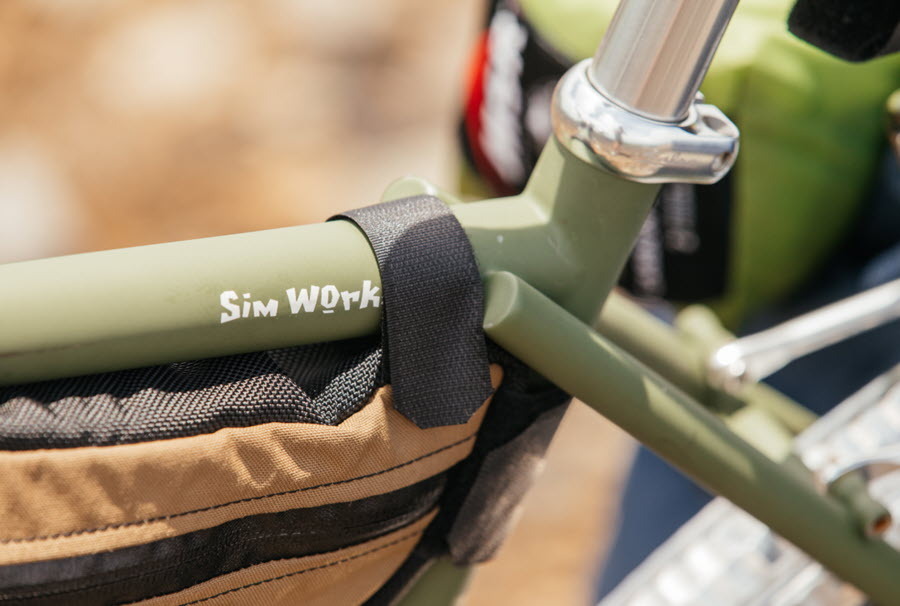
Doppo top tube

The Doppo bicycle embodies three principles from its namesake: going alone, working independently, and striving for excellence. This literary connection reflects Sim Works’ commitment to Japanese cultural heritage and thoughtful design.

Handcrafted by Shin Hattori in Aichi Prefecture

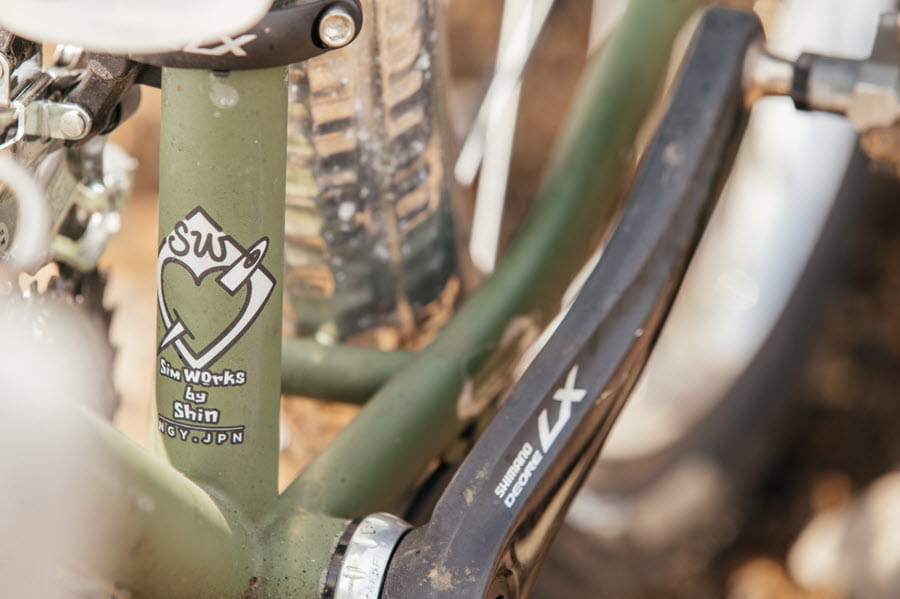
Doppo seatpost

Each Doppo frame is meticulously handbuilt by Shin Hattori and his fabrication partner Makoto Yokoyama in Aichi Prefecture, Japan. This small-batch production preserves traditional Japanese framebuilding techniques while domestic frame manufacturing continues to decline.

Doppo bottom bracket

Shin Hattori uses Tange chromoly steel tubing, a legendary Japanese material known for durability and ride quality. Each tube is precisely mitered, milled, and TIG welded with careful attention to heat management and finishing. The result is a hand-finished frame built to tight tolerances.

The Doppo first debuted at the North American Handmade Bicycle Show (NAHBS) in 2016. Since then, Shin’s workshop has produced several Doppo variants, including the ATB (All-Terrain Bike), Locust, Ronin, and High Plains Drifter models.

Modern Touring Tool with Versatile Capabilities

doppo top tube seat tube

The Doppo offers exceptional versatility through thoughtful design features. The frame accepts both 700c and 650b wheels, with generous tire clearance accommodating 700c x 43mm or 650b x 55mm tires. This multi-wheel compatibility allows riders to optimize their setup for different terrain.

Key features include:

  • Tange chromoly steel frame and fork
  • Disc brake compatibility (flat mount front and rear)
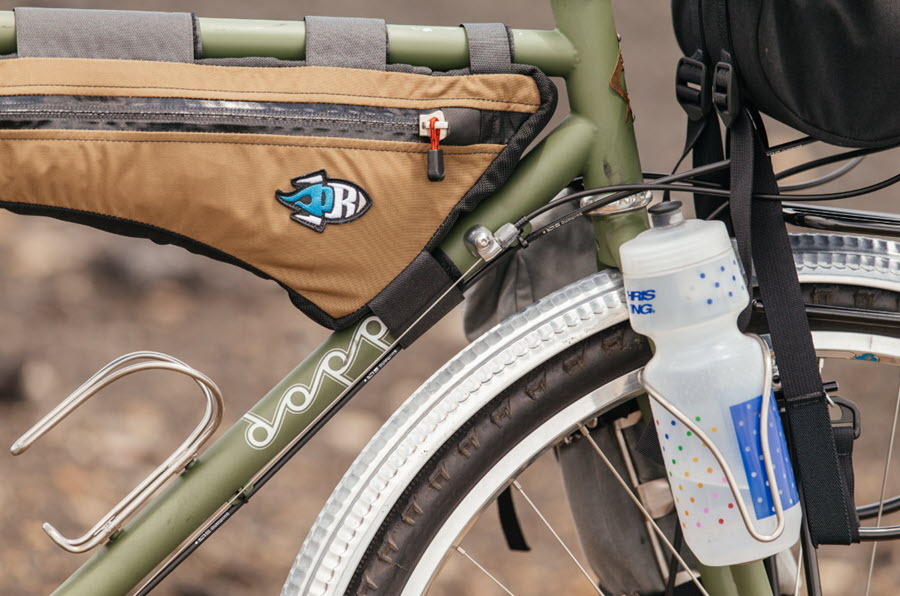
  • Multiple cargo cage mounts under the downtube (“three-pack” mounting)
  • Extensive rack and fender eyelets
  • 27.2mm seatpost diameter
  • 142mm x 12mm rear thru-axle spacing
  • 1-1/8″ straight head tube
    Doppo fork

The fork includes hidden eyelets underneath the crown for secure fender mounting. Additional eyelets on the fork blades support front racks and cargo cages for bike packing adventures. These “anything” mounts enable riders to configure the Doppo for ultralight credit card touring or fully-loaded expeditions.

The geometry balances stable handling when loaded with efficient climbing characteristics. The head tube angle is slack enough for confident descending yet steep enough for pleasurable uphill riding.

Built for Independent Exploration

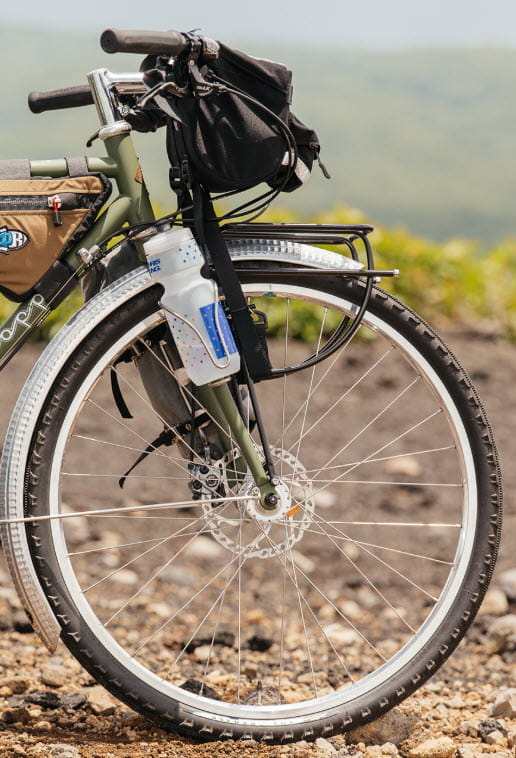
doppo front rack

This bike serves cyclists who venture beyond support networks. Whether exploring forgotten gravel roads, tackling singletrack, or touring through remote areas, the Doppo provides reliability when self-sufficiency matters most.

doppo headset

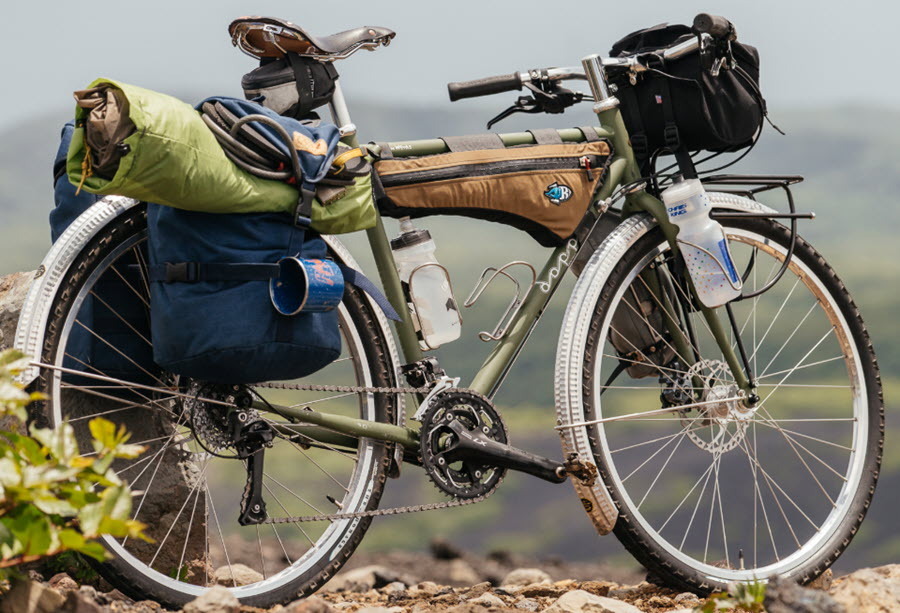
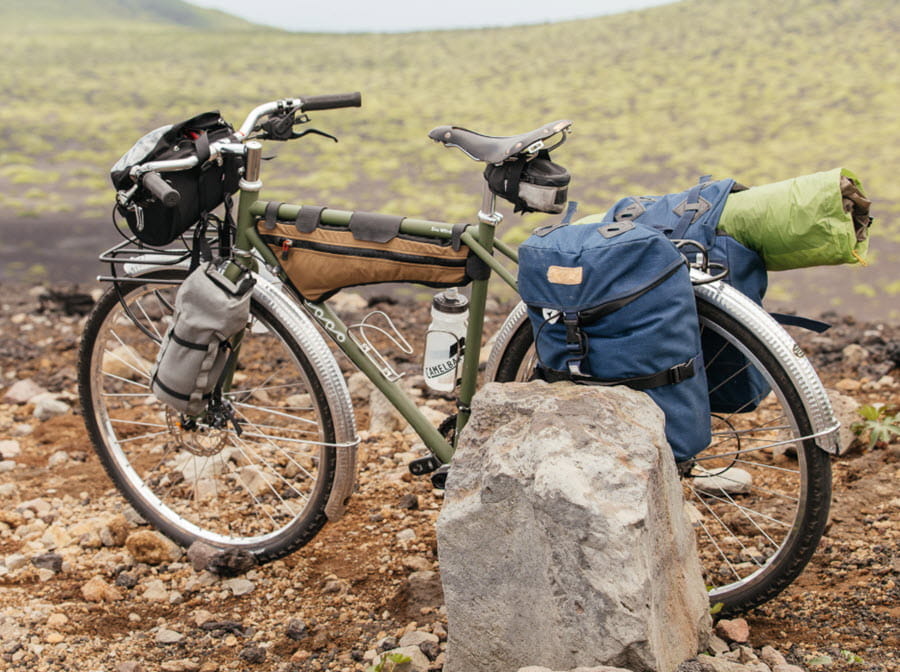
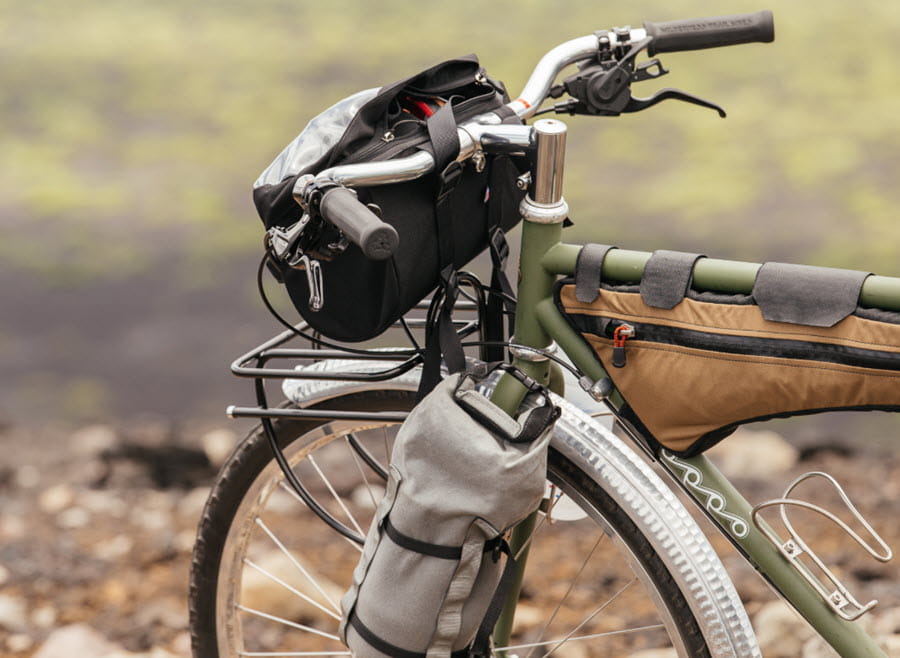
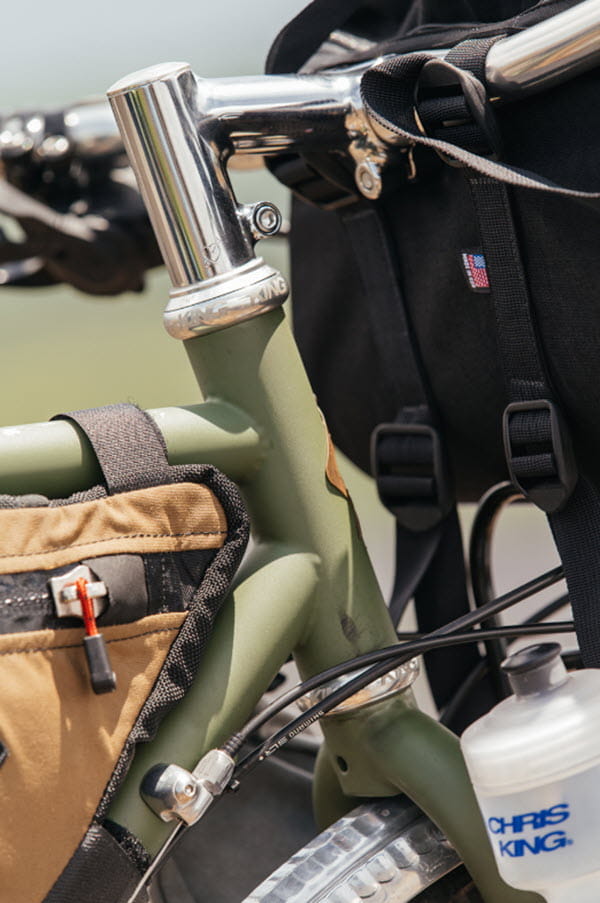
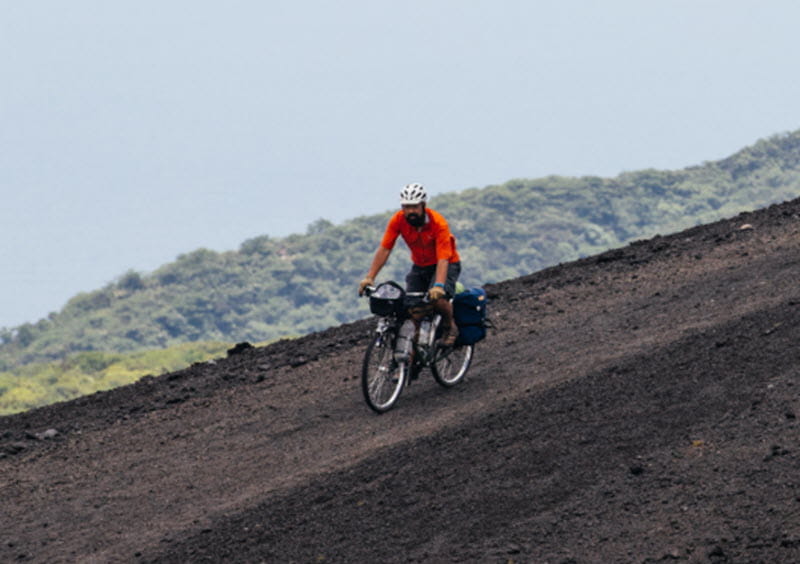
Makoto Yokoyama’s personal Doppo exemplifies this adventure-ready design. Featured in The Radavist’s coverage of a Japanese bike tour, his build included racks, panniers, and Sim Works Homage tires for mixed-terrain riding. The bike performed admirably on Mount Mihara, demonstrating the bike’s capability in mountainous terrain.

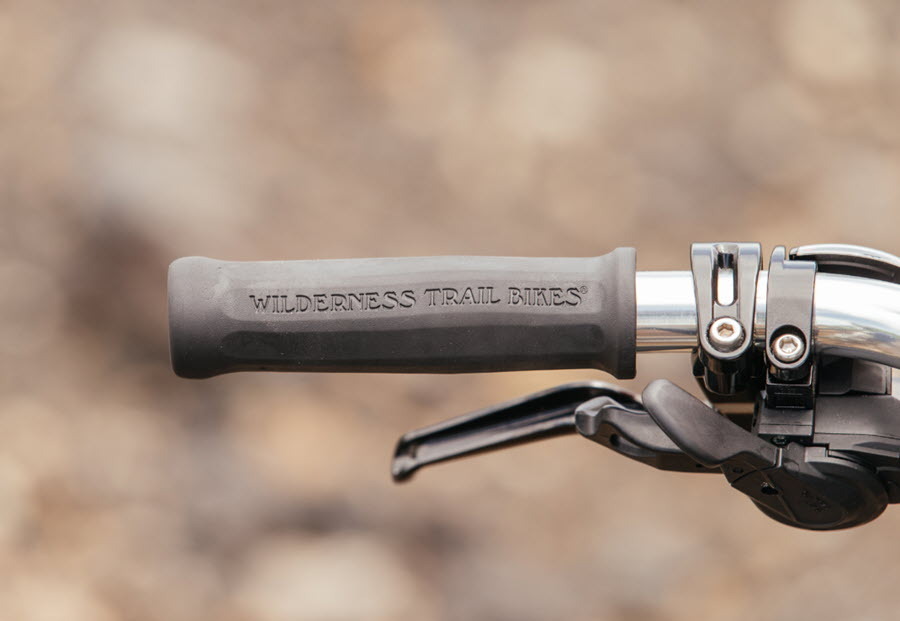
Doppo handlebar grip

The current lineup has evolved to serve different riding styles while maintaining the core philosophy. The Doppo Ronin (formerly ATB) emphasizes all-road versatility with updated geometry. The Doppo Locust targets off-road adventurers with boost spacing, dropper post routing, and clearance for 27.5 x 2.8″ or 29 x 2.4″ tires.

A Doppo on the trail

For riders seeking a companion that encourages exploration without limitations, the Doppo delivers handcrafted Japanese quality built for going alone.

Frequently Asked Questions About the Sim Works Doppo

What does Doppo mean?

Doppo means “walking alone” or “going alone independently” in Japanese. The name comes from writer Doppo Kunikida’s pen name and reflects the bicycle’s design philosophy of self-reliant exploration.

Who builds Sim Works Doppo frames?

Shin Hattori builds Doppo frames in Aichi Prefecture, Japan, with assistance from Makoto Yokoyama. Each frame is handcrafted in small batches using traditional Japanese framebuilding techniques.

What wheel sizes does this bike accept?

The Doppo accepts both 700c and 650b wheels. Tire clearance varies by model but typically accommodates 700c x 43mm or 650b x 55mm tires.

Is the Doppo good for bikepacking?

Yes, the Doppo excels at bikepacking with multiple cargo cage mounts, rack eyelets, generous tire clearance, and stable geometry when loaded. The frame includes “three-pack” mounting under the downtube for additional carrying capacity.

What material is the Doppo frame?

Doppo frames use Tange chromoly steel tubing, a high-quality Japanese steel known for durability, ride quality, and repairability. The matching fork is also constructed from Tange chromoly steel.

How much does a this frameset cost?

Doppo framesets typically retail around $1,880-$1,999 USD depending on the model. Prices may vary by region and dealer.


Recommended Products for Touring Bikes

Building or upgrading a touring bike like the Doppo requires quality components. Here are essential products to consider:

1. Touring Tires

Wide-range touring tires (700c x 35-45mm or 650b x 47-55mm) provide the grip and durability needed for mixed-terrain adventures. Look for puncture-resistant options with reflective sidewalls for safety.

Touring Tires on Amazon

2. Bikepacking Bags

Frame bags, seat packs, and handlebar rolls distribute weight efficiently while keeping gear accessible. Waterproof options protect essentials during unexpected weather.

Bikepacking Bags on Amazon

3. Touring Saddles

Long-distance comfort requires saddles designed for endurance riding. Consider options with cutouts, multiple width options, and durable covers that withstand varied conditions.

Touring Saddles on Competitive Cyclist

4. Multi-Tools and Repair Kits

Compact multi-tools with chain breakers, spoke wrenches, and hex keys keep you rolling when miles from support. Pair with patch kits and spare tubes for complete self-sufficiency.

Multi-Tools on Competitive Cyclist


We are an Amazon affiliate and earn from qualified Amazon purchases with no cost to you. This is for ANY product that you purchase through our links.

If you enjoyed learning about this week’s featured bicycle, don’t miss out on some cycling information you can use and enjoy! Visit our website at pacelinebikes.com Plus, check out our YouTube channel, Bicycle Restoration Man, for detailed restoration videos and showcases of our finished projects. Subscribe and join our community of bike enthusiasts!

Categories
Japanese Road Bikes

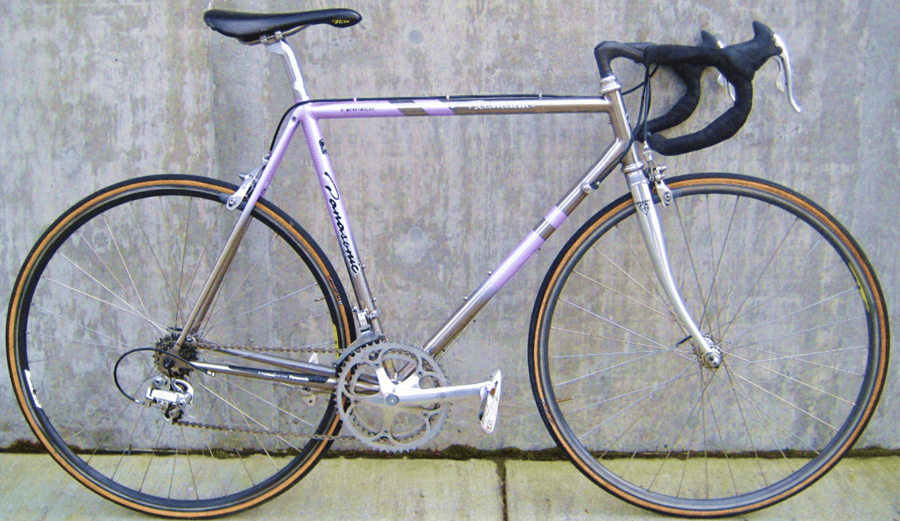
1988 Panasonic Custom Titanium: Japan’s Revolutionary PICS Program

Panasonic PICS
SPECIAL THANKS TO CLASSICCYCLEUS.COM FOR THE IMAGES CONTAINED IN THIS ARTICLE!

What Was the Panasonic PICS Program?

The Panasonic Individual Custom System (PICS) was a revolutionary semi-custom bicycle program launched in 1987 that allowed American cyclists to order personalized titanium or steel frames with custom geometry, component specifications, and approximately 1,000 paint scheme combinations—delivered in just 2-6 weeks via an innovative VHS-and-fax ordering system through authorized dealers.

Industrial powerhouse Panasonic transformed the custom bicycleJapanese Steel classic bicycle design from Japan landscape in 1987 with the launch of PICS (Panasonic Individual Custom System), delivering personalized titanium and steel frames to American cyclists in weeks rather than months. This lavender and polished titanium example showcases the program’s ambitious scope: legitimate custom geometry, premium materials, and thousands of paint combinations—all coordinated through VHS presentations and fax machines in local bike shops.