Categories
Japanese bicycles

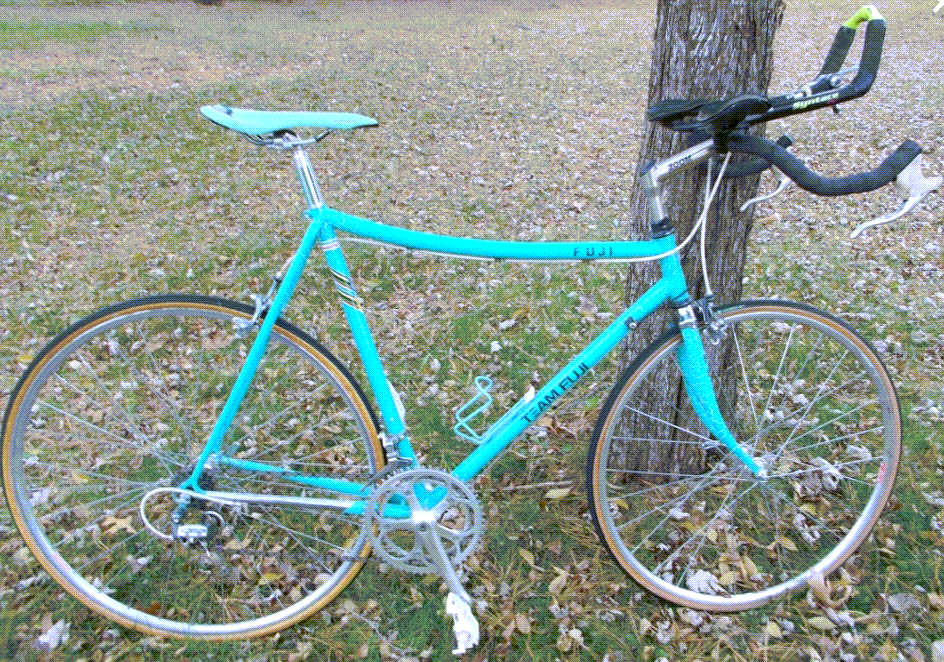
1987 Team Fuji Funny Bike: The Only One Fuji Ever Built

1987 Team Fuji Funny Bike

1987 Team Fuji Funny Bike
SPECIAL THANKS TO DAHLQUISTCYCLIEWORKS.COM FOR THE IMAGES CONTAINED IN THIS ARTICLE!

Quick Answer

What is the 1987 Team Fuji Funny Bike? The 1987 Team Fuji Funny Bike is a hand-built, lugless Japanese steel racing bicycle constructed from Ishiwata 019E chromoly tubing, distinguished by a curved top tube and dual wheel sizes — a small-diameter front wheel paired with a standard 700c rear wheel. It was the only “funny bike” Fuji ever produced, built during a two-year window before the UCI banned dual-wheel-size bicycles from official record-keeping in 1989.


A Two-Year Window in Cycling History
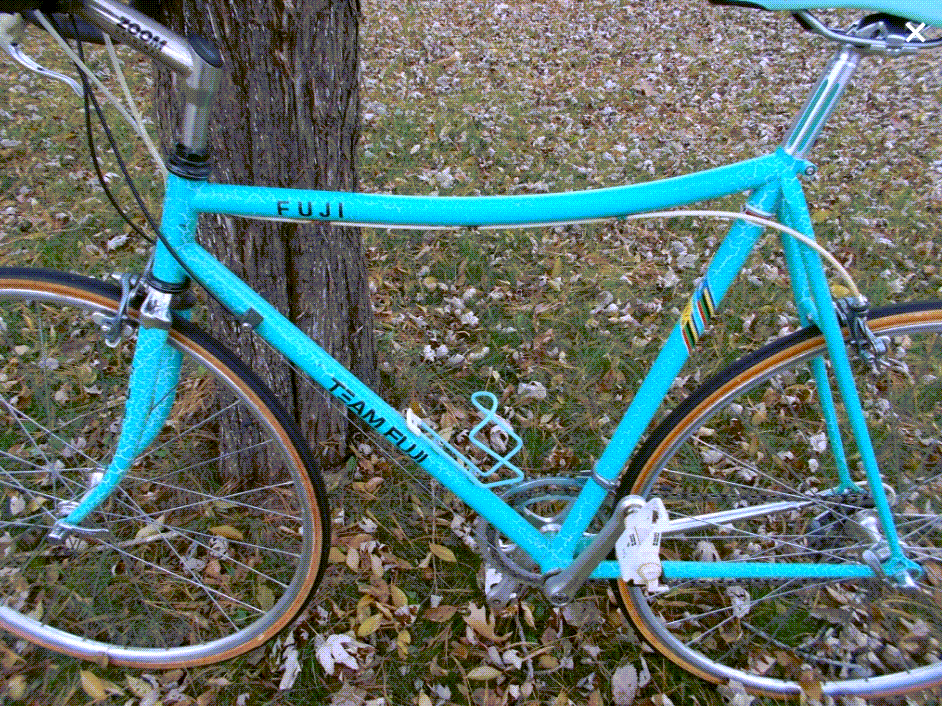
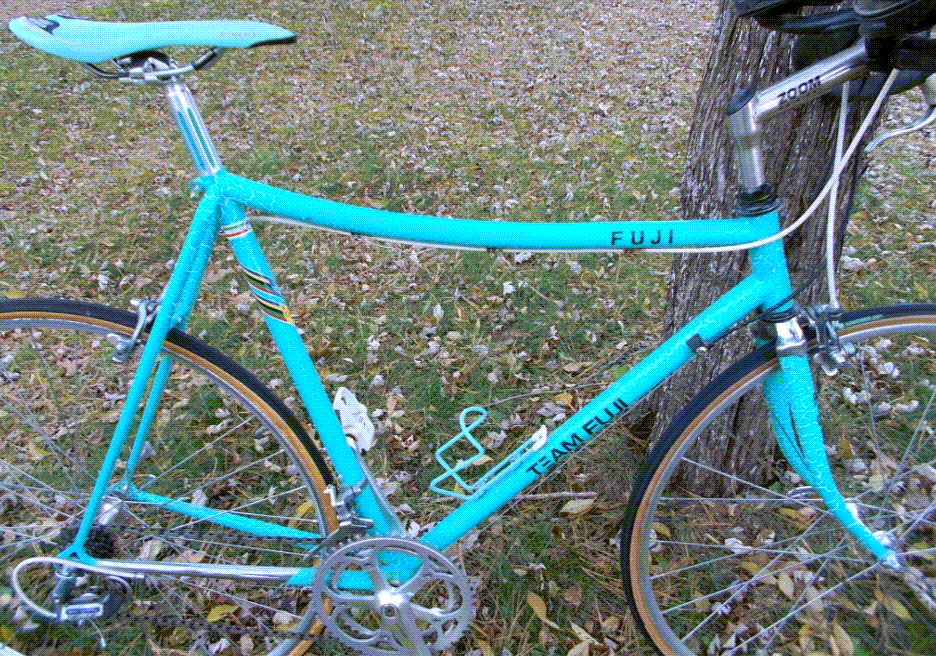
1987 Team Fuji Funny Bike left side

In 1987, Fuji occupied a narrow but significant moment inJapanese Steel classic bicycle design from Japan competitive cycling. The “funny bike” configuration — pairing a smaller front wheel with a full-size 700c rear wheel — was legally sanctioned for time trials and hour records, and manufacturers were racing to capitalize on the aerodynamic advantages the format offered. Fuji built exactly one model: the 1987 Team Fuji Funny Bike. By 1989, the UCI had eliminated dual-wheel-size configurations from official record eligibility, closing that window permanently.
The bicycle documented at Dahlquist Cycleworks represents a surviving example of this rare model in its original crackle finish, acquired and preserved without alteration from its previous owner’s component configuration.


The Funny Bike Concept: What It Was and Why It Mattered
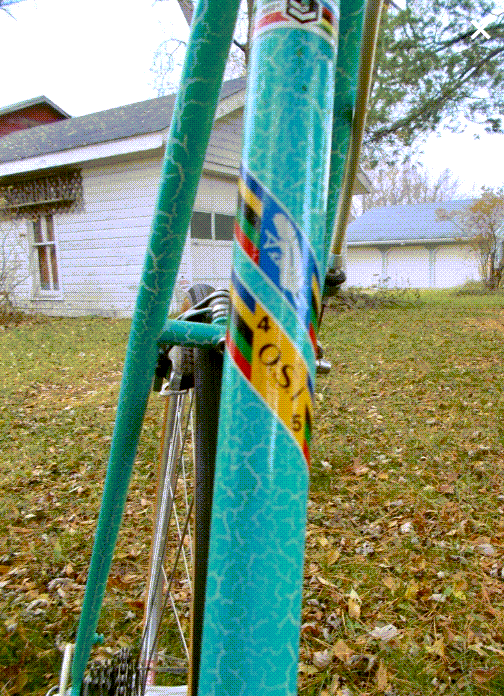
1987 Team Fuji Funny Bike seat post

A “funny bike” is defined by its mixed wheel diameters. The front wheel is typically a 24-inch tubular or 650c rim, while the rear uses a standard 700c wheel. This asymmetric configuration lowered the front end of the bicycle, reducing the frontal area presented to the wind and allowing a more aggressive, aerodynamically efficient rider position — similar in effect to what a cowhorn-style handlebar achieved when paired with aero bars.
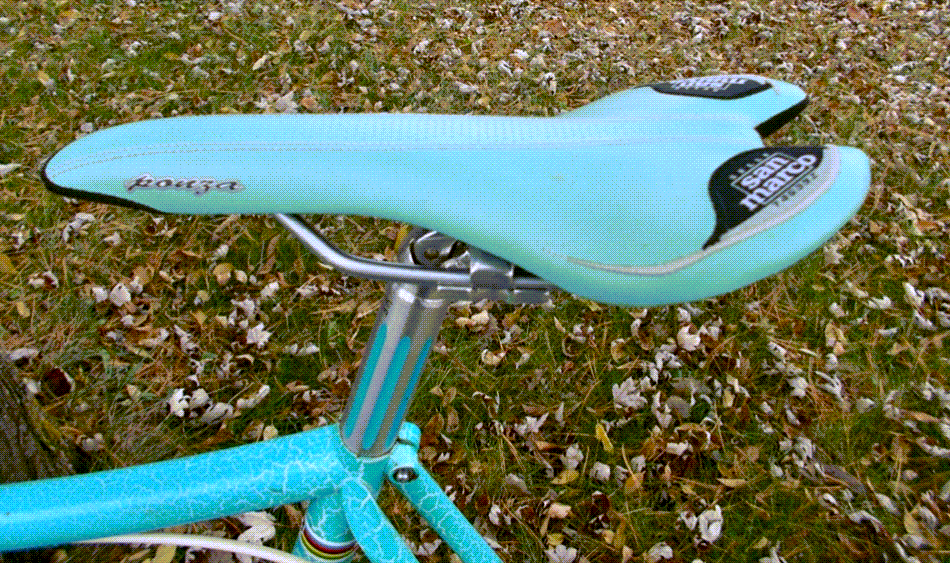
1987 Team Fuji Funny Bike saddle

The rear wheel remained at 700c for practical reasons. A smaller rear wheel would require impractically large chainring tooth counts to maintain competitive gear ratios, and the larger diameter also contributes to lower rolling resistance over distance.

By the late 1980s, funny bikes were in active use across time trials, velodrome pursuits, and team time trial events. The small front wheel was especially valued in team time trial applications, where riders could draft in much closer proximity off the wheel directly ahead. Fuji, Nishiki, Shogun, and other Japanese manufacturers each offered variants, though most were configured differently. The 1987 Team Fuji is notable for its curved top tube — a departure from the conventional straight-tube geometry that Fuji returned to with its 1988 Team Fuji time trial model.


Frame Construction: Ishiwata 019E Tubing
1987 Team Fuji Funny Bike Ishawata tubing

The 1987 Team Fuji is hand-built using Ishiwata 019E chromoly steel tubing, a specification that places it firmly in the upper tier of Japanese steel construction from the era.

Sponsored
JENSON USA
America’s Bike & Adventure Shop
★ FREE 1-Day Shipping over $50 to California
Tools & Maintenance — everything to keep your bike dialed.
Shop Tools & Maintenance →

Ishiwata 019 tubing — the base designation — is a seamless, double-butted chromoly set drawn to 0.8mm/0.5mm/0.8mm wall thicknesses. The name “019” directly references the tube set weight: 1.9 kilograms for the complete main triangle set, equivalent in mass and material composition to Columbus SL tubing. The “E” suffix indicates a seamed variant, as Ishiwata produced both seamless and seamed iterations of its numbered grades. Despite the seamed construction, the material properties and ride characteristics were functionally equivalent; Ishiwata’s finish quality was frequently cited as superior to comparable European tubes of the period.
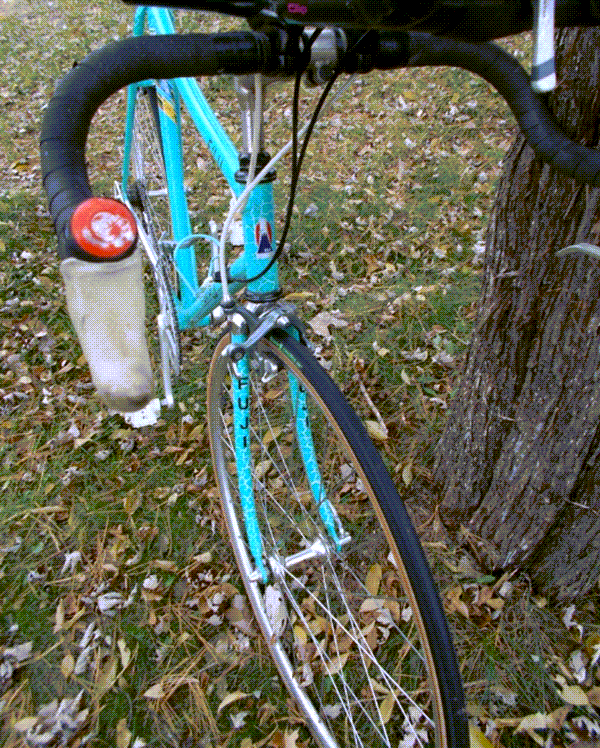
1987 Team Fuji Funny Bike fork

Ishiwata supplied tubing to a broad range of frame builders worldwide — Bianchi, Trek, Bridgestone, Peugeot, Schwinn, and Raleigh among them — but it was particularly embedded in Japanese competitive cycling, where it was specified for Keirin-certified frames and top-tier production racing bikes. The company ceased operations in 1993, with much of its expertise transferring to Kaisei, which continues producing butted steel tubing today.

The 1987 Team Fuji frame is lugless, meaning the main triangle joints are constructed without the bronze or steel lugs used in traditional frame assembly. By 1987, as noted in Japanese Steel: Classic Bicycle Design from Japan (Bevington and Ryder, 2018), lugless construction had become part of Fuji’s technical vocabulary for its high-performance offerings — a reflection of the broader industry shift toward fillet-brazed and TIG-welded construction that offered greater geometric flexibility.


Component Specification
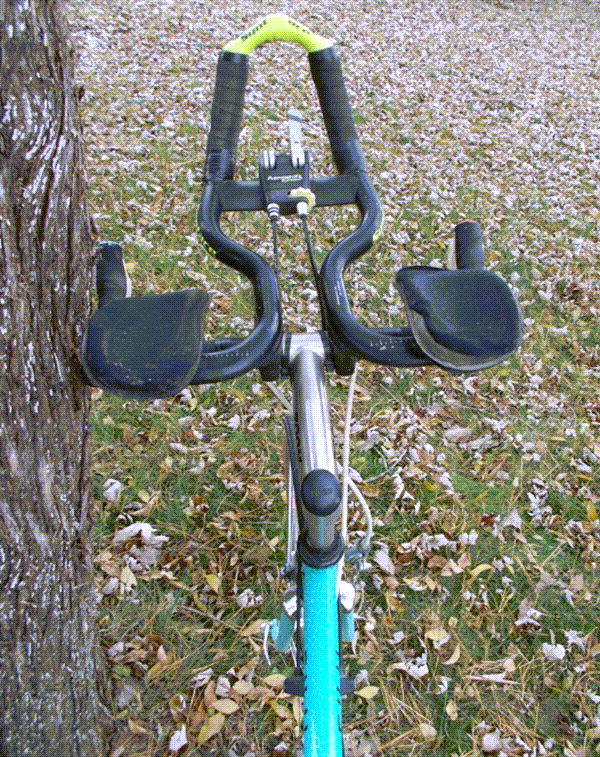
1987 Team Fuji Funny Bike cockpit

The example preserved at Dahlquist Cycleworks retains components selected by its previous owner. The original groupset may have been Shimano Santé, a compact mini-groupset Fuji offered on the 1987 Team models, though this cannot be confirmed with certainty for this specific bicycle. The crackle finish paint — period-correct for the model — remains intact.

The 1987 version is distinguishable from the 1988 Team Fuji (also documented at Dahlquist Cycleworks) by its curved top tube. The following year’s model reverted to a straight top tube, representing a different design philosophy while sharing the time trial intent.


Frequently Asked Questions

Why did the UCI ban dual-wheel-size bicycles? The UCI eliminated dual-wheel-size configurations from official record eligibility in 1989 as part of a broader effort to standardize bicycle specifications in sanctioned competition. Funny bikes were never legal for mass-start road or track racing; their use was limited to individual time trials, pursuit events, and hour records. As aerobars and other equipment gained traction in the early 1990s, the UCI progressively tightened equipment rules, culminating in a comprehensive ban on non-standard configurations in the late 1990s.

What makes the 1987 Team Fuji unique among Fuji’s lineup? It is the only funny bike Fuji ever produced. The curved top tube on the 1987 model further distinguishes it from any other Fuji time trial bicycle. Fuji’s 1988 Team model — a straight-tube time trial bike — and the 1985 Opus III represent adjacent high-performance models in the company’s catalog, but neither shares the funny bike configuration or the curved top tube geometry.

Is Ishiwata 019E tubing comparable to Columbus SL or Reynolds 531? Yes. Ishiwata 019 tubing is drawn to the same wall thickness specification as Columbus SL (0.8/0.5/0.8mm) and weighs 1.9 kilograms per set — identical to Columbus SL’s claimed weight. Material composition is chromoly steel, equivalent in tensile strength and post-brazing characteristics to both Columbus and Reynolds 531 of the period. The “E” suffix denotes seamed construction, which does not compromise structural integrity in bicycle frame applications.


The 1987 Team Fuji Funny Bike is part of the Japanese bicycle collection at Dahlquist Cycleworks. Related models in the collection include the 1988 Team Fuji Time Trial and the 1985 Fuji Opus III.

Sponsored · Competitive Cyclist

Competitive Cyclist

Gear Up for Spring.

Current savings across apparel, bikes, and workshop essentials — no code required.

Up to 50% off

Gorewear Apparel
All-weather cycling kit built for serious conditions.
Up to 40% off

Spring Bike Clearout
Selected road and performance bikes at reduced pricing.
Shop Now

Tools & Maintenance
Dial in your ride before the season starts.

Deals are live now and subject to availability.
Worth checking before the good stuff goes.
Browse All Deals →

Some links on this page are affiliate links. If you click through and make a purchase from Amazon, Competitive Cyclist, or Jenson USA, we may earn a small commission at no additional cost to you. We only link to products and retailers we genuinely recommend. This helps support the site and keeps the content free.


Categories
Japanese Road Bikes

Ebisu All Purpose Randonneur Technical Review

Ebisu All Purpose Randonneur

Ebisu Bicycle
SPECIAL THANKS TO THE PEDAL ROOM FOR THE IMAGES CONTAINED IN THIS ARTICLE!

Quick Answer

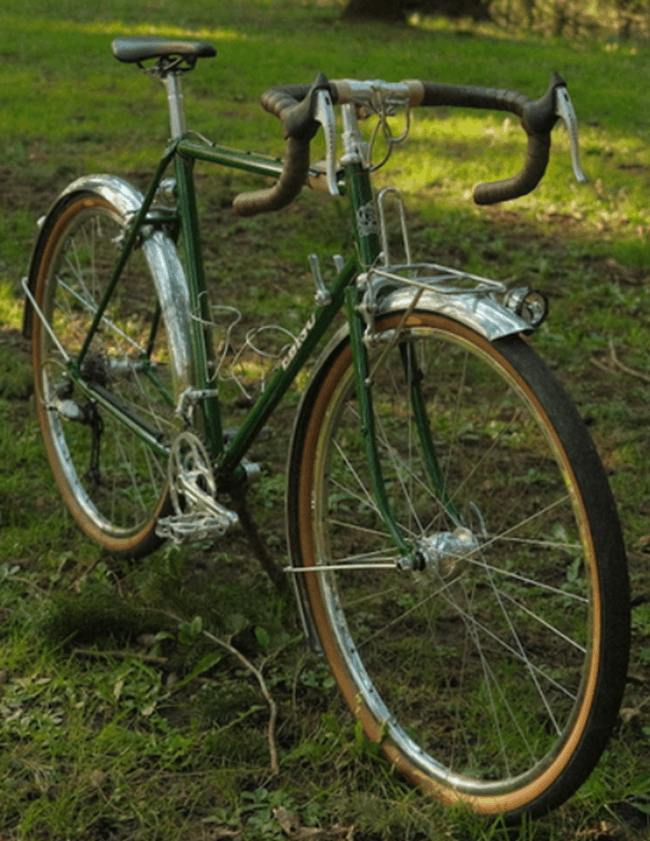
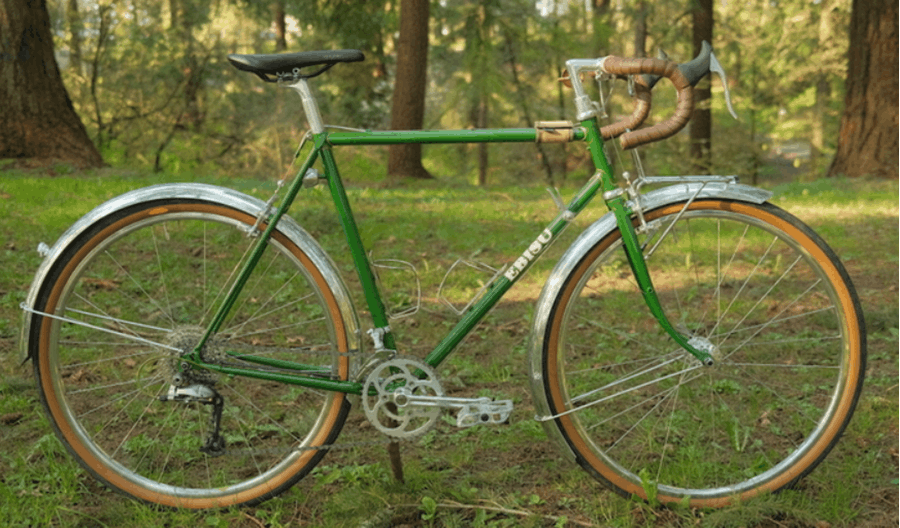
The Ebisu All Purpose is a custom randonneur frame built with Kaisei 019 steel tubing, designed and distributed through Jitensha Studios. This particular build features a modernized randonneur setup with 650b wheels, a wide-range 2×9 drivetrain, dynamo lighting, and French-influenced component selection including Rene Herse cranks and Grand Bois centerpull brakes. The frameset accommodates 650bx42mm tires with clearance for fenders, making it suitable for mixed-terrain riding and self-supported touring.


The All Purpose represents a contemporary interpretation of French randonneuring design, combining traditional steel frame construction with modern componentry. Built through Jitensha Studios with framesets manufactured in Japan, these frames utilize Kaisei 019 chromoly tubing to balance ride quality with structural integrity.

Frame Construction and Geometry

Ebisu geometry

The frames are constructed from Kaisei 019 steel tubing, aJapanese Steel classic bicycle design from Japan Japanese-made chromoly tubeset that offers performance characteristics similar to Reynolds 631 or Columbus Spirit. The All Purpose model features geometry optimized for randonneuring applications, with relaxed angles that prioritize stability under load and comfort over extended distances.

Ebisu frame design

The frame design accommodates 650b wheels with wide tire clearance. This build runs Grand Bois Hetre tires in 650bx42mm, with additional clearance designed for fenders. The fork mirrors the frame’s randonneur-focused design, providing sufficient crown clearance and mounting points for a dynamo front light and front rack if needed.

Jitensha Studios handles frame orders through a consultation process, though specific geometry charts are not typically provided to customers. Lead times historically range from three to four months from order finalization to delivery.

Drivetrain Configuration

Ebisu drivetrain

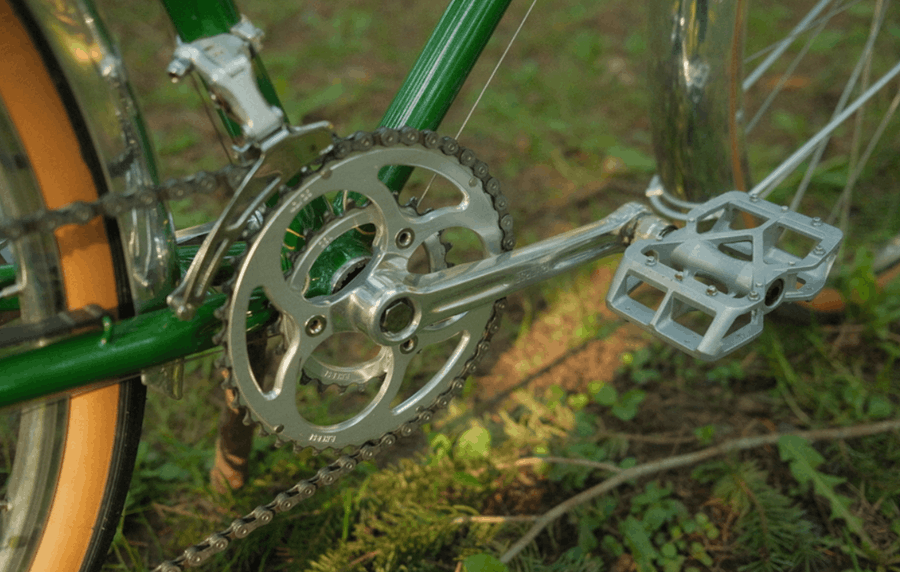
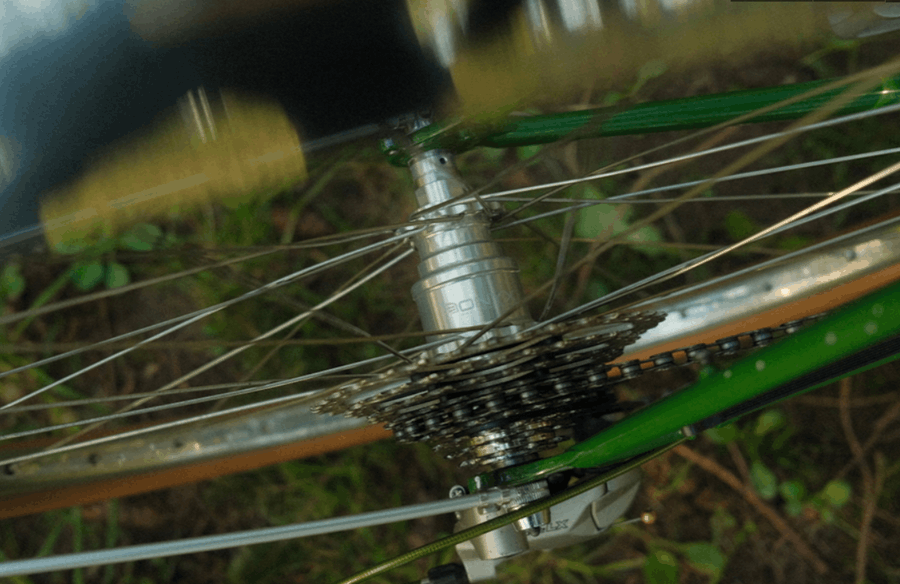
The drivetrain combines French randonneur aesthetics with practical gearing for varied terrain. Rene Herse cranks are mounted with a 42/26 double chainring setup, providing a wide range when paired with the Shimano 11-36 nine-speed cassette. This configuration yields gear ratios from approximately 19 to 103 gear inches, suitable for both loaded climbing and unloaded road riding.

Ebisu rear derailleur

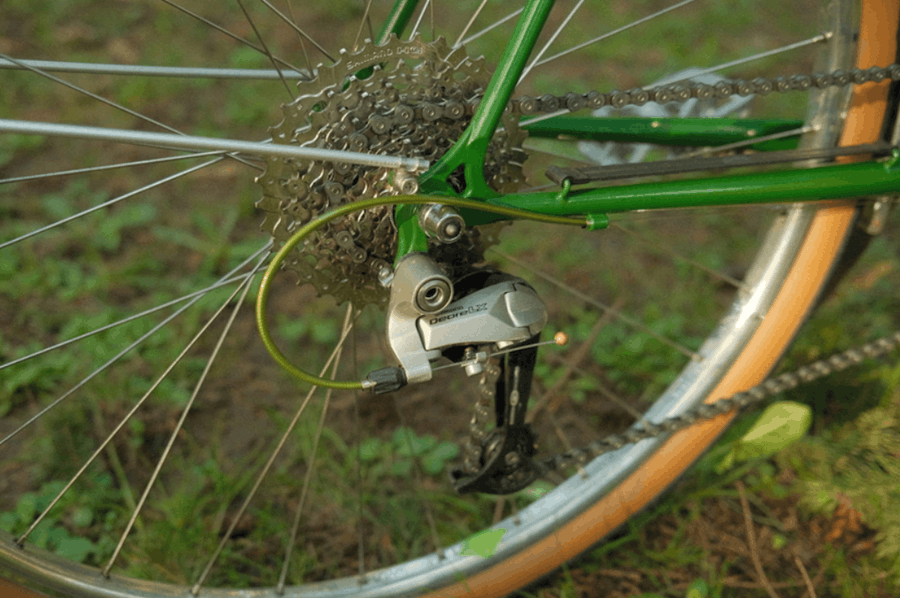
Shifting is controlled via Rivendell Silver downtube shifters, operating a mixed-era Suntour front derailleur and Shimano LX M580 Rapid Rise rear derailleur. The Rapid Rise system reverses standard derailleur operation, with the default position in the largest cog rather than the smallest. This arrangement reduces cable tension in lower gears, where most riding occurs.

The MKS Allways EZY pedals use a magnetic attachment system, allowing quick pedal removal for storage or transport without tools.

Wheel and Tire Specifications

Ebisu wheel and tire specification

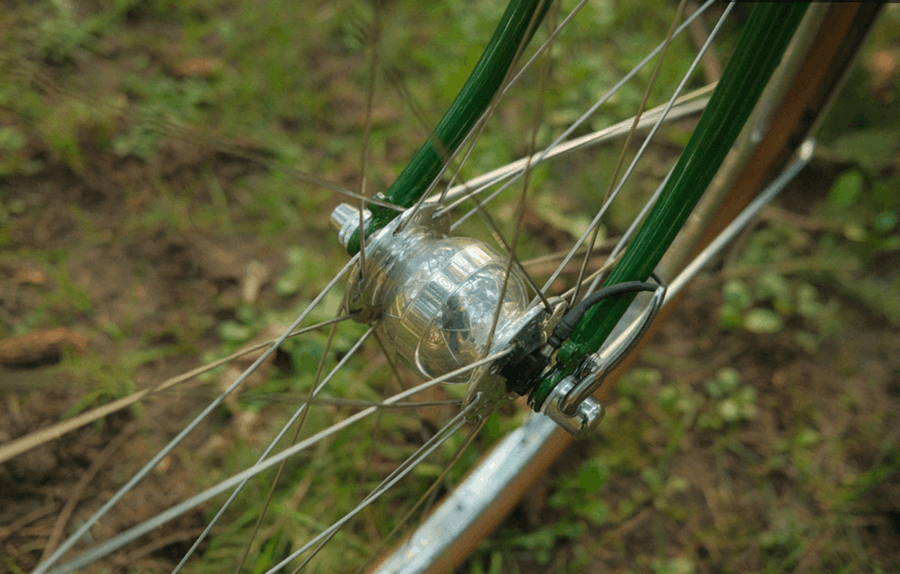
The wheelset features hand-built 650b wheels using Grand Bois Papillon rims laced to premium hubs. The front wheel utilizes a SON Deluxe Wide Body dynamo hub in 28-hole configuration, generating 3 watts at 15 km/h to power the lighting system. The rear wheel is built around an Onyx Racing Vesper hub with 32 spokes, notable for its sprag clutch design that eliminates freehub noise.

Ebisu cogs

Grand Bois Hetre tires in 650bx42mm provide a supple ride with adequate volume for rough pavement and light gravel. The 650b wheel size lowers bottom bracket height compared to 700c equivalents with similar tire volume, improving stability and handling characteristics.

Braking System

Ebisu brakes

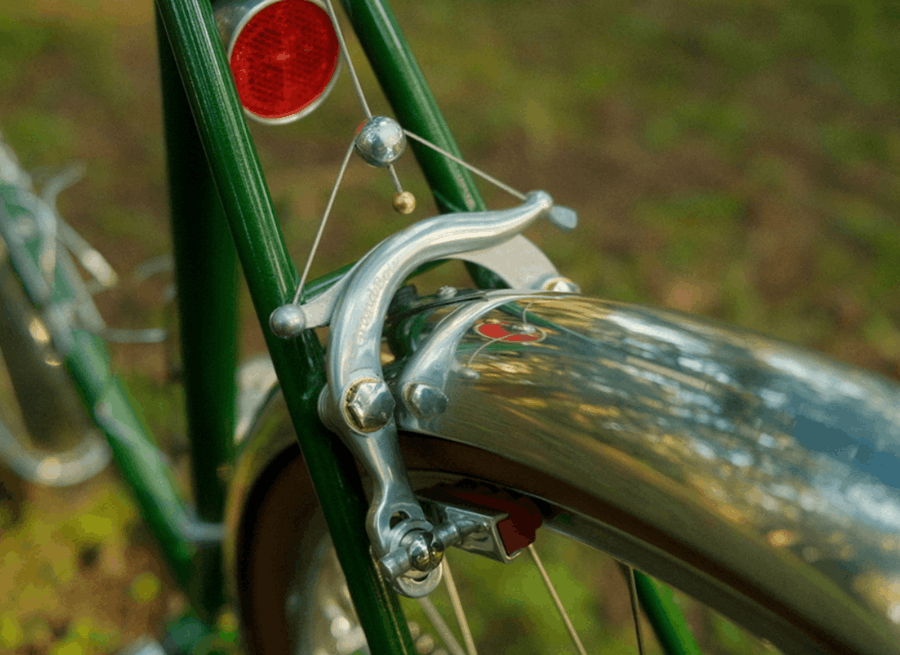
The frame mounts Grand Bois Chouette centerpull brakes, controlled by Gran Compe Aero levers. Centerpull brakes offer symmetrical pad wear and powerful modulation, though they require precise setup and compatible frame/fork mounting. The Chouette model provides sufficient reach for 650bx42mm tires with full fenders.

Ebisu bar ends

Centerpull systems require specific cable routing and compatible levers with sufficient mechanical advantage. The Gran Compe Aero levers are designed for this application, providing ergonomic hoods and reliable cable pull ratio.

Cockpit and Fit Components

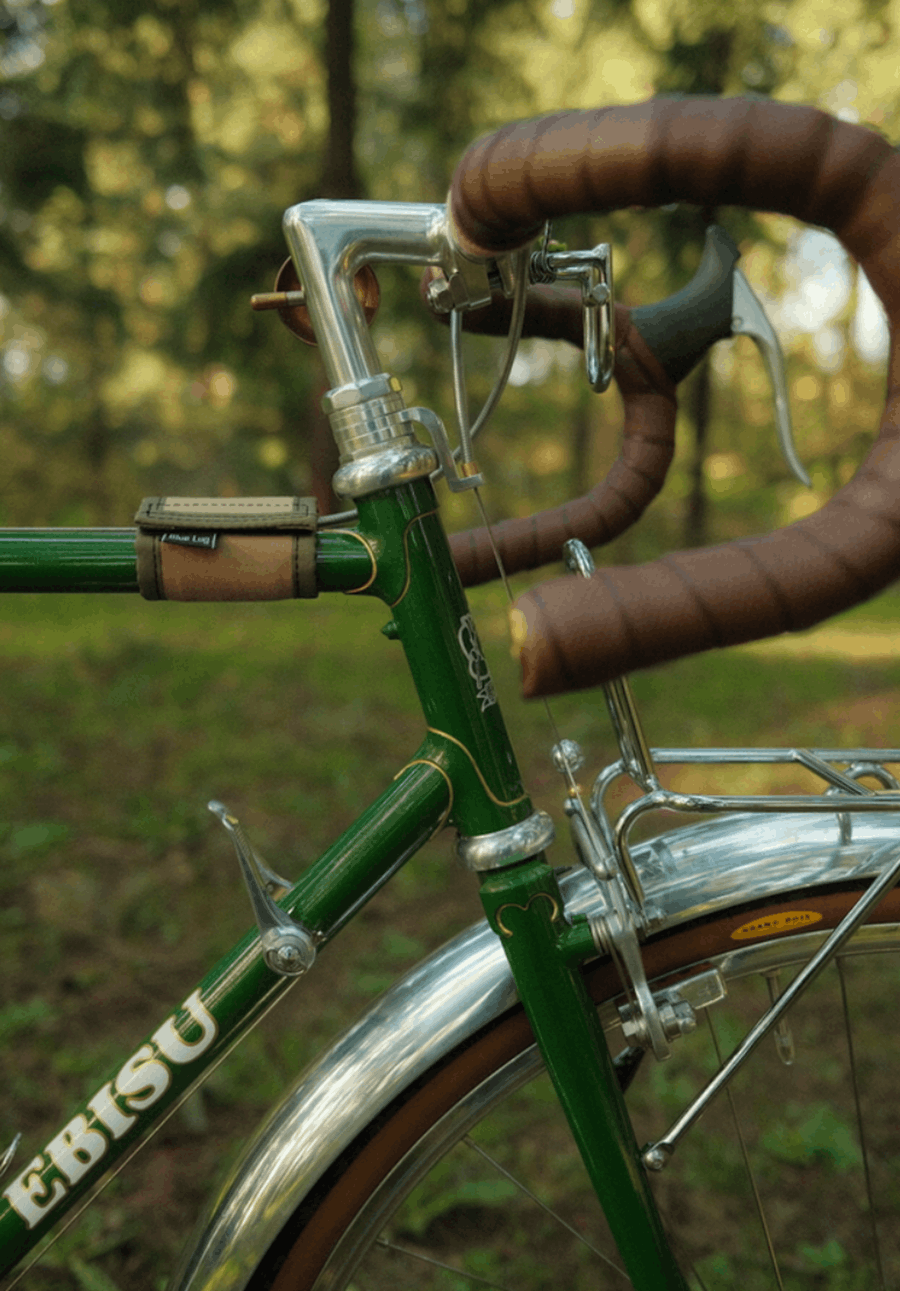
Ebisu cockpit

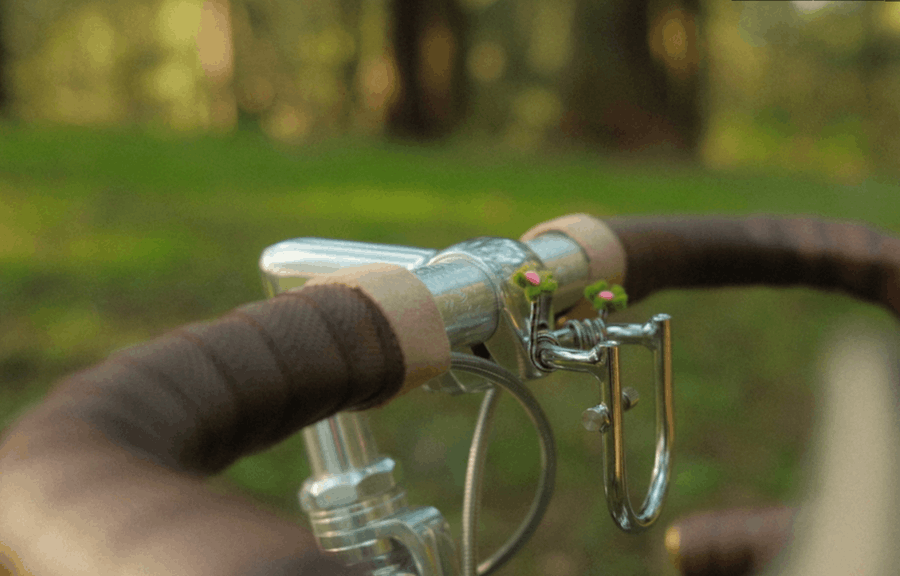
The cockpit uses a modified NOS Nitto Technomic stem cut to 70mm length by Northern Cycles to accommodate a brass bell. This connects to Nitto Noodle (B177) handlebars, a shallow drop bar with compact reach designed for mixed-terrain riding and frequent hand position changes.

The Rene Herse Ultimate headset uses French-specification angular contact bearings, providing smooth steering with minimal friction. The Nitto NJSP72 Jaguar seatpost supports an Ergon saddle, with the Jaguar post offering classic aesthetic while meeting modern dimensional standards.

Lighting and Accessory Integration

Ebisu lighting

The dynamo lighting system consists of a SON Edelux front light and Rene Herse frame-mounted tail light, both powered by the SON Deluxe hub. This configuration provides reliable lighting without battery management, critical for extended unsupported rides or commuting applications.

A custom randonneur rack mounts to the rear triangle, designed specifically for this frame’s geometry and clearances. The rack accommodates traditional randonneur-style handlebar bags and panniers while maintaining heel clearance with the rear wheel.

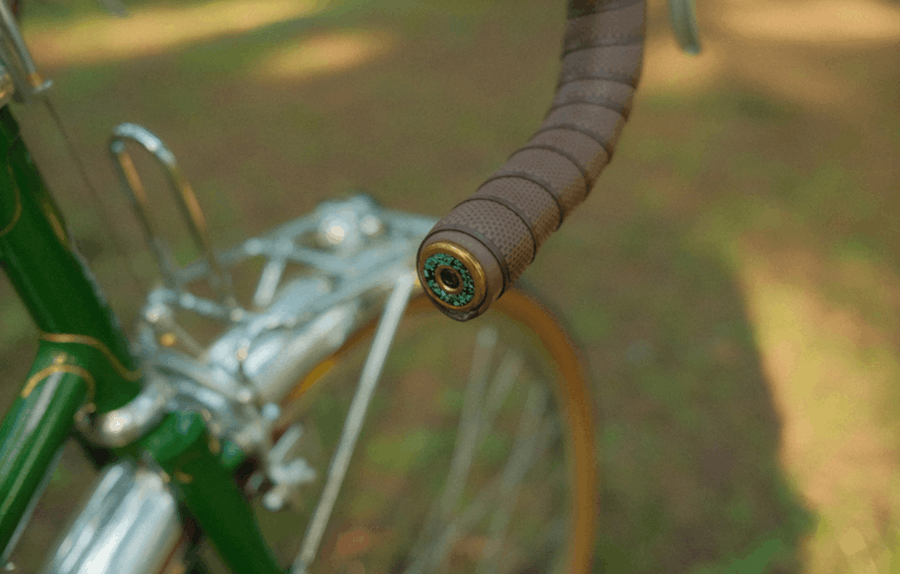
Additional accessories include a Crane bell mounted to the modified stem, and Tomii Cycles aluminum bar end plugs.

Ebisu Brand Context

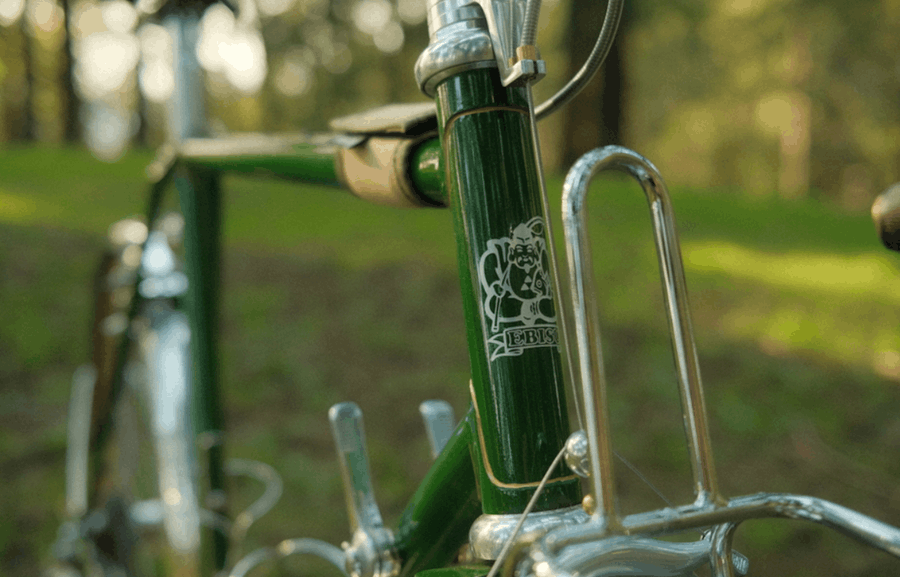
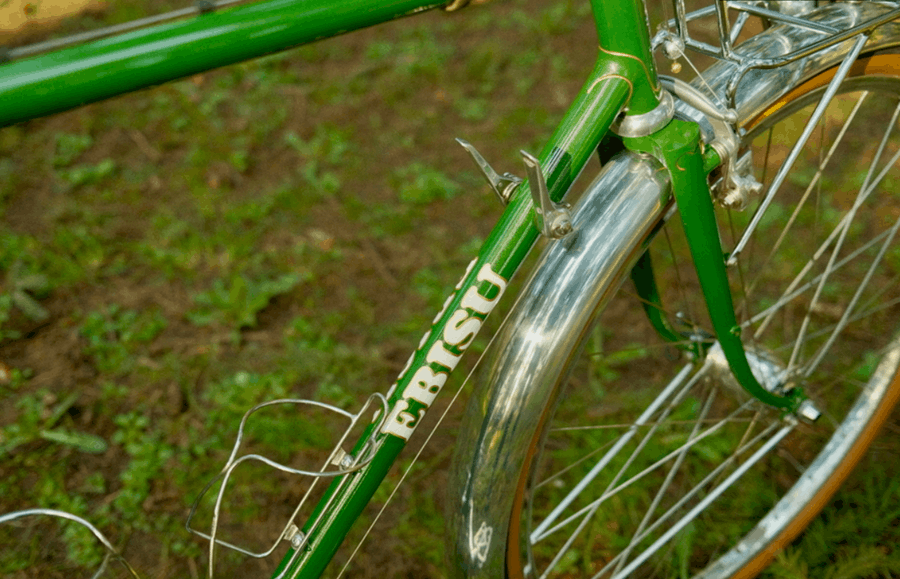
Ebisu brand

Ebisu frames are marketed and distributed through Jitensha Studios, operated by Hiroshi Matsumoto. Framesets are manufactured in Japan to Jitensha Studios specifications, utilizing traditional construction methods and Japanese tubing. The brand positioning focuses on French randonneur design principles adapted for modern component compatibility.

The brand offers several frame models beyond the All Purpose, each targeting specific riding applications while maintaining consistent design language. Frame turnaround times and communication processes reflect a traditional builder-client relationship, with less transparency than some modern custom builders but consistent execution quality.

The All Purpose achieves its design brief: a versatile randonneur capable of all-day rides, light touring, and mixed-surface exploration, built with quality components and careful attention to traditional randonneuring values.


Frequently Asked Questions

What tubing is used in Ebisu frames?

Ebisu All Purpose frames are constructed from Kaisei 019 chromoly steel tubing. Kaisei 019 is a Japanese-made tubeset comparable to Reynolds 631 or Columbus Spirit, offering a balance between ride quality, durability, and weight. The tubing provides the compliance characteristics valued in randonneur applications while maintaining adequate stiffness for loaded riding.

How long does it take to receive an Ebisu frameset?

Typical turnaround for a frameset is three to four months from order finalization to delivery. This timeline includes the consultation period to determine frame specifications, manufacturing in Japan, and shipping to the customer. Lead times may vary based on current order volume and seasonal factors affecting production schedules.

What tire clearance does the Ebisu All Purpose provide?

The All Purpose accommodates 650bx42mm tires with clearance for fenders. This clearance is suitable for Grand Bois Hetre, Compass/Rene Herse, or similar randonneur tires in the 38-48mm width range, depending on tire casing width and fender choice. The generous clearance supports mixed-terrain riding while maintaining traditional randonneur proportions.

Can Ebisu frames accommodate different wheel sizes?

These frames are designed for specific wheel sizes based on the intended frame geometry and riding application. The All Purpose model is optimized for 650b wheels. Switching to 700c wheels would alter bottom bracket height and handling characteristics significantly, making it inadvisable without specific geometry compensation. Customers should specify their preferred wheel size during the consultation process, as the builder can design frames for either standard.

PRODUCT RECOMMENDATION

Pedro's pedal wrenchThe Pro Travel Pedal Wrench makes quick work of tough pedals and now doubles as a socket driver for use with Pedro’s professional socket tools.


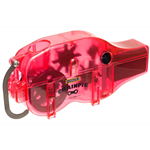
Pedro's Chain CleanerThe Pedro’s Chain Pig II Chain Cleaner uses pro-grade brushes and an absorbent sponge that removes grime, dirt, and oil from your chain, so you can ride with less gunk clogging your drivetrain.

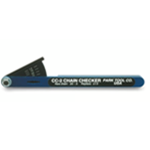
Shimano chain checkerPark Tool CC-2 Chain Checker. Chain wear directly impacts shifting performance and accelerates drivetrain damage. Beyond 0.5% elongation, worn chains damage cassette cogs and chainrings through improper engagement.

We are an Amazon affiliate and earn from qualified Amazon purchases with no cost to you. This is for ANY product that you purchase through our links. We are also an affiliate for Competitive Cyclist and JensonUSA. This way we can provide you with competitive pricing and products.

Categories
Japanese Road Bikes

Zunow Z1: Kageyama’s Aluminum Road Frame in Disguise

  Takeru Kageyama Aluminum Road Frame

Takeru Kageyama Aluminum Road Frame
SPECIAL THANKS TO CIRCLES FOR THE IMAGES CONTAINED IN THIS ARTICLE!
Quick Answer: What is the Zunow Z1?
The Zunow Z1 is an aluminum road frame produced by Osaka-based Zunow Cycles, founded by Takeru Kageyama in 1965. Despite appearing to be chromoly, the Z1 is a TIG-welded aluminum frame with fillet-finish cosmetics — weld beads were ground smooth and filled to mimic the look of steel construction. The frame accepts standard 700c wheels, a 68mm BSA bottom bracket, and 27.2mm seatpost. It is designed as a dedicated road platform compatible with both double and single-chainring drivetrain setups.


Takeru Kageyama built bicycles that looked likeJapanese Steel classic bicycle design from Japan chromoly steel and rode like nothing else coming out of Osaka in the 1980s and early 1990s. The Zunow Z1 is one of the best examples of why. It is an aluminum frame that wears a chromoly disguise — ground welds, filled seams, a pearl white paint job that hides every trace of the TIG work underneath. The deception is deliberate and the engineering behind it is worth examining closely.

Zunow Z1 Specifications at a Glance

Takeru Kageyama Specifications

Specification Detail
Frame Material Aluminum (TIG-welded, fillet-finish)
Fork Zunow Original — aluminum, caliper brake mount
Headset Shimano Dura-Ace (EC34 press-fit compatible)
Bottom Bracket 68mm BSA threaded
Seatpost Diameter 27.2mm
Wheel Size 700c
Brake Type Caliper (side-pull)
Drivetrain Compatibility Double or single chainring
Dropout Style Horizontal (road style)
Builder Zunow Cycles, Osaka, Japan

The Z1 frame carries a “Fillet Brazed” decal, but that label is cosmetic rather than technical. The construction method is TIG welding on an aluminum alloy frame. After welding, the seams were ground down and filled with filler material to produce a smooth, seamless surface. The result is a frame that reads visually as lugged or brazed steel — particularly under the pearl white paint that Kageyama’s shop applied.

Takeru Kageyama seat stays

This matters for two reasons. First, aluminum frames are stiffer per gram than chromoly steel, which changes the ride character. The Z1 transmits road vibration more directly than a steel frame of comparable weight. Second, the fillet-finish cosmetics add weight and labor time without changing the structural properties of the aluminum underneath. Kageyama prioritized appearance here — the Z1 was a road bike intended to look as refined as anything coming from Italy or the top-tier Japanese steel builders.

Single Chainring Conversion: Gear Ratio Engineering

Takeru Kageyama Single chainring

The build documented here strips the front derailleur entirely and runs a 44T single chainring paired with a Shimano XT CS-M770 11-32T rear cassette on a 9-speed Ultegra RD-6600 derailleur. The math is straightforward. The hardest gear ratio drops from 4.72 (on a standard 52/11 setup) to 4.0. The easiest ratio drops from 1.56 to 1.375. Both changes move in the right direction for a bike that sees real-world climbing.

Takeru Kageyama saddle

The RD-6600 is rated for a maximum 25T rear cog. Running 32T requires a Wolf Tooth Road Link, which lowers the derailleur’s pivot point and adds clearance between the guide pulley and the larger sprocket. The reported result after 100+ km of mixed riding is zero chain drops — standard chainring tooth profiles are sufficient on road for this application; narrow-wide is unnecessary.

Takeru Kageyama handlebars

Shifting is handled by Shimano SL-7700 W-levers on the top tube. On a single chainring there is no front shift input, so the lever is used exclusively for the rear. The choice of W-lever over integrated brake-shifters is a deliberate simplification — fewer mechanical points of failure, and a lever style that functions well for riders accustomed to single-speed riding.

Carbon Cockpit on an Aluminum Frame

Takeru Kageyama Cockpit

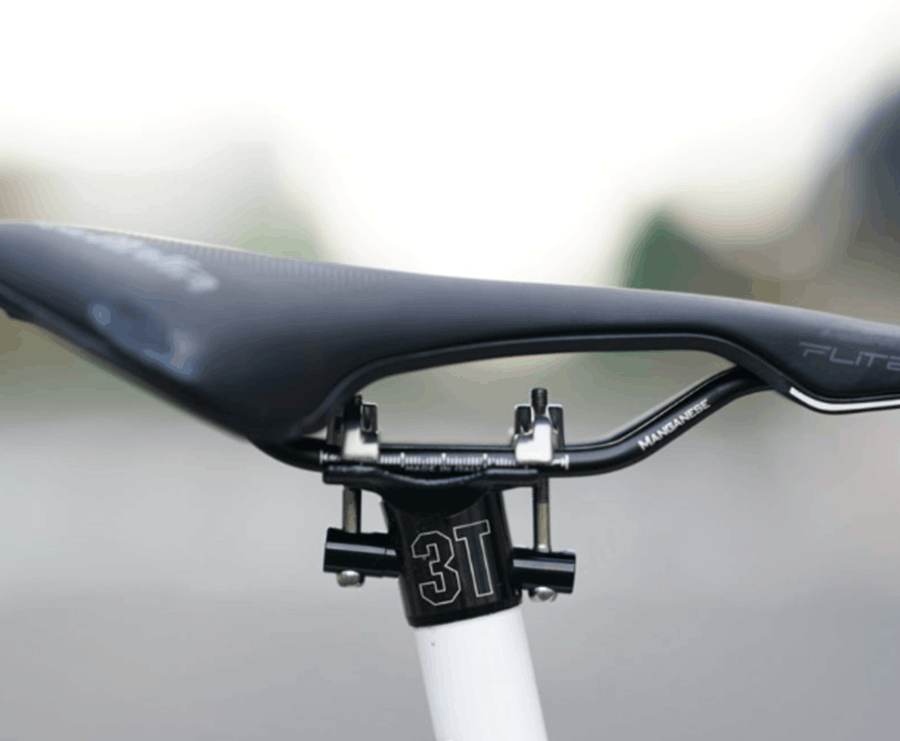
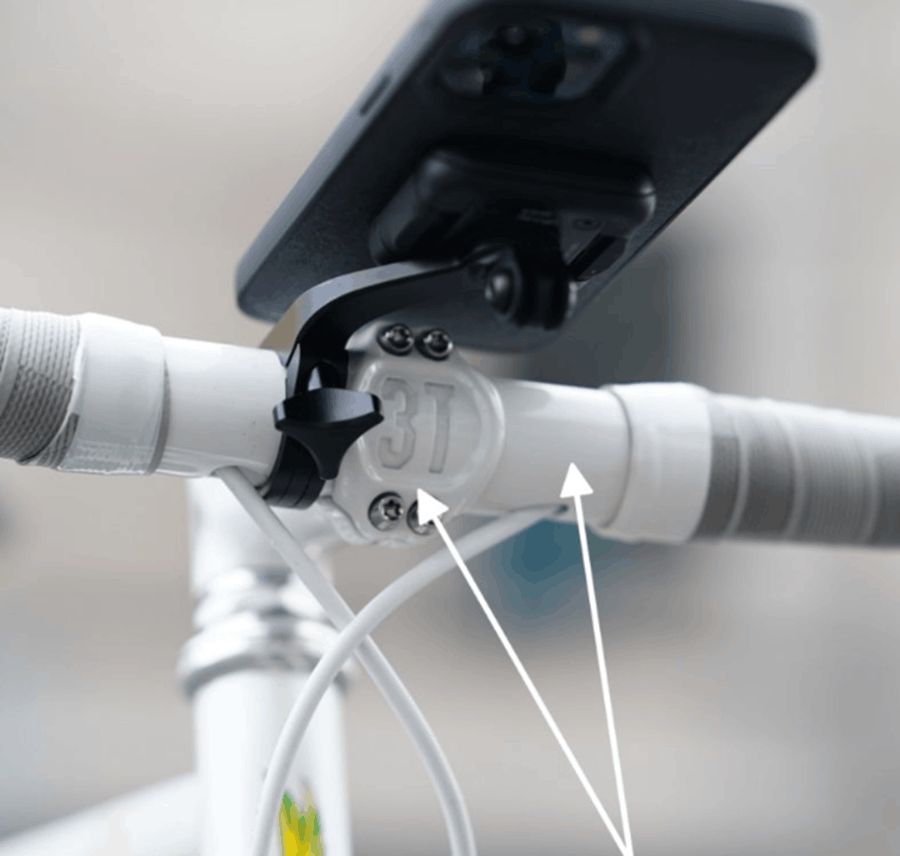
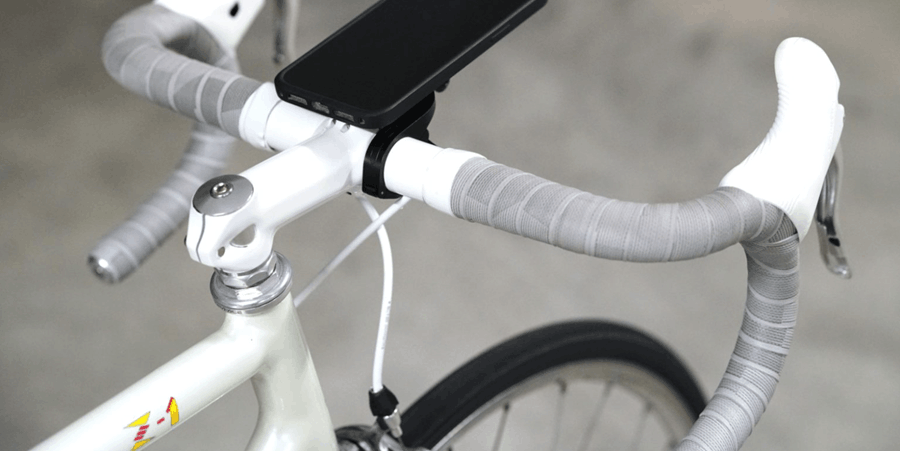
Aluminum is stiff. That is the trade-off built into every aluminum road frame, and it is more pronounced on older designs like the Z1 where tube diameters and wall thicknesses were sized for the manufacturing tolerances of the era. The cockpit selection here — 3T Superleggera TEAM handlebars, 3T Arx II Team stem, and 3T Doric Team seatpost — is a direct response to that stiffness. All three components are carbon fiber, chosen specifically for vibration dampening rather than weight savings.

Carbon handlebars and seatposts absorb high-frequency road noise that aluminum and steel tubing pass straight through to the rider. On a frame this rigid, the difference is measurable over longer distances. The brake levers are Campagnolo Veloce, which adds a small aesthetic inconsistency to the otherwise all-Shimano drivetrain — but the lever shape and pivot geometry are genuinely different from Shimano’s offerings and worth running on their own merits.

Silver Components and the Wheel Choice

Takeru Kageyama Hub

The Ultegra 6600 groupset components — cranks, rear derailleur, brakes — are all silver. Modern component groups default to black, so matching the rest of the bike to that palette required custom painting. Four carbon cockpit parts (bars, stem, seatpost, brake lever brackets) were sent to a specialist painter and refinished in pearl white to match the frame. The color gap will narrow over time as the frame’s pearl white ages under UV exposure.

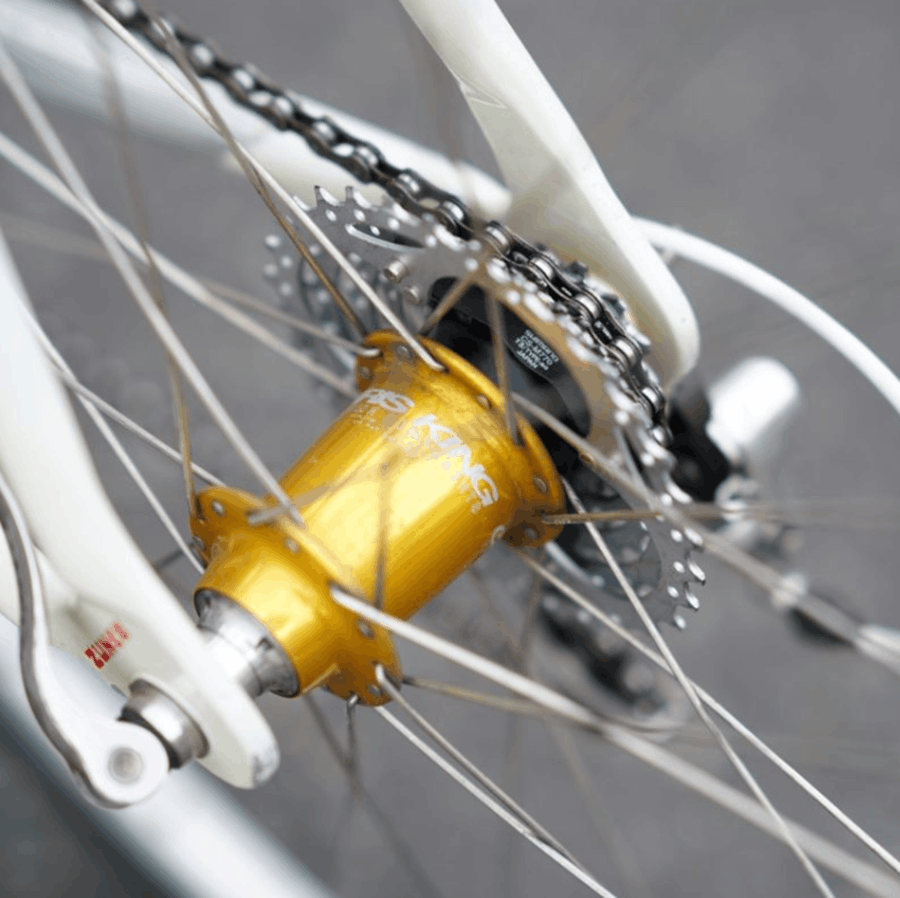
The wheels are Chris King classic hubs laced to Velocity A23 rims — a combination the owner has run since messenger days. A23 rims are a 23mm-wide clinker profile, narrow by current standards but still functional with 28c tires under caliper brakes. The tires are Panaracer GravelKing 28c, which sit comfortably within the caliper brake clearance and provide enough tread for occasional unpaved surfaces without compromising road speed.

Component Part
Chainring Surly Stainless Steel 44T (130 PCD, 5-arm)
Rear Sprocket Shimano XT CS-M770 (11-32T, 9-speed)
Rear Derailleur Shimano Ultegra RD-6600
RD Adapter Wolf Tooth Road Link
Shifters Shimano SL-7700 (W-lever)
Brake Levers Campagnolo Veloce
Handlebars 3T Superleggera TEAM 420mm
Stem 3T Arx II Team 100mm / 17°
Seatpost 3T Doric Team 27.2 / 350mm
Saddle Selle Italia Flite Boost TM
Wheels Chris King hubs / Velocity A23 rims
Tires Panaracer GravelKing 700x28c
Categories
Japanese bicycles

SimWorks Doppo Ronin: Japan’s Ultimate All-Terrain Tool

Simworks Doppo Ronin
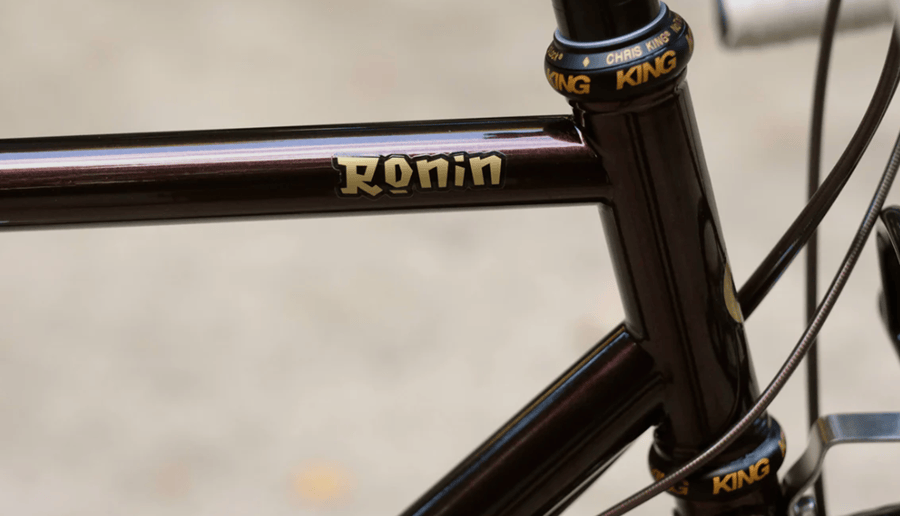
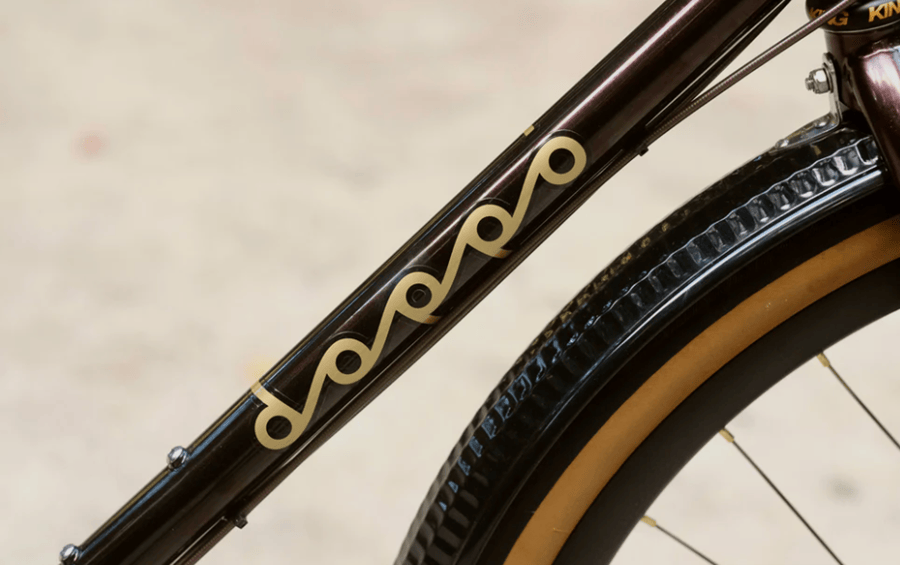
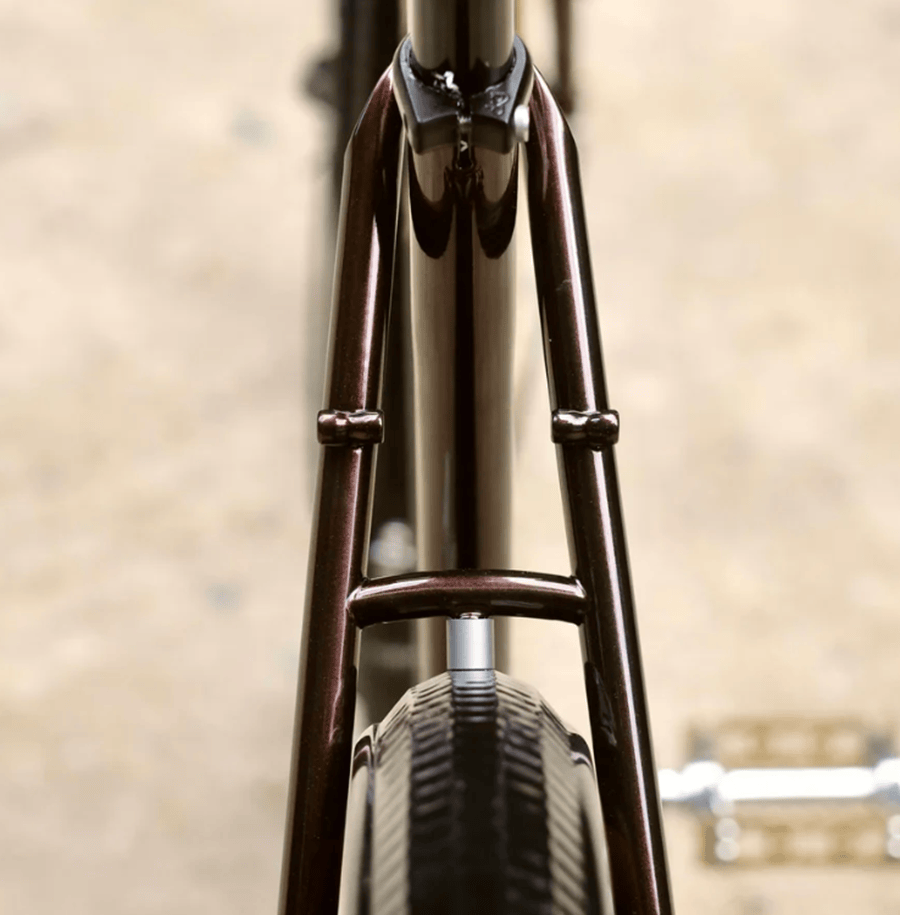
SPECIAL THANKS TO SIMWORKS.COM FOR THE IMAGES CONTAINED IN THIS ARTICLE!

Quick Answer: What is the SimWorks Doppo Ronin?

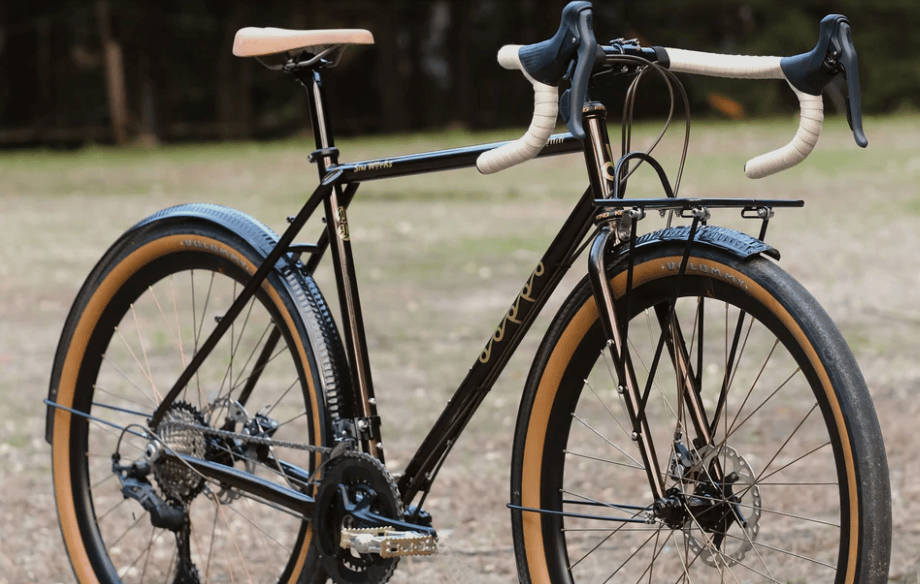
The Doppo Ronin is a TIG-welded Tange Chromoly steel frame and fork, hand-built in Japan by Shin Hattori Works. It is a third-generation all-terrain bicycle designed for 700c/650b convertibility, flat-mount disc brakes, and tire clearances up to 700x43c or 650x55b. The first production batch was limited to 16 framesets worldwide.

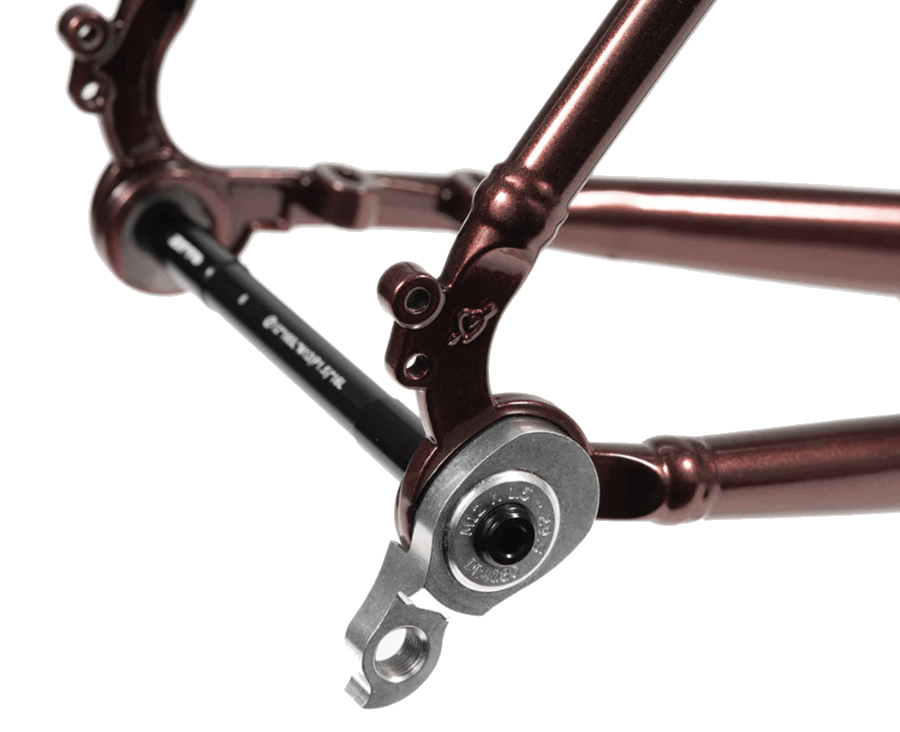
Simworks ronin dropouts

Sixteen framesets. That is the total first-run productionJapanese Steel classic bicycle design from Japan count for the Doppo Ronin from SimWorks. Not a typo — not a limited colorway — the entire opening batch of this Japanese all-terrain frame exists in a number smaller than most bicycle shops carry in a single model. When a manufacturer restricts output this aggressively, the frame itself has to justify the scarcity. The Ronin does.

Doppo Ronin Specifications at a Glance

Simworks ronin rear angle

The Ronin’s geometry has remained largely stable across three generations of the Doppo line, and SimWorks made that a deliberate choice. The frame ships in five sizes — S through XXL — each built around a 71.5° head tube angle (all sizes except XS), 440mm chainstays, and a 70mm bottom bracket drop. These numbers produce a handling character that sits comfortably between a dedicated road bike and a loaded tourer: neutral, stable under weight, and responsive enough for technical gravel.

Specification Detail
Frame Material Tange Chromoly CrMo (No. 1–3 tubes)
Fork Doppo Original Chromoly — Offset 49mm, Length 395mm
Head Tube EC 34mm, straight 1-1/8″ steerer
Brake Mount Flat-mount disc, front and rear
Max Tire (700c) 700 x 43c
Max Tire (650b) 650 x 55b / 27.5 x 2.22″
Bottom Bracket 68mm BSA threaded
Seatpost Diameter 27.2mm
Front Axle 12 x 100mm thru-axle
Rear Axle 12 x 142mm thru-axle
Dropouts SimWorks Original (Paragon 142x12mm inserts)
Bottle Mounts 2 standard + 1 cargo cage (under down tube)
Fork Mounts 3-pack cage mounts, both legs
Drivetrain Compatible with double or single
Sizes Available S, M, L, XL, XXL
Paint NIC Prismatic Powder Coat (Oregon, USA) — Deep Burgundy
Built By Shin Hattori Works, Aichi, Japan

Where This Frame Belongs on the Road

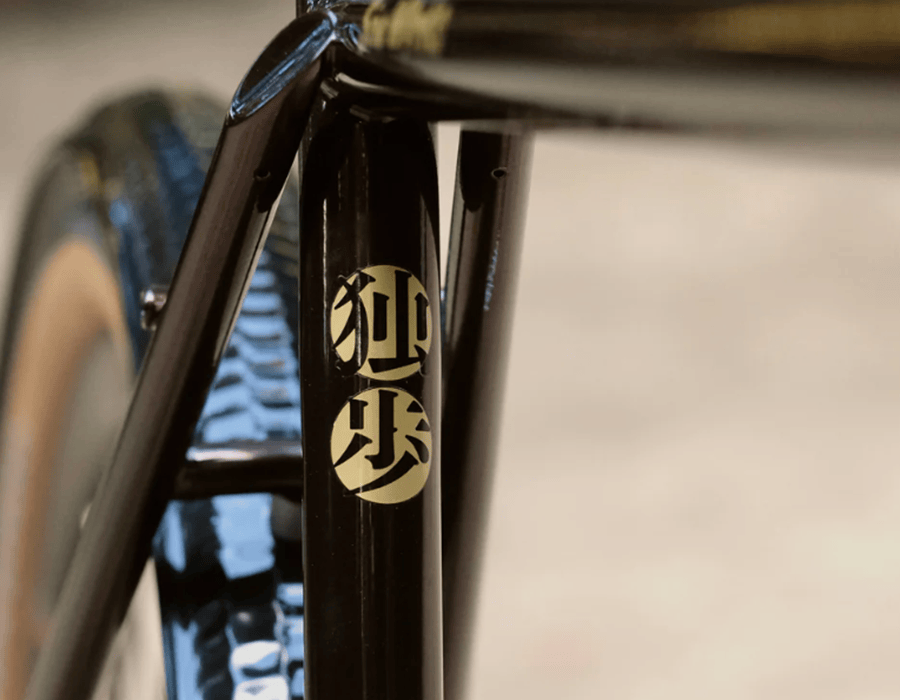
Simworks ronin seat tube

The Ronin is not a road bike wearing gravel tires, and it is not a touring frame with an identity crisis. The geometry and tire clearance numbers tell you exactly what it is: a machine engineered to spend the majority of its working life on mixed surfaces. The 440mm chainstay length keeps the rear triangle compact and responsive on dirt, while the 70mm bottom bracket drop and 71.5° head angle give it enough trail to carry speed on packed gravel without becoming skittish.

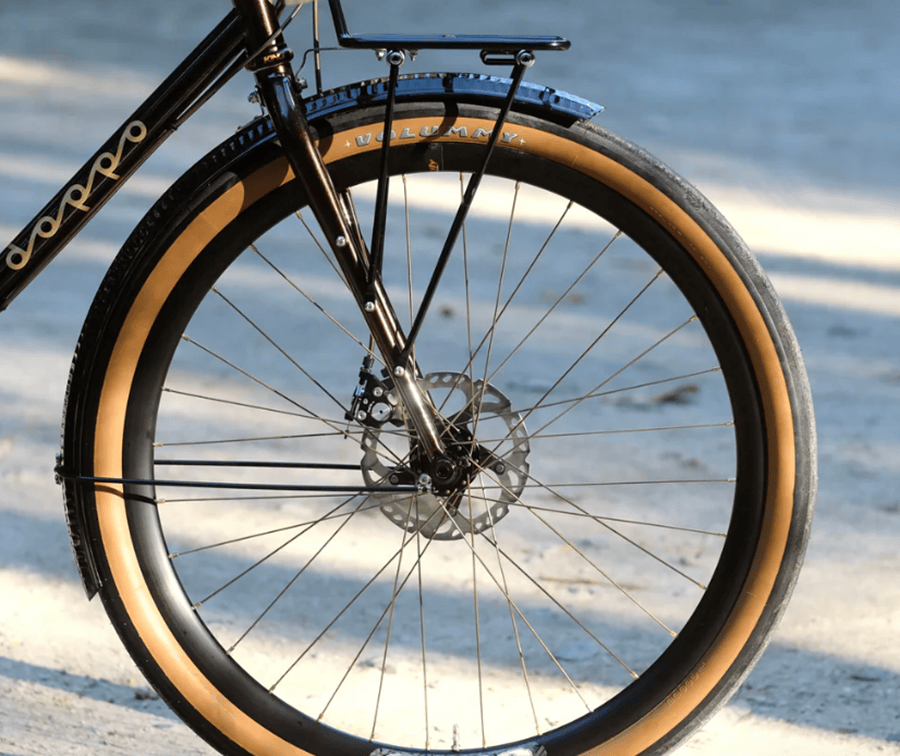
Simworks Ronin front wheel

Practical use cases stack up quickly. Commuting on a mix of bike paths and unpaved shoulders. All-day gravel rides on fire roads and forest service tracks. Multi-day touring with panniers or frame bags — the cargo mount points on the fork legs, down tube, and seat stays give you room to carry meaningful weight without routing issues. The 650b conversion option opens the door to fatter tires for softer ground, which makes this frame relevant in regions with clay-heavy or sandy soil conditions where 700c clearance falls short.

The Doppo Original Chromoly Fork — Rebuilt from the Ground Up

Simworks headset

The fork included with the Ronin is not an afterthought bolted onto a frame. It is a purpose-built Chromoly uni-crown design manufactured by Tange and co-developed with SimWorks to mirror the rear triangle’s geometry and clearance envelope. The 49mm rake and 395mm axle-to-crown length were selected to match the frame’s head angle across all sizes, producing consistent trail and steering feel whether you run 700c or 650b wheels.

Simworks Ronin down tube

Flat-mount disc brake mounts sit front and rear, and the fork legs carry dual 3-pack cage mounts on each blade. Fender and rack eyelets are present — and positioned deliberately. The crown-mounted fender boss sits recessed, which allows a standard full-length fender to clear a 700x43c tire without custom cutting. The 12 x 100mm thru-axle front end adds lateral stiffness that matters under braking load, particularly when the fork is carrying weight.

Tange Steel Construction and the NIC Prismatic Finish

Simworks Ronin seat stays

Tange tubing is the backbone of the Doppo line, and the Ronin uses tubes graded No. 1 through No. 3 from their Chromoly range. These are not budget-tier CrMo tubes pressed into service for cost reasons. Tange is among the oldest and most respected tube manufacturers in the cycling industry, and their steel sets have been the foundation for Japanese framebuilders for decades. The TIG welding is handled by Shin Hattori Works in Aichi, Japan — a small shop with a reputation for clean, precise work on production frames.

The paint finish on the Ronin is NIC Prismatic Powder Coat, applied by NIC Industries in Oregon. Powder coat is inherently more durable than traditional liquid paint — it resists chips, scratches, and UV fade better than most alternatives. The deep burgundy color chosen for this production run has a glossy depth that catches light without being flashy. It pairs cleanly with silver or black component groups, and it holds up to the kind of regular use that an all-terrain tool is supposed to endure.

Frequently Asked Questions

Who builds the Doppo Ronin frame?

The Doppo Ronin is hand-built by Shin Hattori Works in Aichi, Japan. The frame is TIG-welded using Tange Chromoly steel tubes and features SimWorks original rear dropouts developed in collaboration between Shin Hattori and SimWorks’ own welding team.

Can the Doppo Ronin run both 700c and 650b wheels?

Yes. The flat-mount disc brake system and dropout geometry allow full conversion between 700c and 650b without any modification. In 700c the frame clears tires up to 43mm. In 650b, clearance extends to 55mm, which opens the door to tires with meaningful tread for off-road use.

How many Doppo Ronin frames were made in the first batch?

The initial production run was limited to 16 framesets worldwide. SimWorks has not confirmed future restocking dates, making each first-batch Ronin a low-production frame by design.

What type of paint is used on the Ronin?

The Ronin uses NIC Prismatic Powder Coat from NIC Industries in Oregon, USA. The finish is a deep burgundy with a glossy texture. Powder coat offers stronger scratch and wear resistance than standard liquid paint, making it well-suited to a frame intended for daily and mixed-terrain use.

Recommended Products

1. Garmin Edge 840 — Best All-Around Bike Computer  The Garmin Edge 840 packs ClimbPro, Power Guide, detailed mapping, and a touchscreen that also works with buttons so gloves aren’t an issue. Battery life runs 32 to 60 hours depending on use. It covers road, gravel, and mountain biking without needing to upgrade.

2. Stan’s No Tubes Race Sealant — Best Tubeless Sealant Stan’s has been the default tubeless sealant for over two decades and it still holds that spot.  The Race formula is the better pick for gravel and road setups where punctures tend to be smaller and pressure runs higher.

3. Rapha Core Bib Shorts — Best All-Purpose Bib Shorts Rapha Core bibs come up as the go-to recommendation for riders who want quality chamois without the premium-brand price tag. The fit holds up on long rides and the chamois doesn’t bunch or shift. They’re the baseline product most cyclists move to once they get serious about comfort on the bike.

4. Park Tool IB-3 Multi-Tool — Best Portable Trail Tool  Compact, durable, and covers the bolt sizes you’ll actually need on the road or trail. It’s one of the best bang-for-buck purchases in cycling. Park Tool’s reputation speaks for itself — this is the brand most mechanics trust